
USDCHF corrective move: RSI cools to 44
After hitting a seven-month high of 0.8107 on June 24, the USDCHF pair now faces a likely correction as technical indicators signal exhausted momentum.
The prevailing market thesis asserts that the recent bullish surge has stalled, forcing the currency pair into a decisive corrective phase where short-term bias hinges entirely on moving average convergence. Investors analyzing this stagnation will learn how corrective moves validate trend exhaustion, why moving average mechanics currently dictate immediate price action, and which specific trading ranges define the upcoming bullish and bearish scenarios.
Recent data confirms the severity of the pullback; investingLive reports the 14-period RSI recently spiked above 74 before triggering the current decline, while LiteFinance notes the indicator has since cooled to a neutral 44. The price action remains trapped between critical levels, specifically flirting with the 100-hour moving average at 0.8103 and finding temporary support near the 200-hour moving average at 0.8071. Until the market commits to a breakout above these resistance lines or a breakdown below key retracement zones, the technical outlook remains stubbornly neutral despite the preceding six-session rally. Traders must watch these narrow bands closely, as a failure to hold the lower threshold could expose the asset to deeper losses toward the 0.8051 retracement level.
The Role of Corrective Moves in Forex Trend Analysis
A corrective move describes the price retracement following an exhaustion event, specifically the rejection observed at the 100-hour moving average. This phase resets momentum after the USD/CHF corrective move stalled near recent peaks. The preceding rally gained traction post-June 17 7909 to 0.81389. Such rapid appreciation often triggers overbought conditions where the 14-period RSI exceeds 74, signaling highly overstretched technical momentum. Distinguishing this pullback from a trend reversal requires monitoring the 200-day moving average support level.
Volatility stemming from the FOMC decision impact tests whether buyers defend key Fibonacci levels. A drop below the 38.2% retracement would confirm bearish dominance, whereas holding above suggests mere consolidation. Operators must note that AI models fail on 81% of financial QA tasks without strong retrieval, making human verification of these technical signals necessary. Reliance on automated interpretation alone risks misreading the neutral bias currently sandwiching price action.
Technical analysis remains vital as algorithmic strategies using volume-weighted averages only improved returns by 2% historically. The market now waits for a decisive break to establish direction.
Applying Moving Average Tests to Identify Trend Resumption
Price rejection at the 100-hour moving average defines the short-term bearish bias until a confirmed breakout occurs. Traders analyze trend strength by observing how price interacts with layered timeframes during corrections. A corrective move in forex represents a temporary counter-trend pullback that tests underlying support without breaking the primary structure. During the mid-month correction, the pair tested its 200-day moving average before reversing to the upside, validating the long-term baseline. This specific interaction confirms that longer timeframes often absorb selling pressure when shorter cycles falter.
Short-term strategies typically use 5, 10, and 20-period averages. Long-term approaches rely on 50, 100, and 200-period moving averages to identify substantial shifts. The convergence of these lines at key levels creates a high-probability validation zone. Relying solely on price location ignores momentum exhaustion risks. The recent stall demonstrates that even successful tests of the 100-hour moving average
The implication for operators is clear: trend resumption requires both a successful test of the 200-hour support and a decisive break above the immediate resistance. Failure to reclaim the upper average leaves the market vulnerable to deeper retracements toward the 50% mark. This dual confirmation prevents premature entries during neutral consolidation phases. This high error frequency means automated trend analysis often invents support levels that do not exist. Total global fintech investment surpassed $150 billion in the first half of 2025, fueling infrastructure for high-frequency trading yet ignoring verification gaps. The cost is measurable: operators trusting unverified outputs face immediate capital exposure from fabricated signals.
Traditional technical analysis remains superior because it anchors decisions to concrete price action rather than probabilistic text generation. Experts like Greg Michalowski The limitation is clear: AI lacks the deterministic logic required for precise entry triggers. Operators must treat AI output as unverified hypothesis until cross-referenced with raw chart data. Reliance on ungrounded models introduces unacceptable variance into trade execution logic. Human oversight remains the only proven circuit breaker against algorithmic fiction.
Moving Average Mechanics Drive Short-Term Market Bias
Defining the 100-Hour and 200-Hour Moving Average Convergence Zone
The USD/CHF corrective move 8103 and 200-hour support at 0.8071. These flexible levels function as self-adjusting barriers where price action often stalls or reverses based on transient momentum. Traders monitor the space between these averages to gauge immediate sentiment, noting that a breakdown below the lower band signals a shift toward deeper retracement targets. A convergence zone creates a compression point where volatility typically expands following a breakout. Historical patterns show that maintaining position above the 0.7978 baseline keeps buyers in control during such consolidation phases. The current sandwich formation forces a binary outcome: either a reclaim of the upper average restores bullish bias, or a breach of the floor accelerates selling pressure.
| Level Type | Price Point | Function |
|---|---|---|
| Resistance | 0.8103 | Caps upside momentum |
| Support | 0.8071 | Absorbs selling pressure |
| Baseline | 0.7978 | Validates long-term trend |
Fibonacci retracement logic suggests that losing the 200-hour line exposes the pair to a 61.8% pullback of the recent rally. This specific depth often acts as a final defense for the primary trend before a full reversal occurs. The limitation here is timing; price can oscillate within this narrow channel for extended periods, generating false signals for breakout traders. Operators must wait for a confirmed close outside the moving average envelope rather than reacting to intra-bar wicks.
Identifying Neutral Bias in the USDCHF Sandwich Pattern
Price rejection at the 100-hour moving average during the early Asian session confirms immediate seller pressure near resistance. This specific interaction creates a neutral bias where the market sits sandwiched between flexible barriers, forcing traders to await a definitive breakout. The pair currently trades near 0.8088, trapped between the upper ceiling and the rising 200-hour support floor. Determining short-term direction requires monitoring how price interacts with these converging lines rather than predicting outcomes prematurely.
- Sellers must push rates below the lower band to invalidate the bullish structure.
- Buyers need a clean break above the upper threshold to resume the uptrend.
- Compression between these averages often precedes expanded volatility and sharp directional moves.
The cost of premature entry in this zone is exposure to whipsaw events where false breakouts trigger stop-loss orders on both sides. Unlike clear trend phases, this mechanical range demands patience as transaction costs accumulate from frequent signal switching in shorter timeframes. Historical data confirms that staying above key convergence points was necessary for maintaining buyer control in earlier sessions.
| Condition | Technical Implication | Operator Action |
|---|---|---|
| Price 100-hour | Bullish momentum restored | Add long exposure |
| Price Inside Range | Neutral compression | Reduce position size |
A failure to hold the lower support invalidates the short-term bullish thesis entirely. Traders watching the USD/CHF corrective move. The retest of 0.8103 served as a practical example of how moving average resistance attracts fresh selling interest before a trend resolves.
Comparing Current Compression to the April 0.7978 Support Convergence
Current price action mirrors the April configuration where the 100-hour and 200-hour moving averages converged to form a rigid support floor. Historical records confirm that maintaining levels above the 0.7978 The mechanism differs now; instead of a unified floor, the averages have diverged to create a sandwich pattern that compresses volatility. Traders often misinterpret this compression as consolidation, yet the narrowing spread between these timeframes frequently precedes an explosive directional move.
| Feature | April Convergence | Current Configuration |
|---|---|---|
| MA Structure | Unified Support Floor | Divergent Sandwich |
| Price Action | Held Above Key Level | Rejected at Upper Band |
| Bias Signal | Clear Bullish Control | Neutral / Indecisive |
| Outcome | Trend Continuation | Pending Breakout |
The limitation of relying on this historical parallel is the absence of confirmed momentum in either direction. Unlike the April setup where buyers defended the line immediately, current sessions show repeated rejection at the upper 100-hour boundary. This divergence suggests that while the technical structure resembles past support zones, the market lacks the aggressive buying pressure required to replicate that specific outcome. A failure to clear the upper band leaves the pair vulnerable to a breakdown toward deeper retracement levels. Operators must wait for a confirmed close outside this range before assuming the historical pattern will resolve identically.
Bullish and Bearish Scenarios Define Trading Ranges
Application: Defining Bearish Rejection at the 100-Hour Moving Average
Seller control manifests when price fails to sustain levels above the 100-hour moving average, creating a mechanical rejection point. Traders enter short positions only after price closes below the 200-hour moving average, confirming the breakdown of the neutral sandwich pattern.

False breaks occur without significant volume, trapping early entrants who ignore the need for a decisive close. Applying a buffer zone around these flexible lines reduces exposure to noise, similar to how historical data validates the 0.7978 Holding price between these averages indicates indecision, requiring a breach of the lower band to target deeper retracement zones. Failure to break the 200-hour support leaves the broader uptrend intact despite temporary weakness. Traders execute sells only after price sustains below this flexible barrier, targeting the 0.8009 swing zone where former resistance flips to support. Historical precedents show that Fibonacci retracement levels frequently stall momentum, making the 0.8051 mark a high-probability profit-taking zone.
A confirmed close above the 100-hour moving average is the primary trigger for long entries. Buyers must push price through the 0.8107 Shorter timeframes react quicker to these breaks, yet they generate more noise than longer baselines. A valid reversal requires clearing both the flexible resistance and the static peak simultaneously.
Traders should note that a Golden Cross on daily charts often lags behind these hourly signals. Early entry carries a higher false-positive rate during compression phases. Price action sandwiched between averages frequently fakes a breakout before reversing. Sustained buying volume must accompany the breach of the 100-hour line to avoid a trap. Failure to hold above the 0.7978 convergence zone immediately after a spike invalidates the bullish thesis. This specific sequence separates genuine reversals from temporary liquidity grabs.
Breakout Confirmation Methods Prevent False Signals
Defining False Breakout Traps in the 0.8088 Neutral Zone
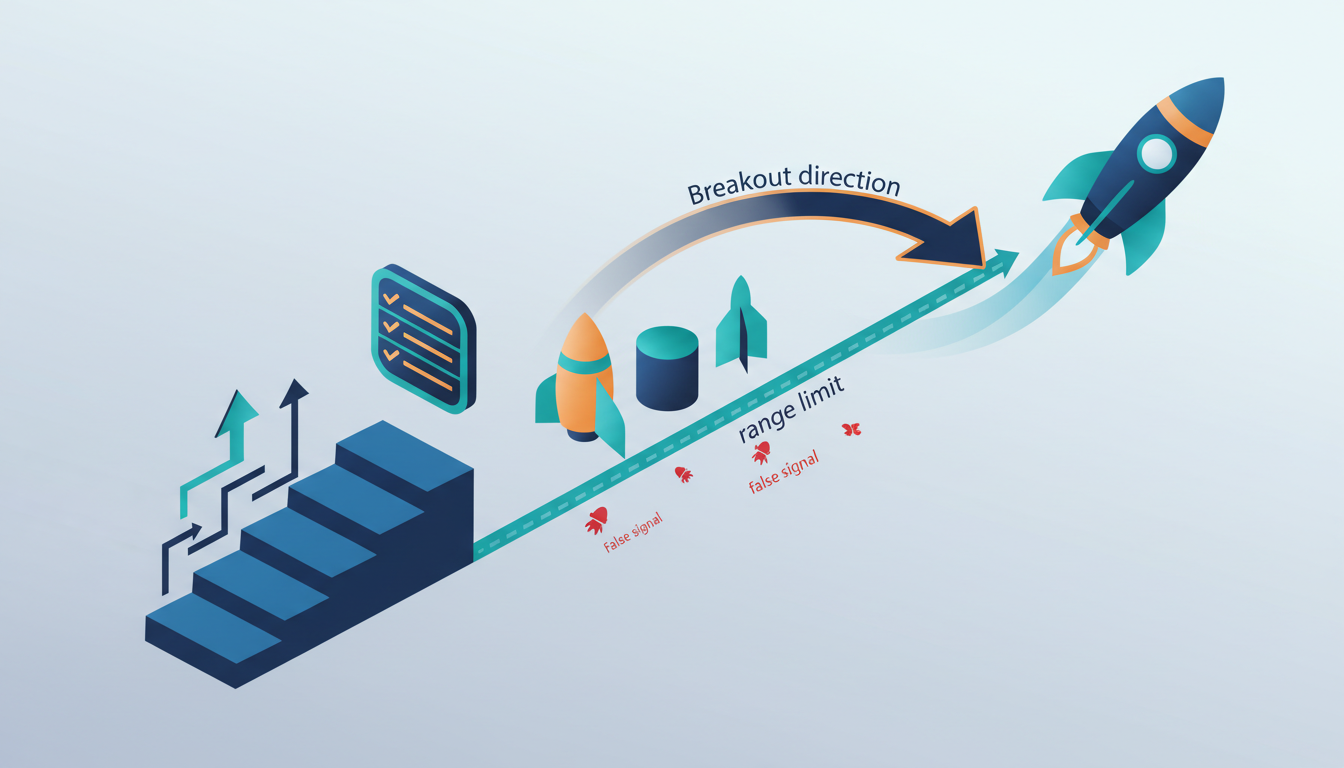
A false breakout occurs when price penetrates the 100-hour or 200-hour moving average but fails to sustain momentum beyond the 0.8088 equilibrium. Testing on the Russell 2000 index demonstrated that applying a 5-day confirmation period to signals cut false alerts by 20%, validating time-based filters over immediate reaction. The current sandwich pattern between flexible averages creates a mechanical trap where early entrants face rapid reversals.
- Identify price rejection candles closing back inside the 100-hour and 200-hour range.
- Wait for a confirmed close outside the neutral zone before executing entries..
Operators ignoring this delay risk entering during the neutral bias. The cost of premature execution is measurable drawdown as mean reversion forces price back to the center. Coverage Pillars recommends strict adherence to close-based confirmation to avoid these liquidity traps.
Implementation: Executing Short Entries Below the 200-Hour MA Toward 0.8051
Validating a breakdown requires price to sustain below the 200-hour moving average rather than piercing it momentarily. Traders apply a time-based filter to distinguish genuine momentum from noise within the neutral zone. This approach mitigates the risk of entering short positions just before a reversal back toward the 0.8088 equilibrium.
- Monitor for an hourly close strictly below the 200-hour flexible support level.
- Wait for a retest of the broken floor to confirm it acts as resistance. 3.4. Set stops above the recent swing high to invalidation the bearish thesis.
A decisive move lower opens the path toward the 0.8009 swing area where former resistance may offer temporary support. Operators using Coverage Pillars Deeper corrections could extend toward the 100-day moving average if selling pressure intensifies through the June support floors. The cost of ignoring confirmation protocols is measurable performance drag during volatile consolidation phases.
Risks of Premature Entries Before Reclaiming the 0.8107 High
Entering short positions before price sustains below the 200-hour moving average exposes capital to false breakdown traps within the neutral zone.tradingkey.com/news/market-movers/261987838-market-movers-usdchf-20260624/) often precipitates corrective moves that erase gains from prior consecutive sessions. Traders ignoring this flexible face significant risk when the pair remains sandwiched between converging averages near 0.8088.
- Wait for an hourly close strictly below the 200-hour flexible support level to confirm seller control.
- Apply a time-based filter to avoid entering on momentary pierces that lack follow-through volume.
- Target the former resistance zone only after invalidating the immediate corrective bias with sustained momentum.
The cost of premature action is evident when pairs fail to break key levels, leading to rapid reversals that punish early momentum traders A confirmed close above the 100-hour moving average would put buyers back in control, invalidating the bearish thesis entirely. Operators using Coverage Pillars must prioritize confirmation over speed to navigate this volatility effectively.
About
Vikram Nair, Emerging Markets & Asia FX Writer at ForexCFD. Top, brings a distinct macroeconomic perspective to the analysis of the USDCHF currency pair. While his daily coverage primarily focuses on emerging-market currencies and central bank policies in Asia and Africa, this broad exposure to global capital flows and FOMC impacts provides critical context for substantial pair movements. The recent USDCHF rally, driven by Federal Reserve decisions and technical breakouts, directly influences liquidity conditions in the developing markets he tracks. At ForexCFD. Top, an independent publication dedicated to vendor-neutral market news, Nair applies his expertise in fundamental analysis to dissect how strong US dollar trends affect global FX dynamics. His ability to interpret central-bank decisions ensures that readers receive a factual assessment of whether the current corrective move in USDCHF signals a deeper reversal or a mere pause, grounding complex technical data in real-world economic drivers.
Conclusion
Scalability breaks when traders confuse mean reversion with trend continuation, specifically by ignoring the liquidity voids that open between the 100-day and 200-hour moving averages. The ongoing operational cost here slippage, but the capital inefficiency of holding positions through a confirmed corrective cycle that technical indicators suggest could last up to three months. As RSI stagnates near neutral territory, the market demands a shift from reactive scalping to disciplined wait-and-see protocols. You must recognize that current price action represents a structural reset rather than a simple pause, requiring a fundamental adjustment in how you define entry triggers during these consolidation windows.
Adopt a strict two-week moratorium on all long-side exposure unless price decisively reclaims the 200-hour flexible level with accompanying volume. This timeline aligns with the projected corrective window, allowing the bearish momentum to fully exhaust itself before seeking new opportunities. Do not attempt to front-run the bottom; let the market prove its direction first.
Start by auditing your open orders this week to ensure no limit buys are sitting inside the neutral zone between converging averages. Remove any entries that rely on hope rather than a confirmed hourly close below key support levels.
Frequently Asked Questions
Breaking this level shifts focus to deeper losses toward the 50% mark. Historical data shows AI models fail on 81% of financial tasks without verification, making such manual technical checks crucial for confirming bearish dominance.
Shorter moving averages incur higher costs due to increased signal frequency. While algorithmic strategies using volume-weighted averages only improved returns by 2%, minimizing switches remains essential for reducing overall expenses in trend-following approaches.
Automated systems often misread neutral bias during consolidation phases. Since AI models fail on 81% of financial QA tasks without strong retrieval, traders must manually verify signals like the 38.2% retracement to avoid costly interpretation errors.
A correction tests support without breaking primary structure, unlike a reversal. Monitoring the 50% retracement level helps distinguish these moves, as dropping below key Fibonacci zones confirms bearish dominance rather than simple consolidation.
These strategies historically improved returns by only 2% in similar conditions. Given this limited upside and the fact that AI models fail on 81% of tasks, relying solely on automated volume signals carries significant risk.