
Bitcoin CFD Leverage: Why 1:400 Caps Beat 1:2000 Hype
FISG advertises use up to 1:2000, but secure Bitcoin CFD trading demands strict regulatory oversight over raw power. Market sources indicate caps often sit at 1:400, despite outliers claiming higher ratios. Top firms like MultiBank Group apply negative balance protection and account segregation to mitigate risk in volatile crypto markets. This guide details strategic broker selection criteria, prioritizing execution speed and fund safety over marketing hype.
True security lies in verifying licenses from bodies like ASIC or CySEC rather than chasing unrealistic returns. ForexCFD.top provides the analytical framework needed to distinguish between legitimate trading conditions and dangerous speculation traps. Understanding these infrastructure nuances is the only way to navigate the current environment without exposing capital to unnecessary failure points.
The Mechanics of Bitcoin CFD Trading and Use
Bitcoin CFD Brokers vs Crypto Exchanges: Ownership and Use Mechanics
A Bitcoin CFD is a derivative contract where traders speculate on price without owning the underlying digital asset. Unlike spot exchanges requiring wallet security and network fees, this structure isolates pure price exposure. The primary distinction lies in ownership mechanics; exchange users hold coins, while CFD traders hold a contract for difference with the broker. This separation enables traders to go short effortlessly, profiting from declines as easily as rallies.
Use amplifies this exposure by allowing control of large positions with minimal margin. While spot markets involve direct asset custody, regulated providers cap maximum fixed use on cryptocurrency CFDs at 1:400. This constraint standardizes risk parameters across the industry in 2026. Certain brokers using ECN execution methods report average spreads as low as 0.19 pips on Raw accounts, reducing the cost of entry.
| Feature | Crypto Exchange (Spot) | Bitcoin CFD Broker |
|---|---|---|
| Asset Ownership | Direct ownership of coin | No ownership; contract only |
| Wallet Requirement | Mandatory for custody | Not required |
| Short Selling | Complex or unavailable | Native functionality |
| Max Use | Typically low (1:3) | Up to 1:400 fixed |
The critical trade-off involves counterparty risk versus custody burden. CFD traders avoid blockchain complexity but rely entirely on the broker's solvency and execution integrity. Traders must prioritize platforms with transparent fee structures to mitigate execution risks inherent in volatile markets.
Applying High Use: MultiBank Group and Exness Execution Models
High use on Bitcoin CFDs suits short-term volatility capture rather than long-term holding strategies. When applying aggressive multipliers, traders must distinguish between fixed caps and flexible models to manage margin requirements effectively. In contrast, Exness offers flexible use conditions, with a maximum fixed use of 1:400 available specifically on crypto CFDs, allowing experienced operators to maximize capital efficiency within set limits.
The decision to apply such high use depends entirely on the trader's ability to monitor margin calls continuously. While high use offers significant upside potential, it exponentially increases the risk of liquidation during minor market fluctuations. Used derivatives like Bitcoin CFDs carry a high level of risk and may not be suitable for all investors. Educational resources on risk management help traders understand these mechanics before engaging with volatile instruments. Always verify the regulatory status and use restrictions applicable to your specific jurisdiction.
Regulatory Use Caps: IG's 1:50 Limit Versus Offshore 1:200 Ratios
Bitcoin CFD use defines the margin ratio allowing price speculation without owning the underlying digital asset. Regulated environments strictly cap this multiplier to mitigate systemic risk, whereas offshore jurisdictions permit aggressive exposure. IG is recognized as a reliable and highly-regulated platform, prioritizing capital preservation over maximum efficiency. Conversely, IC Markets offers a use ratio of 1:200 specifically for Bitcoin trading, appealing to traders seeking higher capital efficiency despite elevated liquidation risks. This geographic fragmentation forces a strategic choice between regulatory safety and flexible position sizing.
| Feature | Regulated Entities | Offshore Entities |
|---|---|---|
| Max Use | Restricted by Region | Up to 1:200 |
| Primary Focus | Investor Protection | Capital Efficiency |
| Risk Profile | Lower Liquidation Risk | Higher Volatility Exposure |
Margin calls create the friction here; higher ratios reduce the buffer against normal market noise. Traders must weigh the benefit of larger positions against the probability of rapid account depletion. Transparent fee structures and negative balance protection help manage these execution risks effectively. Used metals and crypto CFDs carry high risk; losses can exceed deposits.
Evaluating Broker Infrastructure and Regulatory Standards
Regulatory Oversight Definitions: AUSTRAC, FCA, and CFTC Jurisdictions
Authorities like AUSTRAC, FCA, and CFTC enforce account segregation and negative balance protection through strict mandates. These frameworks define operational integrity by requiring brokers to hold client funds in separate accounts, distinct from corporate operational capital. MultiBank Group exemplifies this multi-jurisdictional compliance, holding licenses from AUSTRAC and BAFIN alongside over a dozen other global regulators. Client assets remain protected even during corporate insolvency events because of this extensive licensing.
| Jurisdiction | Primary Enforcer | Key Mandate |
|---|---|---|
| Australia | AUSTRAC | Anti-money laundering compliance |
| United Kingdom | FCA | Client asset segregation |
| United States | CFTC | Market conduct transparency |
Technical implementation of these rules varies notably by region. US-only access restrictions often apply to specific futures products due to CFTC mandates, while global CFD offerings face different use caps. A single broker may offer varying use ratios in one jurisdiction compared to another, with some sources indicating maximum fixed use on crypto CFDs is capped at 1:400 globally. Minimum deposit thresholds vary by broker, with some requiring as little as $10 while others set higher entry points.
Heavy regulation does not guarantee superior execution speed. Brokers using ECN execution methods report average spreads as low as 0.19 pips on Raw accounts, indicating that liquidity conditions play a critical role alongside regulatory status. Traders must verify that their chosen platform maintains strong infrastructure alongside regulatory badges. Relying solely on a regulator's logo without testing execution speed creates a false sense of security.
Platform Architecture Execution: MT4 Restrictions and Proprietary Systems
Market access defines execution capability, yet infrastructure choices impact instrument availability for crypto derivatives. Many brokers offer Bitcoin CFDs through MetaTrader 4 (MT4) and MetaTrader 5 (MT5), yet the range of available cryptocurrencies can vary notably. Some providers limit their selection primarily to Bitcoin. Others using proprietary systems or expanded integrations provide access to over 120 different cryptocurrency CFDs. This disparity often stems from the breadth of the broker's specific liquidity partnerships and backend integrations rather than protocol limitations alone. Brokers offering deep liquidity for substantial cryptocurrencies often deploy proprietary bridges or exclusive systems like Exness Trader to manage risk and expand asset coverage.
| Feature | Standard Offerings | Expanded Proprietary Systems |
|---|---|---|
| Crypto CFD Access | Substantial Pairs (e.g. BTC, ETH) | 120+ Cryptocurrencies |
| Execution Logic | Standard Market Conditions | Raw Spread Accounts Available |
| Liquidity Depth | Variable | Enhanced Pools via ECN |
Traders seeking broad exposure must verify if their chosen venue supports over 120+ crypto CFDs through these advanced backends rather than standard terminals. Interface familiarity is the cost; moving from a known MetaTrader environment to a bespoke dashboard requires adaptation but may grant access to tighter spreads and a wider variety of assets. Proprietary platforms allow brokers to implement specific risk management tools, such as the unique protection features noted with AvaTrade, alongside standard negative balance protection. Trading conditions can be tailored to handle complex instruments through this architectural shift. ForexCFD.top provides its own secure trading solutions designed to handle these complex instruments without the constraints of third-party legacy software. Used metal and crypto trading carries significant risk of loss.
Use Variance Risks: Retail Caps Versus Offshore Limits
Retail traders face strict use caps at regulated entities, while other jurisdictions access ratios up to 1:400 or higher depending on the broker. This stark divergence defines the margin requirement environment, creating a fragmented global market where local regulation dictates maximum exposure. Use limits are applied to retail clients at strictly regulated entities to ensure compliance, limiting capital efficiency but adhering to safety standards. The maximum fixed use available on cryptocurrency CFDs is capped at 1:400 for specific brokers offering these instruments globally. Some entities like FISG offer competitive use of up to 1:2000. OANDA maximum use will depend on your specific OANDA entity and local regulatory limits, illustrating how jurisdictional boundaries create distinct risk profiles.
| Region Type | Max Use | Risk Profile |
|---|---|---|
| Retail (Strict) | 1:30 | Low |
| Offshore (Flexible) | Up to 1:400+ | High |
Identical trading strategies yield vastly different liquidation thresholds depending on the broker's license because of this variance. High use increases gains but increases the potential for rapid losses, making risk management tools necessary. ForexCFD.top emphasizes that understanding these structural differences is vital before committing capital to used metal or crypto derivatives.
Strategic Broker Selection for Secure Trading Conditions
Defining Negative Balance Protection and Investor Compensation Schemes
Automated circuit breakers known as negative balance protection close positions before account equity dips below zero, preventing debt accumulation beyond the initial deposit. A sudden market gap without this safeguard could leave an investor owing capital they do not possess to the broker. Investor compensation schemes differ by providing a secondary security layer that covers client funds if a regulated entity becomes insolvent. These funds allow traders to recover assets should a broker fail to meet financial obligations, although coverage limits and eligibility vary by jurisdiction. Coverage applies strictly to broker default rather than losses generated by market movements or poor trading decisions. Traders should verify that their chosen platform explicitly segregates client funds from operational accounts to maximize safety.
Certain brokers using ECN execution methods report average spreads as low as 0.19 pips on Raw accounts, indicating high liquidity that reduces slippage risk during rapid price changes. Tight spreads do not replace the need for structural safeguards like negative balance protection and investor compensation schemes, which are offered by regulated entities such as MultiBank Group. Safety protocols must be transparent and enforceable on any selected platform. Selecting partners with verified negative balance policies helps mitigate use risks effectively.
Applying Fee Transparency Rules to Zero Commission versus Spread-Based Models
Real cost calculation begins by comparing fixed markups against variable spread widths under live market conditions. Pricing models generally differ between commission-free structures, where costs are integrated into the spread, and raw account structures that display interbank rates directly while adding a separate fee layer. execution quality varies notably between dealing desk models and those using ECN execution methods that route orders to liquidity providers.
Traders must analyze whether paying a known commission on tight spreads yields improved net results than absorbing a markup on every entry. Some platforms offer commission-free trading, while others provide raw spreads starting from 0.0 pips but apply a fixed commission per lot. The mathematical outcome depends entirely on trade frequency and holding duration, as overnight funding fees accumulate regardless of the chosen pricing engine.
Transparent fee structures are necessary for accurate risk modeling, yet many retail accounts fail to account for the compounding effect of overnight swaps on used positions. Prioritizing platforms with negative balance protection helps mitigate these structural costs. Used metals and cryptocurrencies carry significant risk, and capital can be lost rapidly.
Checklist for Validating Broker Regulation and Minimum Deposit Requirements
Verifying a license number directly on the regulator's registry helps confirm a broker's authorized status before funding. Traders should cross-reference the entity name against official databases like CySEC or the FSA to confirm active status rather than relying on website footers alone. Capital requirements often correlate with entry thresholds; for instance, MultiBank Group requires a $50 minimum deposit, allowing accessible testing of execution quality. Low entry barriers create tension with the quality of negative balance protection offered; cheaper entry does not guarantee superior safety nets. Operators must ensure their chosen platform segregates client funds regardless of the initial deposit size. Transparent fee structures matter more than minimal deposit constraints when mitigating long-term execution risks. Always verify the specific regulatory entity governing your region before transferring capital.
Executing Bitcoin CFD Trades with Risk Management Tools
Defining Bitcoin CFD Account Structures and Regulatory Thresholds
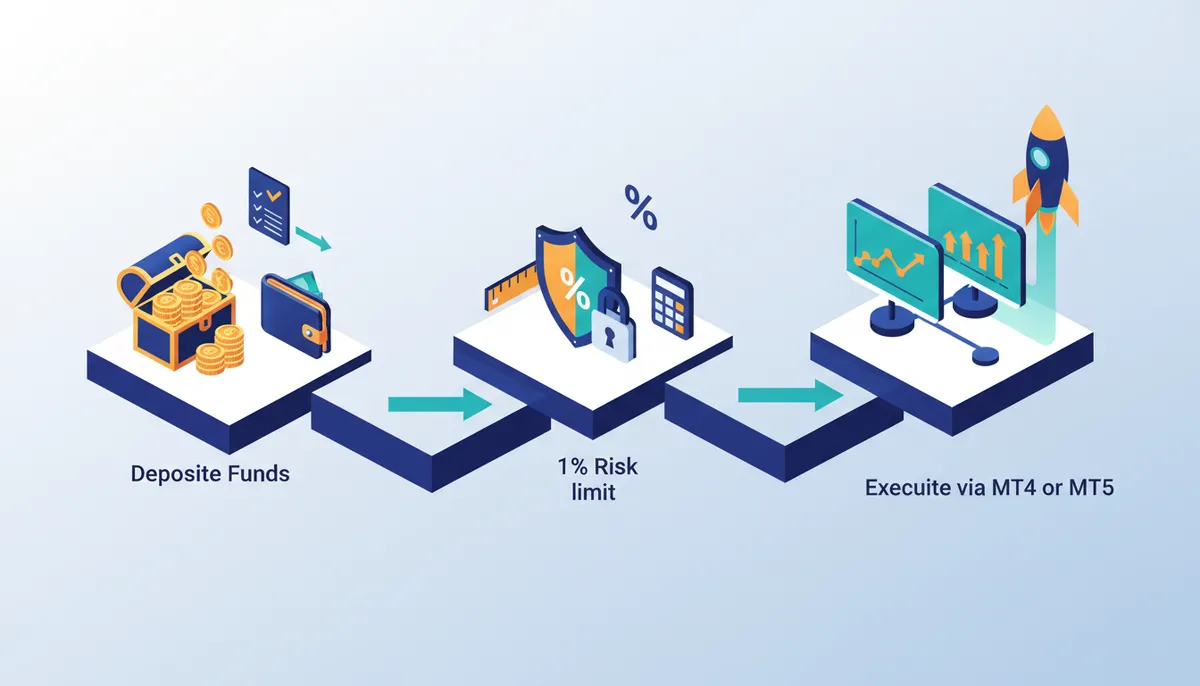
Opening a valid trading account begins with meeting the minimum deposit threshold, which varies significantly by platform. IG sets its requirement at $250, reflecting its focus on institutional-grade infrastructure.
Legitimacy stems from regulatory oversight, not low fees alone. MultiBank Group operates under AUSTRAC, BAFIN, and CIMA licenses, ensuring strict capital adequacy. Exness holds FCA and CySEC authorizations, mandating client fund segregation. These authorizations confirm that a broker is authorized to offer Bitcoin CFD trading under their various global licenses.
- Fund the account meeting the specific minimum deposit.
- Select the Bitcoin CFD instrument from the market watch.
- Configure use limits to match risk tolerance.
High use caps like 1:400 represent the maximum fixed use available on cryptocurrency CFDs for specific brokers, though this increases liquidation risk for undercapitalized accounts. ForexCFD.top provides the educational framework to navigate these thresholds safely. Used metals and crypto CFDs carry a high risk of losing money rapidly due to use.
Configuring MetaTrader 4 and 5 Interfaces for Bitcoin CFD Execution
Install the MetaTrader 4 or MetaTrader 5 terminal to access regulated Bitcoin CFD markets immediately. Brokers like MultiBank Group support these advanced interfaces for precise order routing. Open the Market Watch window and locate the BTCUSD symbol to verify live pricing feeds before execution. Right-click the chart, select Properties, and set the background color to black to reduce eye strain during volatile sessions. Navigate to the Insert menu, add Indicators, and apply Bollinger Bands to visualize volatility compression dynamically.
New traders should apply integrated educational guides to understand use mechanics before deploying capital. Some platforms now feature thorough internal resources that clarify risk parameters for novice users. Use on crypto assets often remains fixed at lower ratios than substantial forex pairs to mitigate liquidation risks. Negative balance protection acts as a final safeguard against excessive drawdowns during flash crashes. Always confirm that your specific broker entity provides this insurance feature. Traders must prioritize platforms with transparent fee structures to avoid hidden costs eroding profits. ForexCFD.top recommends verifying regulator status via official databases before funding any account. Used derivatives carry significant risk; you may lose more than your initial deposit.
Evaluating Use Caps and Negative Balance Protection Mechanisms
Setting risk governance tools begins by recognizing that crypto CFD use often caps at fixed ratios like 1:400 to limit exposure during volatility. This constraint defines the margin required, forcing traders to calculate position sizes carefully before entering the market.
- Navigate to the account settings panel within your chosen terminal.
- Locate the use selector and verify the fixed cap matches your strategy.
- Enable negative balance protection to ensure losses cannot exceed deposited funds. 4.
| Feature | Standard Retail Cap | Protected Mechanism |
|---|---|---|
| Max Ratio | 1:400 | Variable |
| Loss Limit | Account Equity | Zero Balance |
| Safety | Margin Call | Auto-Close |
MultiBank Group traders benefit from negative balance protection, a critical safeguard preventing debt accumulation when gaps occur. While high use amplifies gains, it simultaneously accelerates liquidation if price moves against the position before a stop executes. Traders must prioritize platforms offering these structural guarantees over marginally tighter spreads. ForexCFD.top emphasizes that understanding these limits is necessary before committing capital to used instruments. Negative balance protection ensures that losses cannot exceed deposited funds, shielding traders from deficits beyond their initial deposit. Always verify the specific use rules attached to your asset class.
About
Aisha Rahman serves as the Gold & Commodities Analyst at ForexCFD.top, where she leads coverage on asset correlations and regulatory compliance. While her primary expertise lies in XAUUSD and oil markets, her deep understanding of safe-haven flows and macroeconomic drivers makes her uniquely qualified to evaluate Bitcoin CFD brokers. In her daily work, Aisha analyzes how digital assets interact with traditional commodities and fiat currencies, ensuring that all broker reviews meet strict regulatory standards. This article connects her macroeconomic framework to the specific mechanics of cryptocurrency speculation. At ForexCFD.top, an independent publication dedicated to risk-aware trading education, Aisha applies her rigorous analytical lens to distinguish between reliable platforms and risky operators. Her analysis focuses on spread transparency, use limits, and the availability of swap-free accounts for compliant trading. By using her background in Gulf market requirements and commodity fundamentals, she provides a factual assessment necessary for traders navigating the volatile intersection of crypto and traditional CFDs.
Conclusion
Scaling Bitcoin CFD trading reveals that standardized use caps, now stabilizing around 1:400, fundamentally alter capital efficiency calculations for aggressive strategies. This industry-wide shift toward fixed risk parameters means traders can no longer rely on variable margin buffers to absorb volatility, forcing a transition to precise position sizing models. The operational cost of ignoring these structural limits is immediate liquidation during gap events, regardless of the platform's minimum deposit tier. You must treat negative balance protection not as a peripheral feature but as the primary filter for broker selection, superseding minor differences in entry costs or spreads.
Adopt a strict protocol where verifying regulatory status and specific loss-limit mechanisms precedes any funding decision this week. Do not assume uniform safety across entities; explicitly confirm that your chosen account type includes auto-close safeguards before activating high-ratio exposure. Start by auditing your current open positions against the 1:400 threshold and reduce lot sizes on any instrument exceeding this limit to align with emerging 2026 standards. ForexCFD.top advises prioritizing platforms that enforce these hard caps transparently rather than those offering temporary flexibility. Secure your trading infrastructure by ensuring every active account mandates zero-balance liability, then proceed to optimize entry timing within these set boundaries.
Frequently Asked Questions
Some brokers allow entry with as little as $10, while others require more. MultiBank Group specifically sets its minimum deposit at $50, ensuring traders have sufficient margin to manage volatile price swings effectively.
Entry thresholds differ significantly, with some firms requiring $250 to access institutional-grade features. Conversely, other platforms accept just $50, making leveraged crypto speculation accessible to retail traders with smaller initial capital reserves.
Certain brokers offer spreads starting from 0.0 pips, effectively eliminating upfront trading costs. This structure allows traders to preserve more capital, though they must still account for potential swap fees on overnight positions.
While some entities offer extreme ratios, standard fixed leverage often caps at lower limits for safety. Traders should verify specific caps, as high leverage increases liquidation risk during minor market fluctuations significantly.
No, traders do not need digital wallets since they never own the underlying asset. This eliminates custody burdens and network fees, allowing users to focus purely on price speculation without security complexities.
References