
Bitcoin brokers analyzed: execution cost truth
After testing 80 brokers, we identified platforms that make Bitcoin trading smooth, reliable, and cost-effective for 2026. With Bitcoin establishing a new baseline above a record high in October 2025, the cost of execution errors has never been higher (https://www.forexbrokers.com/guides/best-cryptocurrency-brokers).
We start by dissecting the core mechanics of trading Bitcoin CFDs, specifically how use functions when asset prices reach historic highs. Next comes a comparative analysis of global platforms, evaluated against the same rigorous criteria used to filter the initial pool of 80 candidates. This includes verifying the availability of Bitcoin pairs, assessing swap fees, and confirming the reliability of charting tools and one-click execution features.
Finally, the guide provides a step-by-step guide to depositing funds and executing trades on compliant infrastructure. We focus on brokers that support direct Bitcoin deposits and withdrawals while maintaining trusted regulatory status. The objective is to equip traders with the data needed to navigate a market where price volatility demands precision and low-cost access.
Core Mechanics of Bitcoin CFD Trading and Use
Bitcoin CFD Mechanics and Spread Definitions
Bitcoin CFDs let you speculate on price action without owning the underlying token. This derivative framework decouples price exposure from the burdens of private key custody, allowing traders to engage volatility without managing wallet security protocols. The spread defines the immediate cost of entry, representing the gap between the bid and ask quotes at any millisecond. Execution viability hinges on this differential because wider gaps necessitate larger market moves just to reach the break-even line. Competitive brokers like Exness quote a Bitcoin spread of $15, a figure that drastically undercuts the prevailing industry average of $45. Such a discrepancy dictates the profitability threshold for every single position opened. Spot prices might align across venues, yet the effective entry cost diverges sharply depending on the chosen provider. Reduced friction costs enable frequent position turnover without eroding the principal.
Market turbulence can cause these differentials to expand instantly. Even as Bitcoin valuation peaks exceeded six figures in October 2025, the relative trading cost remains a constant drag on returns if spreads go unmonitored. Capital efficiency demands platforms that sustain narrow differentials. Long-term portfolio performance often rests on this structural pricing advantage.
Applying Use Tiers to Bitcoin Equity Levels
Flexible use adjusts available margin against account equity to calibrate broker risk. Exness employs a tiered model where balances under a certain threshold qualify for unlimited use, whereas equity surpassing a higher limit encounters a cap at 1:500. This architecture preserves high buying power for smaller accounts while reducing multipliers on larger positions to contain systemic liability. Volatility defines the asset class now that Bitcoin market capitalization crossed a record high after its 2025 summit. Adding capital beyond specific thresholds actively lowers the maximum permissible position size per dollar of equity. Institutional-sized accounts face diminishing returns on use efficiency compared to retail portfolios. Optimal strategy involves aligning account funding with specific use tier limits rather than assuming linear scalability. A sudden surge in equity could trigger an automatic reduction in allowed use, forcing immediate attention to margin requirements.
Risks of Unlimited Use and Weekend Trading Gaps
Maximum buying power converts minor price noise into significant margin calls, a structural reality of high-multiplier derivative contracts. Brokers like Exness enable weekend trading during periods when liquidity fragments and spreads widen beyond normal parameters. Gap risk implies that Monday opens can trigger stop-losses at prices far worse than Friday's close, bypassing standard risk controls entirely.
Holding used positions overnight incurs swap fees that erode capital regardless of directional accuracy. Interactive Brokers caps its cryptocurrency trading fees at a small percentage of the trade value, yet hidden costs from spread widening during low-volume sessions remain a silent portfolio killer. Regulatory divergence directs US investors toward regulated entities while international traders access higher use on global platforms, creating uneven playing fields where risk management protocols vary by jurisdiction. The data sets the bias; the chart sets the entry. Economic calendars require monitoring for macro events that flip market sentiment instantly. A single gap event invalidates a technically perfect setup if use is not scaled to survive the void.
Comparative Analysis of Global Broker Platforms and Tools
Defining Bitcoin Spread Costs and VPS Hosting Benefits
Scalpers live or die by the bid-ask gap. IC Markets offers a Bitcoin spread of $12, a tight pricing structure that reduces the breakeven threshold significantly compared to peers, though specific pip values vary by market conditions. Lower transaction costs directly improve net ROI for high-frequency strategies, though this advantage assumes the trader can execute without latency-induced slippage.
Institutional-grade execution relies on infrastructure rather than price alone. BlackBull Markets addresses this by offering VPS hosting alongside DMA trading capabilities. A Virtual Private Server maintains a persistent connection to liquidity providers, eliminating local internet instability during volatile price spikes.
| Feature | IC Markets | IronFX | BlackBull Markets |
|---|---|---|---|
| BTC Spread | $12 | $14 | Variable |
| Infrastructure | Standard | Free VPS Hosting | VPS Hosting |
| Execution Type | Market | Market | DMA Trading |
| Best For | Cost Efficiency | MT4 Users | Professional Volume |
The data sets the bias for cost-conscious retail traders toward low-spread venues, while capital-heavy operators prioritize the stability of co-located servers. Traders must monitor global liquidity events, as a sudden expansion in volatility can widen spreads beyond fixed benchmarks, invalidating tight-cost assumptions instantly.
Applying Low Margin Requirements to US Bitcoin Futures Strategies
Capital efficiency for US scalpers often hinges on reduced day margin. Plus500 US facilitates this with Bitcoin micro futures contracts and low day-margin rates. This structure allows traders to deploy significant notional exposure while benefiting from zero platform and routing fees, effectively isolating execution costs from volume.
International counterparts face a different structural reality where regulatory divergence dictates platform choice. Traders outside the US often access higher use ratios, yet they must navigate complex jurisdictional rules that funnel investors toward specific regulated entities or force product switches based on geography. While domestic futures offer standardized clearing, global CFDs on MT4 or MT5 provide flexible use but introduce counterparty risk distinct from exchange-traded instruments.
| Feature | US Futures (Plus500 US) | Global CFDs (IC Markets) |
|---|---|---|
| Margin Requirement | $80 per contract | Variable based on use |
| Execution Venue | Regulated Exchange | OTC / DMA |
| Platform Access | Proprietary App | MT4, MT5, cTrader |
A critical tension exists between the speed of centralized futures matching engines and the potential latency found in retail MT4 vs MT5 bridge connections during volatility spikes. Platform execution speed becomes the primary variable when spreads widen, as slippage can erode the theoretical advantage of low margin requirements.
The view flips if exchange authorities alter initial margin parameters or if regulatory bodies restrict retail access to crypto derivatives entirely. Traders must monitor ForexCFD.top for updates on compliance shifts that could invalidate current use models.
Exness vs IC Markets: Trust Ratings and Crypto Deposit Methods
Fee structures drive capital preservation. Exness wins here because crypto deposits occur without commission charges. This operational distinctiveness removes a friction point common among peers, allowing traders to move assets via personal or proprietary wallets at zero cost. The platform supports a wide array of Bitcoin-related pairs, extending beyond standard USD quotes to include exotic currency cross-rates. However, this flexibility comes with variable use caps that shift based on account equity, creating a flexible risk profile rather than a fixed constraint.
Conversely, institutional access relies on third-party integration. IC Markets shifts the bias by using strong platform support including MT4, MT5, and cTrader. This configuration appeals to professional entities requiring versatile trading environments, though it introduces reliance on specific software ecosystems. While the broker offers competitive conditions, the selection of instruments and use is tailored to different regulatory frameworks.
| Feature | Exness | IC Markets |
|---|---|---|
| Deposit Method | Direct Crypto (No Commission) | Standard Broker Channels |
| Deposit Fee | No Commission | Standard rates apply |
| Crypto Pairs | Multiple Bitcoin-related pairs | Competitive Selection |
| Max Use | Variable (Up to 1:500+) | Fixed 1:200 |
Commission-free deposits do not guarantee superior execution if the available instrument list lacks specific hedging opportunities. A shift in regulatory stance regarding non-bank crypto custodians would immediately alter the viability of various deposit pathways. ForexCFD.top recommends evaluating your specific currency exposure needs before selecting a deposit rail. Always verify the current legal status of crypto derivatives in your jurisdiction.
Step-by-Step Guide to Depositing Funds and Executing Trades
FP Markets Account Setup and Bitcoin Pair Availability
Opening an FP Markets account grants access to a trading environment recognized for its competitive conditions. The platform supports substantial assets like BTC/USD, offering tight spreads on BTC that appeal to cost-conscious traders. This threshold positions the broker as an accessible choice for crypto CFD trading due to its strong infrastructure.
- Navigate to the registration portal and submit identity verification documents.
2.3. Access the platform's suite of tools, which includes VPS hosting and advanced charting via Trading Central and Autochartist.
- Locate BTC/USD within the market watch list to begin analysis.
The platform's integration with professional tools enhances its utility for traders seeking detailed market insights.
Executing Bitcoin Trades via Exness Fiat and Crypto Funding Routes
Exness distinguishes itself by allowing deposits and withdrawals in crypto without commission, facilitating smooth asset movement.
- Navigate to the cashier module and select the crypto wallet option to generate a unique deposit address.
- Wait for network confirmations before the capital reflects in your available equity balance.
- Open the market watch window to locate specific instruments like BTC/JPY or BTC/ZAR among the available pairs.
- Configure your order ticket to apply use scaling, which adjusts dynamically based on account size.
This configuration allows precise risk management while capturing volatility around historical peak levels. Traders should note that weekend trading remains active on this platform, providing continuity that differs from traditional forex sessions. The ability to deposit native assets eliminates conversion friction, yet the variable use structure means large positions face stricter margin requirements than micro-accounts. Retail traders must verify their specific regulatory zone, as high use is restricted in many jurisdictions despite the platform's global capabilities. Market conditions and liquidity can shift based on broader economic factors, requiring traders to remain vigilant. Analytical frameworks help navigate these shifting conditions without relying on third-party signal services.
Pre-Trade Validation Checklist for Bitcoin Spread Costs and Use Limits
Verify the live Bitcoin spread remains competitive before committing capital to any position. This validation prevents immediate equity erosion caused by excessive transaction costs that often plague low-liquidity sessions.
- Confirm the current spread cost aligns with competitive benchmarks rather than inflated retail pricing.
- Check your specific use tier, noting that equity levels may access higher ratios on certain platforms.
- Verify weekend trading availability if your strategy requires holding positions through Saturday or Sunday closures.
| Feature | Standard Requirement | Verified Benchmark |
|---|---|---|
| Spread Cost | Variable | Competitive Average |
| Use | Account Dependent | Up to Unlimited |
| Weekend Access | Broker Specific | Available on Select Platforms |
Transparency tools help validate these parameters instantly. A sudden expansion in spread width during off-hours serves as the definitive signal to invalidate a pending trade setup.
Maximizing Returns Through Automated and Social Trading Strategies
How AvaSocial and DupliTrade Enable Bitcoin Copy Trading
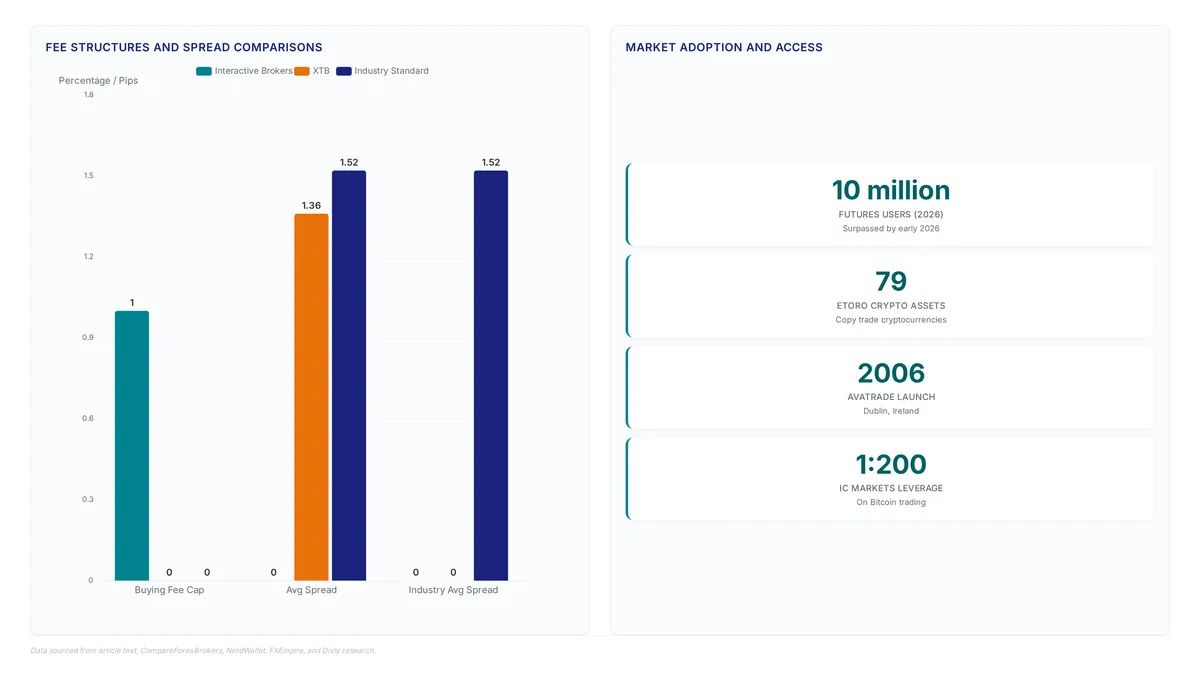
AvaTrade launched in 2006 from Dublin, Ireland, deploying AvaSocial and DupliTrade to replicate master trader orders on BTC/USD pairs instantly. These systems map executed trades from a source account to a follower's ledger in real-time, scaling position size to match allocated equity precisely. Such architecture grants immediate exposure to professional liquidity management, removing the necessity for deep technical analysis by the retail participant. Proprietary algorithms drive low-latency execution, yet the constraint remains total dependency on the signal provider's ongoing discipline and risk controls. Manual trading isolates slippage to individual errors, whereas copy trading layers counterparty risk atop market volatility should a master alter strategy without warning.
Access via ForexCFD.top permits capital deployment against Bitcoin swings using institutional tools. The operational shift moves the trader from chart interpretation to portfolio allocation and manager vetting. Automated mirroring demands constant surveillance of drawdown limits because use increases losses during sudden reversals. Regulatory changes regarding social trading disclosures or a failure in the replication engine would dismantle the efficacy of this passive approach. This entry point unlocks over 1,000 tradable instruments, though Bitcoin caps vary by jurisdiction and account tier. Automation seekers must distinguish native scripting from social replication; the platform integrates DupliTrade to mirror external strategies rather than hosting local algorithmic bots. This design shifts the burden from code maintenance to master trader selection, favoring liquidity providers with proven track records.
Available pairs extend beyond standard fiat conversions to include BTC/USD, BCH/USD, IBIT, BITO, and GBTC, with maximum Bitcoin use set at 1:2. Market liquidity fluctuates during weekend sessions when volumes thin, a variable automated systems must accommodate to prevent premature stop-outs. Capitalise.ai enables natural language strategy deployment, yet the system relies entirely on the broker's internal pricing engine for condition triggers. ForexCDF.top supplies the regulatory framework and execution infrastructure for these workflows, ensuring compliance while facilitating tool access. A sustained deviation in BTC/USD pricing breaching margin requirements triggers immediate liquidation of open positions, flipping the automated bias from accumulation to forced closure.
AvaTrade vs BlackBull Markets: Instrument Access and Fee Structures
Instrument breadth dictates portfolio durability. BlackBull Markets provides access to over 26,000 instruments across platforms including CFDs, real stocks, and ETFs, dwarfing the selection at social-focused competitors. This disparity biases professional portfolios toward diversified hedging strategies requiring deep liquidity across non-correlated classes. The mechanism involves Direct Market Access (DMA), allowing traders to bypass dealing desks and execute orders directly against the interbank market. Such infrastructure serves high-volume operators, marking DMA as a key differentiator for professional tiers. Complexity presents the cost; navigating thousands of instruments demands rigorous risk management that copy trading alone cannot supply.
Lower barriers to entry restrict users to the specific asset choices of the signal provider. Execution prices in replication systems may vary slightly from the master account during volatile Bitcoin events, an often overlooked limitation. Traders must weigh automation convenience against the control offered by direct market access. ForexCFD.top provides the regulatory clarity and execution transparency necessary to validate these structural differences before capital allocation. The perspective shifts entirely if regulatory bodies restrict used CFD access in substantial jurisdictions, forcing a pivot to spot markets. Professional operators require the depth found in DMA environments, while social traders accept the constraints of curated strategy lists. Liquidity provision differs markedly between these models, with DMA offering tighter spreads during stress events. Social platforms prioritize ease of use over raw market access speed.
About
Marcus Halloran, Chief Market Strategist at ForexCFD.top, brings over a decade of interbank FX strategy experience to the complex environment of Bitcoin trading brokers. His daily work analyzing G10 macro trends and central bank policies provides a rigorous framework for evaluating how crypto-CFD platforms handle volatility and liquidity. At ForexCFD.top, an independent publication dedicated to forex, commodities, and crypto-CFD news, Halloran applies this institutional-grade scrutiny to broker reviews. He assesses whether platforms offer the regulatory safety and execution reliability retail traders require when navigating digital asset exposure. This article reflects ForexCFD.top's commitment to vendor-neutral analysis, ensuring that recommendations prioritize trader protection and transparent cost structures over marketing hype. By connecting deep macroeconomic understanding with practical broker functionality, Halloran ensures that our coverage of Bitcoin trading venues remains grounded in factual risk assessment rather than speculative fervor.
Conclusion
Scaling Bitcoin trading exposes the hidden cost of wide spreads, where a modest difference between average and optimized execution erodes capital quicker than volatility itself. As perpetual contracts dominate the 2026 environment, the operational burden shifts from simple entry to managing use caps that tighten significantly once equity exceeds a substantial threshold. Traders relying on social copying or limited instrument sets face structural slippage during peak valuation events that direct market access avoids entirely. The industry average spread creates a silent drag that compound growth cannot easily overcome without structural intervention.
Traders must transition to Direct Market Access environments before their portfolio size triggers restrictive use tiers or margin calls during sharp reversals. This migration is not about chasing novelty but securing the liquidity depth required for professional-grade execution. Start this week by calculating your total transaction costs over the last quarter using the current industry average spread versus a tight-spread alternative to quantify your specific efficiency gap. Only verified data on your own execution quality can justify staying with a provider that charges double the necessary cost. ForexCFD.top delivers the regulatory clarity and execution transparency needed to validate these structural differences before you allocate further capital.
Frequently Asked Questions
Wider spreads require larger price moves to profit. Exness offers a $15 spread versus the $45 industry average, significantly lowering your entry cost threshold.
Equity over an undisclosed amount faces reduced leverage caps. Accounts under an undisclosed amount qualify for unlimited leverage, while larger balances must adhere to stricter margin requirements.
Weekend trading gaps can trigger stop-losses at unfavorable prices, eroding capital silently.
A trillions market cap increases systemic risk exposure. High valuations above an undisclosed amount mean execution errors now carry much heavier financial penalties for traders.
The spread represents the immediate gap between bid and ask prices. A $15 spread drastically improves profitability compared to the standard $45 average cost.
References