
CFDs risk: Why most retail traders lose
Between a majority and a large majority of retail accounts lose money trading CFDs, proving the sector carries extreme inherent risk. You will examine how multi-market platforms bundle thousands of instruments to maximize exposure while minimizing friction for the user.
The analysis begins by dissecting the role of modern infrastructure in facilitating access to over 5,500 instruments, ranging from 4,500+ shares like TSLA and NVDA to 450+ crypto pairs such as PEPE/USD. We then peer inside the trading engine to understand how execution speeds and spread structures on regulated venues authorized by the Cyprus Securities and Exchange Commission (CySEC) impact net profitability. The final section details strategic risk management, contrasting the availability of 65+ commodity markets with the statistical reality that most participants fail to preserve equity.
Survival in this system requires more than just identifying trends in global markets like Oil - Brent or EUR/USD. It demands a rigorous understanding of how use control and stop-loss protocols function within a system designed for high-frequency turnover. By focusing on these mechanical realities rather than hype, traders can improved navigate the disparity between platform marketing and the mathematical probability of loss inherent in derivative trading.
The Role of CFDs in Modern Multi-Market Infrastructure
CFD Mechanics: Use, Spreads, and Non-Ownership
A Contract for Difference (CFD) lets traders speculate on price moves without owning the underlying asset. Investors never hold the actual share or commodity, settling only the net difference between entry and exit prices. The spread acts as the primary cost, representing the gap between buy and sell quotes that traders must overcome to profit. Platform selection often hinges on reviewing spreads and use as critical cost factors for traders selecting a venue. Use increases exposure by allowing control of large positions with minimal capital, magnifying both potential gains and losses. This access enables participation in extensive markets, yet the statistical reality remains severe: the retail investor loss rate when trading CFDs across substantial regulated brokers ranges between a majority and a vast majority of accounts. Leading global brokers now provide access to an extensive range of over 350 tradable instruments.
Absence of shareholder rights like voting or dividends defines this high-access model, replaced entirely by cash settlement. Operators must recognize that use functions as a double-edged sword, accelerating equity depletion during adverse moves just as quickly as it builds it. Effective risk management requires selecting appropriate use levels and maintaining strict stop-loss discipline to mitigate the high probability of capital erosion. Without these controls, the structural advantage of the house, embedded in the spread and loss statistics, dominates individual performance outcomes over time. Some specialized brokers offer a more focused portfolio with over 160 CFD instruments.
The platform delivers 5,500+ instruments through a single CySEC-regulated account interface. Traders access 4,500+ shares, 120+ forex pairs, and 450+ crypto markets without switching providers. This multi-market architecture consolidates disparate asset classes into one decision environment, eliminating the fragmentation common in retail trading setups.
| Asset Class | Market Count | Key Examples |
|---|---|---|
| Shares | 4,500+ | TSLA, NVDA, SPCX |
| Crypto | 450+ | BTC/USD, ETH/USD |
| Forex | 120+ | EUR/USD, GBP/JPY |
| Commodities | 65+ | Gold, Oil - Crude |
Execution occurs across MT4, MT5, TradingView, and Web Terminal interfaces. Private tech exposure, such as the SpaceX listing seen on competing platforms, illustrates the industry shift toward non-standard assets that Capital.com mirrors with its own extensive share catalog. Broad access increases complexity; managing risk across Commodities, bonds, and indices simultaneously demands rigorous discipline. Traders face decision fatigue more often than liquidity gaps given such depth. Effective navigation requires filtering instruments by strategy rather than availability alone.
- Select specific sectors to avoid over-exposure.
- Apply stop-loss protocols on volatile crypto pairs.
- Verify spread costs before entering exotic forex markets.
- Monitor correlation between asset classes to prevent hidden concentration.
Capital.com positions this infrastructure for operators seeking consolidated global access. Regulation remains the primary safeguard, yet instrument variety introduces execution risks if use is not strictly controlled. Success depends on treating the platform as a tool for targeted exposure, not a catalog for indiscriminate speculation.
The platform is authorised and regulated by the Cyprus Securities and Exchange Commission (CySEC). Retail loss rates remain critically high across the sector, creating an environment where investor protection coexists with significant financial exposure. The platform operates under the supervision of the Cyprus Securities and Exchange Commission. These compliance measures exist alongside the inherent volatility of used instruments.
New market entrants now promote performance-focused infrastructures to attract semi-professional capital seeking execution speed. Such systems prioritize low-latency order matching over the educational guardrails required by novice participants. The industry mission shifts toward enabling improved decisions within a marketplace constructed for noise and rapid price fluctuation.
| Risk Factor | Regulatory Mitigation | Trader Responsibility |
|---|---|---|
| Capital Loss | Negative Balance Protection | Stop-Loss Discipline |
| Use Abuse | Maximum Use Caps | Position Sizing |
| Market Noise | Transparent Spread Pricing | Entry Timing |
Regulatory frameworks provide oversight rather than a profit guarantee. Accessing 5,500+ instruments expands opportunity but simultaneously increases the surface area for potential error. Successful navigation requires treating use control as the primary survival mechanism in this high-velocity system.
Inside the Trading Engine: Execution, Spreads, and Platform Architecture
How Capital.com Generates Revenue Through Trade Spreads
Capital.com generates revenue exclusively through trade spreads on executed orders rather than charging deposits or withdrawals. This transparent before position cost structure ensures traders see the full price impact before committing capital, aligning with industry standards where variable spreads act as the primary cost component.
| Feature | Traditional Commission Model | Spread-Based Model |
|---|---|---|
| Revenue Source | Fixed fee per lot | Bid-ask difference |
| Upfront Cost | Deposit fees often apply | No deposit fees |
| Visibility | Calculated post-trade | Visible pre-execution |
Traders must therefore analyze spread stability across different sessions, as comparing these variable costs remains a critical step for ideal platform selection.
Executing Orders Across MT4, MT5, and Web Terminals
The platform supports access via Android, iOS, MT4, MT5, TradingView, and Web Terminal. Users can explore CFD markets across commodities, crypto, forex, shares, bonds, ETFs, indices, and interest rates through their chosen interface.
| Interface | Primary Strength | Asset Coverage |
|---|---|---|
| MT4 / MT5 | Algorithmic support | Full market access |
| Web Terminal | No installation | 5,500+ instruments |
| Mobile (iOS/Android) | Immediate alerts | Substantial indices & forex |
A recent market shift toward performance-focused infrastructure highlights the demand for low-latency execution speeds to attract serious traders in forex and metals. Traders diversifying across shares and commodities must verify their specific terminal supports the required order depth before capital deployment. Consistency in trade execution depends on the chosen interface matching the operator's technical workflow rather than mere asset availability.
Validating Clear Cost Structures Before Committing Capital
Confirm zero deposit fees before funding any account to avoid immediate capital erosion. Traders must verify that payment processors accept trusted methods like bank transfers, cards, and digital wallets without hidden surcharges. When evaluating a commodities trading platform for oil or gold, operators should check that no withdrawal penalties apply to realized profits.
| Cost Component | Verification Target | Risk if Ignored |
|---|---|---|
| Funding | No deposit charge | Reduced buying power |
| Withdrawal | Free repatriation | Profit clawback |
| Execution | Transparent spreads | Unpredictable slippage |
Reviewing spreads and use remains necessary since these variable costs drive long-term performance more than static fees. Investors targeting ETF or bond markets face similar scrutiny requirements; the platform lists over 650 ETF markets alongside 20+ bond markets. The full fee structure is available on the Charges and fees page, where traders can inspect specific details for their region before committing funds.
Strategic Risk Management Through Use Control and Stop-Loss Protocols
Defining Stop-Loss Protocols and Use Parameters
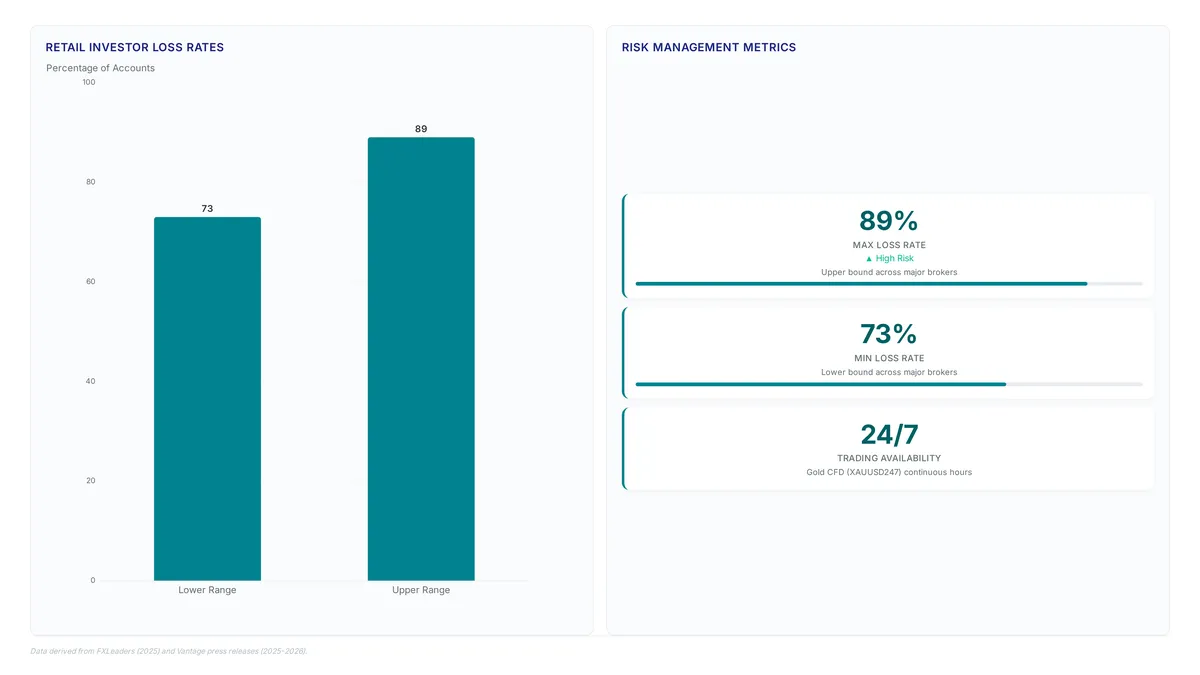
A stop-loss order terminates a position at a preset price to cap potential capital erosion. This mechanism acts as a hard constraint on the use parameters chosen during trade setup, stopping exponential losses when market volatility spikes. Emotional reactions often override logical planning during rapid price movements, causing most traders to lose money. Decisions determine outcomes when parameters are set while calm rather than under pressure. The operational sequence demands that traders set the stop-loss before trade entry, select appropriate use, and then confirm the order. Such discipline keeps risk exposure visible and controlled regardless of market noise. High use increases position size but reduces the account equity available to withstand normal fluctuations without triggering premature liquidation.
- Define the maximum acceptable loss percentage per trade.
- Calculate the corresponding price level for the stop-loss.
- Adjust use to ensure the position size aligns with this risk cap.
- Execute the order only after both parameters are locked.
Structural rigidity enforces discipline when market conditions deteriorate. The platform states that "Discipline is visible. So is trust," showing the need for a structured approach before entering the market.
Executing Trades: Setting Stop-Loss Before Confirming Use
Define the stop-loss price before selecting use to lock risk parameters while cognitive load remains low. This sequence forces a calculation of maximum capital exposure based on the distance to the stop-loss level rather than available margin. Setting the exit point first ensures the position size aligns with the specific risk tolerance of the trader. The platform interface requires users to set stop-loss before trade, select use, and then confirm order. This workflow supports a disciplined approach by prioritizing risk definition. Some brokers restrict advanced strategies like scalping on certain accounts, adding another layer of complexity to execution logic. Discipline is visible in the order ticket before confirmation. So is trust. By fixing the loss limit first, the trader transforms an abstract risk concept into a concrete monetary value. This approach mitigates the psychological pressure that often leads to poor decision-making during live market conditions.
Retail Loss Realities and the Necessity of Pre-Trade Parameters
Volatility stems from market mechanics, yet the decision-making process remains central to trading outcomes. The solution requires setting a stop-loss order before selecting use ratios while the mind is calm. This sequence forces the trader to define maximum risk exposure before calculating potential position size.
| Parameter | Set While Calm | Set Under Pressure |
|---|---|---|
| Stop-Loss | Logical distance based | Emotional panic level |
| Use | Calculated for safety | Maximized for greed |
| Outcome | Controlled risk | Rapid liquidation |
Survival in high-frequency environments depends on these pre-trade decisions rather than luck. The platform emphasizes that "Discipline is visible. So is trust," suggesting that adherence to self-imposed constraints matters more than chasing fleeting market movements. Setting the exit point first ensures the position size matches specific risk tolerance. This approach transforms trading from a gamble into a managed business operation with set boundaries.
Executing Your First Trade: Account Setup and Crypto CFD Workflows
Defining the Crypto CFD Account Verification Workflow
Executing a BTC/USD Trade Across 450+ Crypto Markets
Select BTC/USD from the 450 + crypto markets to initiate a position on Bitcoin's price movement without owning the underlying asset. This instrument sits within a diverse portfolio including ETH/USD and SOL/USD, requiring precise parameter configuration before confirmation.
- Choose BTC/USD from the market watchlist.
- Set your desired volume in lots.
- Select use to manage exposure.
- Set a stop-loss before trade to define risk.
5.6. Click Buy or Sell to execute.
Some platforms restrict advanced strategies like scalping, creating a hidden policy cost for high-frequency traders who may face account limitations. The operational friction here is real; a trader aiming for rapid entry must verify that their specific broker permits such velocity on crypto pairs. Selecting the wrong venue renders a technical strategy impossible regardless of analysis quality.
Cost transparency varies significantly, yet revenue is typically earned through spreads on executed trades rather than fixed commissions. The implication is clear: execution speed means nothing if the entry price is mathematically disadvantaged by the platform's pricing model. *Risk Warning: CFDs are complex instruments. Most retail trader accounts lose money.*
Troubleshooting Deposit Issues and Validating Cost Structures
The platform offers trusted payments via Bank transfers, cards, and digital wallets, noting explicitly that there are no deposit or withdrawal fees. While the full fee structure is available on the "Charges and fees" page, specific constraints regarding third-party funding sources or name-matching protocols are not detailed in the provided text. Traders should ensure their chosen method aligns with the platform's supported options to avoid processing delays.
The platform earns revenue through spreads on executed trades rather than hidden commissions, yet spread width varies significantly by asset class.
| Payment Method | Availability |
|---|---|
| Bank Transfer | Supported |
| Credit Card | Supported |
| Digital Wallet | Supported |
Some brokers restrict advanced strategies like scalping, creating a policy cost for high-frequency traders who face bans on restricted platforms.
Independent reviewers assign a 4.6 Trustpilot score, reflecting general satisfaction with settlement reliability. Always confirm the transparent cost structure displays clearly before committing capital to a position.
About
Sofia Mendes serves as the Broker Reviews & Trading Education Editor at ForexCFD.top, where she leads the publication's rigorous analysis of global trading platforms. Her daily work involves deep due diligence on regulatory frameworks, specifically evaluating CySEC-authorized entities, making her uniquely qualified to dissect this platform's compliance and market offerings. As the architect of the site's transparent review methodology, Sofia constantly assesses critical factors like instrument diversity, ranging from commodities to indices, and platform accessibility across MT4, MT5, and TradingView. This article's focus on a "Global CFD trading platform" offering 5,500+ instruments aligns directly with her expertise in comparing broker capabilities for retail traders in emerging markets. At ForexCFD.top, an independent publication dedicated to regulation-aware news, Sofia ensures every analysis prioritizes investor safety and clear risk disclosure. Her structured approach guarantees that discussions on complex derivatives remain factual, helping traders navigate noise with improved decisions based on verified regulatory status and genuine market access.
Conclusion
Scaling CFD activity exposes a critical friction point where policy restrictions on scalping directly erode the viability of high-frequency strategies. Reliance on execution speed becomes futile if the underlying pricing model embeds a permanent disadvantage. Traders must prioritize venues that explicitly permit rapid entry techniques before committing significant capital, as platform compatibility dictates strategic feasibility more than analysis quality does.
You should immediately audit your current broker's specific policy documentation regarding high-velocity trading on crypto pairs this week. Do not assume permission exists; verify it in writing to avoid sudden account limitations that invalidate your approach. This verification step is necessary because revenue models based on spreads often conflict with the tight margins required for scalping. A proactive review of these terms prevents the hidden cost of forced strategy abandonment later. Securing a venue that aligns with your trading velocity ensures your technical edge remains actionable rather than theoretical.
Frequently Asked Questions
Most retail investors lose money trading these derivatives due to high inherent risk. Data shows the loss rate ranges between a portion of accounts across major regulated brokers, demanding strict capital preservation strategies.
Modern infrastructure consolidates global markets into one decision environment for efficient trading. A single account interface delivers access to over 5,500 instruments, eliminating the need to manage multiple fragmented retail trading setups simultaneously.
Leverage acts as a double-edged sword that accelerates equity depletion quickly. It magnifies both potential gains and losses, meaning minimal capital controls large positions while increasing the probability of total capital erosion.
Investors never hold the actual share or commodity when trading contracts. This absence of shareholder rights defines the model, as settlements occur entirely through cash differences between entry and exit prices only.
Statistical reality indicates most participants fail to preserve equity within this ecosystem. The retail investor loss rate when trading CFDs across major regulated brokers ranges between a portion of accounts, proving extreme risk exposure.
References