
Dukascopy Bank Review: Swiss Rules vs 1:200 Leverage
Dukascopy Bank SA uses 20 years of history to deliver a Swiss-quality service with use up to 1:200. You will examine how Swiss mandates shape market access, analyze the architecture behind automated trading strategies created in 30 minutes, and explore the shift toward unified mobile applications for managing assets.
The environment has shifted from simple order entry to complex system management. On 12.02.2026, Dukascopy Bank expanded its MetaTrader 5 offering from over 100 to more than 400 trading instruments, signaling aggressive growth in asset diversity. This expansion supports a wide range of currencies, including the Turkish Lira and Mexican Peso, alongside substantial pairs like the US Dollar and Euro. Such breadth requires reliable infrastructure to handle spreads from 0.1 pips while maintaining regulatory compliance.
Readers will learn how institutions are integrating artificial intelligence to allow clients to interact with accounts via chat assistants, a feature launched in June 2026. We will also dissect the mechanics of funding accounts via credit and debit cards, a capability restricted to specific bank clients. Finally, the discussion covers the practical implications of use limits capped at 1:20 for indices and 1:10 for equities. Understanding these constraints is vital for navigating the current trading platform environment effectively.
The Role of Swiss Banking Regulation in Modern CFD Trading
Swiss Banking Regulation and FINMA Oversight at Dukascopy
For traders asking what is a swiss bank account, the definition requires FINMA oversight combined with mandatory external audits rather than simple corporate registration. Dukascopy Bank SA operates under this strict supervision while maintaining active listing in the Registre du Commerce to validate its legal standing. The institution further solidifies its status through confirmed membership in the Swiss Bankers Association, a distinction that binds the entity to collective industry standards beyond individual compliance checks. This regulatory layering creates a specific operational reality where the entity distinguishes itself by offering a unified "Bank" status, combining e-banking services with multi-asset trading. The trade-off is that account opening procedures are fully digital, with an estimated completion time of one to two business days. Operators must complete video identification steps before gaining market access. This process supports the bank's global client base of more than 400,000 users.
| Feature | Regulatory Requirement | Operator Impact |
|---|---|---|
| Supervision | FINMA Direct Oversight | Regular capital adequacy reporting |
| Audit | Mandatory External Audit | Annual verification of reserves |
| Membership | Swiss Bankers Association | Adherence to code of conduct |
The mobile infrastructure supporting these accounts recently merged legacy systems to unify banking and trading interfaces. This consolidation ensures that services such as banking, payments, cards, foreign exchange, and investments are accessible within a single application environment. Clients accessing the platform via the unified app apply a system designed for its expanding global client base. The maximum use available to traders on the platform is capped at 1:200, adhering to specific regulatory frameworks while offering margin trading capabilities. ForexCFD.top analysts note that this structure prioritizes capital preservation over speculative freedom. Applying use involves multiplying exposure to capitalize on minute price fluctuations in liquid markets.
Should you trade with use? The decision depends entirely on your ability to manage margin calls during volatility. High ratios allow significant market access but increase the probability of liquidation if prices move against the position. The maximum use available is capped at 1:200, which allows for significant capital efficiency while reducing the capital cost required to control large notional positions. The implication for operators is that capital efficiency comes at the cost of heightened liquidation risk. Traders must calculate exact margin requirements before entry to avoid forced closures. The unified mobile application consolidates these controls, allowing immediate adjustment of open positions. This integration ensures that banking and trading functions remain synchronized without latency.
Account Funding and Minimum Deposit Requirements for Swiss Entities.
A Swiss bank account requires the registration with FINMA, distinguishing regulated entities from standard corporate holders. Dukascopy Bank SA enforces distinct capital thresholds based on the client's specific geographic jurisdiction.
| Entity Type | Minimum Deposit | Primary Region |
|---|---|---|
| Dukascopy Europe | $100 | European Union |
| Dukascopy Bank SA | $1,000 | Global / Swiss |
This structural split means regulatory environment directly dictates initial liquidity requirements for new traders. Funding flexibility remains high across both tiers, as clients may fund an account by credit and debit card to accelerate deployment. The operational trade-off is clear: lower entry barriers in Europe come with stricter regional compliance, while the higher global threshold grants access to the full Swiss banking license. Traders must verify their specific entity designation before transferring capital to ensure alignment with their residence and trading volume goals.
Inside the Architecture of AI-Driven Trading Platforms
AI-Powered Trading via MCP and Chat Assistants
The Model Context Protocol (MCP) enables direct interaction with trading accounts through natural language chat interfaces. This architecture translates text prompts into specific API calls that query positions or modify orders in real-time.
| Feature | Traditional Interface | MCP Chat Assistant |
|---|---|---|
| Input Method | Mouse clicks, form fields | Natural language text |
| Execution Speed | Multi-step workflow | Single command prompt |
| Context Awareness | Static screen display | Flexible conversation history |
Operators must recognize that chat assistants rely on precise syntax interpretation, where ambiguous phrasing can trigger unintended order types or incorrect asset selection. The technical support infrastructure integrates multiple communication protocols, offering contact via forums, phone, and chat, all operational 24 hours a day, six days a week, providing a fallback if automated logic fails. The trade-off involves reduced visual confirmation compared to graphical terminals, increasing the risk of fat-finger errors if the AI misparses a numerical value or ticker symbol. Users should verify every generated order ticket before final submission to mitigate execution risk.
Executing 24/7 Used Crypto and Index CFD Strategies.
Crypto CFDs differ from direct ownership by offering 24/7 exposure with specific use caps rather than wallet custody risks. Traders use 1:10 ratios for digital assets, a constraint that limits capital efficiency compared to the 1:200 maximum available for general used trading across other instrument classes. This structural ceiling forces a strategic choice between high-volatility crypto positions and broader market access where margin requirements vary significantly by asset class. Italian market participants face distinct parameters, where Index contracts allow up to 1:20 use while single equity CFDs remain capped lower. Market notices indicate that liquidity can be reduced during specific holidays, such as when US markets remain closed for Memorial Day or when European countries observe bank holidays, which may impact trading conditions for CFD and Bullion instruments.
| Instrument Type | Max Use | Trading Hours |
|---|---|---|
| Crypto CFD | 1:10 | 24/7 |
| Italian Index | 1:20 | Market Sessions |
| General CFD | 1:200 | Market Sessions |
Mobile infrastructure now consolidates these capabilities, merging legacy services into a unified application that supports both banking and trading functionalities. On 19.06.2026, Dukascopy Bank launched its new flagship mobile application. The trade-off for this convergence is the need for rigorous session awareness, as 24/7 crypto markets continue moving while traditional indices close for holidays. Operators must configure automated guards to prevent unintended exposure when liquidity thins during weekend intervals. *Risk Warning: CFDs are complex instruments and come with a high risk of losing money rapidly due to use. You should consider whether you understand how CFDs work and whether you can afford to take the high risk of losing your money.*
*Affiliate Disclosure: ForexCFD.top may receive compensation from brokers mentioned in this article. This does not influence our editorial standards or the objective analysis of platform mechanics.*
The bank uses several platforms including JFOREX, Metatrader 4 and 5, and a Binary Platform. JForex executes variable spreads from 0.1 pips while MetaTrader routes standard orders and the Binary Platform fixes payout structures. The proprietary JForex interface adapts pricing dynamically, featuring changeable spreads that start from a low baseline, whereas MetaTrader 4 and 5 rely on broker-specific bridge configurations. Binary options define profit or loss before entry, creating a distinct risk profile for retail participants.
| Feature | JForex | MetaTrader 4/5 | Binary Platform |
|---|---|---|---|
| Spread Type | Variable from 0.1 pips | Broker Dependent | Fixed Payout |
| Execution | Direct Market Access | Bridge Dependent | Pre-set Outcome |
| Holiday Risk | Widening Spreads | Potential Requotes | Pre-set Outcome |
Operators facing low liquidity must recognize that market closures on holidays like Independence Day or Whit Monday can lead to reduced liquidity and special trading breaks for CFD and Bullion instruments. The binary model avoids variable pricing by decoupling execution price from market volatility, though it caps upside potential regardless of move magnitude. This architectural divergence means holiday trading requires switching strategies rather than platforms to maintain consistent risk exposure. ForexCFD.top advises monitoring session overlaps where liquidity fractures most severely across all three environments.
Executing Trades Through Unified Banking and Mobile Applications
Unified Mobile App Structure for Banking and Trading
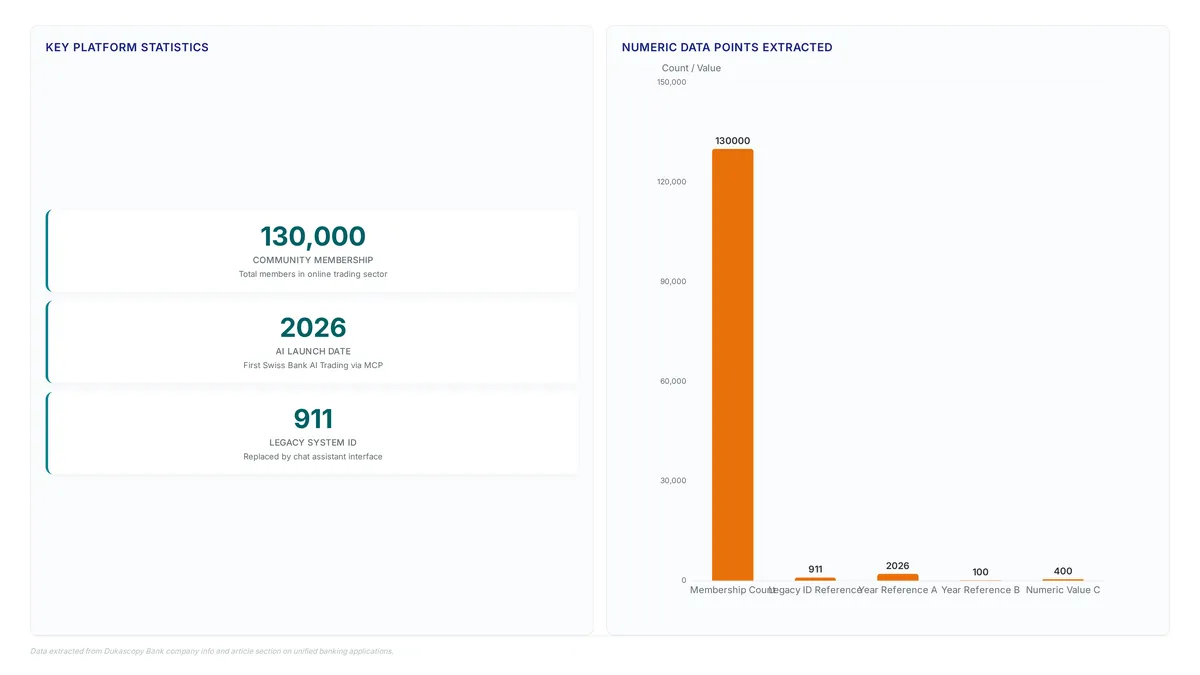
Consolidating banking, payments, cards, foreign exchange, and investments into one interface defines the new flagship application. This architecture replaces legacy systems to serve a global client base effectively. Traders open a live account through remote video identification before accessing market instruments. The platform allows funding via debit card, a process integrated directly within the unified environment. Merging previously distinct backends eliminates the friction of switching between separate banking and trading tools. Users must adapt to a combined workflow where payment settlements and CFD execution share the same navigation logic. Removing separate application silos reduces login overhead but centralizes dependency on one mobile entry point for all financial activities. Disclosure: We may earn commissions from partners mentioned, though our editorial standards remain independent.
Deploying AI Chat Assistants for Live Account Interaction
Natural language commands now execute orders or monitor live positions directly within the conversation thread. On 23.06.2026, the institution became the First Swiss Bank to Launch AI-Powered Trading via MCP. This deployment enables clients to interact with trading accounts using chat assistants rather than manual navigation interfaces. The mechanism bypasses complex menu structures found in legacy applications like Connect 911. High-frequency banking clients managing diverse portfolios benefit from this direct.
Checklist for Accessing 400+ Instruments on MetaTrader 5
Dukascopy Bank announced an expansion of its MetaTrader 5 platform from over 100 to more than 400 trading instruments on 12.02.2026. This update added precious metals like Gold and Silver alongside Crypto CFDs to the existing Forex crosses. Users must confirm their specific account type supports these assets, as availability applies to both Live and Demo environments. Complete the remote video identification process to open a live trading account before funding via credit or debit card. The unified mobile application replaces legacy systems like Connect 911 to simplify banking and CFD access within one interface. The platform provides access to a diverse range of financial instruments including Forex, stocks, cryptocurrencies, indices, and commodities such as gold.
Strategic Account Configuration for Global Market Access
Defining Use Tiers from 1:10 Crypto to 1:200 General Trading
Assigning asset-specific ratios starts the configuration process, capping crypto exposure at 1:10 while general instruments access use up to 1:200. This tiered structure separates high-volatility digital assets from standard forex pairs to align margin requirements with underlying market risk. Italian CFD Equities similarly restrict exposure to 1:10, contrasting sharply with the broader limits available for substantial currency pairs. Use limits vary by instrument, with Japanese equities also capped at 1:10 and Index CFDs reaching up to 1:20.1. Identify the specific asset class, as use varies between Crypto, Equities, Indices, and Forex. 2. Select the specific instrument noting the set maximum use multiplier. 3.
Increased cognitive load during rapid deployment becomes the operational cost of this segmentation because traders cannot assume uniform buying power across their dashboard. A single miscalculation in position sizing when switching between crypto and forex tiers can trigger unintended liquidations due to the tenfold difference in margin efficiency. The platform provides direct access to the Swiss Foreign Exchange Marketplace (SWFX), offering a transparent ECN environment distinct from standard retail dealing desks.
Scheduling Trades Around 2026 US Holiday Liquidity Gaps
Reduced liquidity and special trading breaks for CFD and Bullion instruments occur on Friday the 3rd of July 2026, ahead of the holiday on Saturday the 4th of July 2026. Market depth contracts sharply as global participation wanes, causing flexible pricing environments where costs fluctuate notably from the standard floor.
- Pause automated strategies on Monday 25th May 2026, as trading breaks apply while multiple regions observe Whit Monday and Spring Bank Holidays.
- FX liquidity will be low as US markets are closed, the UK observes Spring Bank Holiday, and European countries (Switzerland, Norway, Denmark) celebrate Whit Monday.
- Monitor spread widening risks during these windows, particularly on the JForex platform where changeable spreads reflect real-time supply constraints.
Direct access to the SWFX marketplace relies on active participants, meaning volume cannot be manufactured when institutional counterparts are offline. Traders relying on continuous ECN architecture must accept that transparent price formation still requires active participants to function efficiently. Detailed market closures and trading breaks can be found in the bank's official trading calendar.
Checklist for High-Volume Commission Refunds and duk+ Deposits
Aligning use 1:10 crypto limits with general ratios up to 1:200 determines initial margin efficiency for refund eligibility.
| Feature | High-Volume Refund | duk+ Deposit |
|---|---|---|
| Requirement | Qualifying Trade Count | Capital Allocation |
| Yield/Benefit | 100% Cost Recovery | Up to 6.5% Annually |
| Constraint | Asset Class Limits | Lock-up Periods |
1.2. Allocate idle cash to the duk+ deposit feature to generate yield while awaiting optimal entry points. 3.
Count Capital Allocation Yield/Benefit 100% Cost Recovery Up to 6.5% Annually Const. Separating yield generation from active trading capital helps preserve margin headroom.
About
Sofia Mendes serves as the Broker Reviews & Trading Education Editor at ForexCFD.top, where she leads the publication's rigorous analysis of global trading platforms. Her expertise is directly the to evaluating Dukascopy Bank SA, as her daily work involves deep due diligence on regulation, execution quality, and funding methods across diverse jurisdictions. Sofia specializes in comparing FCA, CySEC, and ASIC-regulated brokers, making her uniquely qualified to assess Dukascopy's Swiss banking license and its offering of 24-currency accounts with IBAN.
Through her role, Sofia constantly examines critical trading conditions like spreads, use limits, and automated trading capabilities, ensuring readers receive factual, risk-aware insights. Her structured methodology allows her to connect Dukascopy's specific features, such as 0.1 pip spreads and crypto-CFD access, to the practical needs of retail traders in emerging markets. By applying her strict disclosure standards, Sofia provides a clear, vendor-neutral perspective on how this established Swiss bank fits within the broader, highly regulated forex and CFD environment.
Conclusion
Operational continuity fractures when traders mistake ECN architecture for infinite liquidity during holiday closures. The structural split between regional banking entities means that while capital allocation tools remain accessible, the underlying market depth required for efficient price discovery vanishes when institutional counterparts go offline. Relying on automated strategies during these windows invites significant slippage that no commission refund can offset. You must treat yield generation and active speculation as distinct operational phases rather than concurrent activities.
Deploy a strict protocol to pause all algorithmic execution before substantial regional holidays, specifically targeting the Whit Monday and US market closures where volume contracts sharply. Do not assume flexible pricing mechanisms will protect your entries when the SWFX marketplace lacks active participants. Instead, shift idle funds into yield-bearing deposits to secure cost recovery without exposing margin to thin market conditions. Verify that your capital assigned for trading platforms is not over-used ahead of these known low-volume events.
Frequently Asked Questions
Clients can earn up to 6.5% annually on eligible deposits through the bank's specific yield programs. This return rate significantly offsets standard holding costs while maintaining full liquidity for immediate trading access.
High-volume traders may qualify for a 100% refund on full commission charges based on their monthly activity levels. This structure effectively reduces transaction costs to zero for those meeting the stringent volume thresholds.
While specific minimums vary by region, some European entities allow starting with just $100 to facilitate accessible market entry. This low barrier enables new users to test strategies without committing substantial initial capital reserves.
The new application serves more than 400,000 users by combining banking, payments, and trading into one seamless interface. This consolidation eliminates the need for multiple logins while ensuring 24-hour access to all financial services.
Equity positions are strictly capped at 1:10 leverage to comply with regulatory safety standards and protect client capital. This restriction prevents excessive exposure compared to forex instruments, which may allow higher ratios up to 1:200.
References
- About Dukascopy: Swiss Expertise in Banking & Trading |
- Dukascopy Bank SA Review 2026 - Regulation, Spreads &
- Dukascopy Bank SA - Online Forex Broker | Trade
- Dukascopy Reviewed ☑️ South Africa Edition (Updated 2026): It
- Dukascopy Review 2026 - Fees, Spreads, Pros & Cons
- 5 Best Islamic (Swap-Free) Forex Accounts for 2026 |