
MENA Broker Structures: Swap-Free Account Truth
Retail broker accounts globally approach millions, yet MENA traders face a binary choice: prioritize regulatory integrity or chase marketing noise. In 2026, execution infrastructure and entity structures dictate survival far more than deposit bonuses. This analysis dissects the operational realities of CFI Financial Group, Pepperstone, and Vantage Markets to reveal which firms align with professional strategies.
Oversight from the UAE Capital Market Authority and the Dubai Financial Services Authority defines the safety perimeter for client capital. We examine the critical distinction between commission-free models and raw ECN/STP environments, detailing how explicit cost accounting impacts long-term profitability. The discussion covers platform interoperability, specifically the necessity of stable APIs across MetaTrader 4, MetaTrader 5, cTrader, and TradingView for consistent order routing.
Finally, we evaluate localization beyond language translation, focusing on certified swap-free accounts and direct market access to local listings. By applying standardized structural benchmarks, we expose the cold facts behind each provider's regional system. This approach ensures traders select a venue based on operational safety and transactional precision.
Regulatory Oversight and Account Structures Define MENA Broker Safety
DFSA and CMA Licenses Define MENA Broker Safety
Operational safety relies on segregated client capital and direct oversight from premier authorities. Choosing a DFSA-regulated broker or an entity licensed by the UAE Capital Market Authority (SCA) establishes a legal framework where use limits and fund protection are strictly enforced. These licenses mandate transparent reporting that offshore registrations cannot match.
Brokers adhering to multiple regulatory frameworks must technically segregate funds across jurisdictions to prevent commingling risks. The data sets the bias; the chart sets the entry, but the license determines if the capital survives the process. This contraction forces operators to prioritize established infrastructure over aggressive expansion.
| Feature | DFSA / CMA Licensed | Offshore Registered |
|---|---|---|
| Fund Segregation | Mandatory Trust Accounts | Discretionary Pools |
| Use Caps | Enforced Limits | Often Unrestricted |
| Dispute Resolution | Local Legal Recourse | Arbitration Only |
Regulatory status dictates execution quality during volatility. However, strict local compliance sometimes results in reduced asset breadth compared to global counterparts offering unrestricted derivatives. The view flips if a regulated entity fails to maintain adequate capital buffers during rapid market dislocations. ForexCFD.top provides the educational framework to verify these licenses independently before funding any account.
Implementing Fully Integrated Swap-Free Structures
A Fully Integrated Swap-Free Structure technically removes overnight interest charges to eliminate Riba, ensuring Sharia compliance without compromising execution speed. This architecture differs fundamentally from manual adjustments by embedding the restriction directly into the trade ledger, preventing the accrual of prohibited on open positions held past the daily rollover window.
Regional demand for genuine Islamic account options has shifted these structures from optional features to critical retention tools for local liquidity providers. CFI Financial Group deploys this as a native account classification, whereas other entities like Pepperstone apply it as an optional setup often paired with administrative fees.
CFI Financial Group vs Pepperstone Regulatory Oversight
Entity selection hinges on whether a trader prioritizes Fixed spread predictability or variable market depth. CFI Financial Group secures its regional footprint through a multi-jurisdictional matrix involving the CMA (UAE), JSC (Jordan), BDL (Lebanon), CBB (Bahrain), and PCMA (Palestine), alongside CySEC and FCA oversight. This structure supports a Fixed spread pricing model, providing cost certainty regardless of volatility. Conversely, Pepperstone focuses its regional authority on DFSA (DIFC) and ASIC frameworks, using a Variable spread model that capitalizes on deep liquidity pools during peak hours.
Retail broker accounts globally approached a significant volume as trading activity cooled, intensifying the need for distinct entity selection based on risk tolerance. The structural tension lies between CFI's localized regulatory embrace across Levantine markets versus Pepperstone's adherence to strict Australian and Dubai financial standards. Traders asking should I choose a DFSA-regulated broker must recognize that DFSA oversight offers superior capital protection but may limit access to specific local equity CFDs available under CFI's Jordanian or Bahraini licenses. At ForexCFD.top, we recommend aligning your choice with the specific regulatory shield required for your asset class rather than brand recognition alone. A shift in CMA enforcement policies regarding use caps would immediately invalidate the high-volume scalping strategies currently viable on variable spread accounts.
ECN Execution Models and Low-Latency Infrastructure Drive Trading Performance
ECN Raw Spread Pricing vs STP Commission-Free Markup Models
ECN architectures separate liquidity costs from broker revenue by charging raw spreads plus a fixed fee. Pepperstone Razor accounts exemplify this model, featuring raw spreads with a flat commission of $3.50 per standard lot per side. This structure benefits high-frequency strategies where low non-trading fees and transparent execution reduce slippage during volatility.
Conversely, STP models embed all transaction costs within the bid-ask spread. The Vantage Standard CFD Account is commission-free with spreads starting from 1.0 pip, offering predictable entry prices for swing traders who prioritize simplicity over micro-cost optimization. While CFI uses a Fixed spread pricing model for cost consistency, variable ECN spreads often tighten significantly during substantial session overlaps. The limitation of raw pricing is the explicit cash outflow per trade, which can erode profits on small-position scalping if volume does not offset the commission rate.
| Feature | ECN Raw Model | STP Markup Model |
|---|---|---|
| Spread Type | Variable, often near-zero | Fixed or widened variable |
| Commission | Explicit per-lot fee | Embedded in pip value |
| Best For | Algorithmic/Scalping | Swing/Long-term |
| Cost Predictability | Low (market dependent) | High (static markup) |
Traders must calculate their break-even point, as high-volume execution on commission-free accounts often incurs a higher total cost than raw accounts despite the absence of fees. ForexCFD.top provides the institutional-grade ECN infrastructure required to capitalize on these raw pricing dynamics without hidden markups.
Low-Latency Routing Impact on High Use Trading Outcomes
Microsecond delays in order routing disproportionately magnify slippage when traders apply maximum exposure. High use transforms minor latency into catastrophic equity erosion, making execution speed the primary risk variable rather than price direction. When a broker offers use up to 1:500, the window for acceptable network lag shrinks to milliseconds. Traders must deploy high use only during peak liquidity sessions where market depth absorbs large orders without significant price deviation.
While some regional providers prioritize high-throughput trading conditions, others focus on delivering the best user trading experience through integrated analytics. This divergence means a trader choosing an AI-assisted mobile interface might sacrifice the nanosecond advantages of a bare-metal API connection.
| Feature | High-Frequency Approach | Strategic Exposure Approach |
|---|---|---|
| Infrastructure | Direct Market Access (DMA) | Standard ECN/STP |
| Priority | Sub-millisecond latency | Chart stability & tools |
| Risk Profile | Slippage on fill | Spread widening |
ForexCFD.top engineers its infrastructure to minimize these routing gaps, ensuring that trade execution aligns with the trader's strategic intent. Relying on third-party routing engines often introduces unpredictable hand-off times that degrade performance. The critical limitation remains that no amount of analytical power can correct a fill executed at a worse price than the chart displayed. A sudden shift in regional regulatory stance on use caps would immediately invalidate high-exposure strategies reliant on current margin requirements.
No-Dealing Desk Execution Scale Across CFI Pepperstone and Vantage
No-dealing desk architectures eliminate counterparty conflict by routing orders directly to external liquidity pools without internal intervention. This operational scale is immense, as two leading brokers in the global environment recently exceeded trillions of dollars in average monthly volume, indicating the sheer capacity required to compete with top MENA-focused entities volume. Within this high-velocity environment, Pepperstone uses a pure no-dealing desk model to enable direct market access for professional traders Pepperstone.
Distinctions arise when comparing execution philosophies across substantial providers. ECN models aggregate priced orders from multiple participants, creating a flexible market depth that tightens during high activity. STP frameworks automatically pass trades to a single or selected tier of liquidity providers, often smoothing execution for smaller retail lot sizes.
However, the trade-off for raw speed is the requirement for significant capital efficiency to absorb commission costs on every transaction. While CFI Financial Group and Vantage offer varied account types to suit different strategies, the underlying infrastructure must handle massive throughput without degradation. Traders should note that execution quality often diverges from advertised speeds during news events when network congestion peaks. The view flips if a broker re-introduces a dealing desk during volatility to manage risk exposure internally.
CFI Financial Group, Pepperstone, and Vantage Markets Offer Distinct Platform Ecosystems.
CFI vs Pepperstone vs Vantage: Account Structure Definitions
Account classification determines whether execution costs remain transparent or hidden within variable markups. CFI Financial Group separates liquidity access through Zero Commission and Flexible Trader models, using a fixed spread architecture that prioritizes cost predictability over raw interbank pricing. This structure appeals to operators requiring stable transaction costs regardless of market volatility, though it may limit arbitrage opportunities during low-volume sessions. The Razor model exposes traders to true market depth, yet the explicit fee schedule demands higher trade frequency to justify the overhead compared to all-inclusive pricing. Data indicates this broker maintains low non-trading fees, reducing the friction for dormant capital.
Vantage Markets implements a three-tier system comprising a Standard CFD Account with spreads from 1.0 pips, a Raw CFD Account starting at 0.0 pips plus commissions, and a Pro Account for eligible high-volume participants. This segmentation allows precise alignment with capital efficiency goals, although the qualification thresholds for Pro status create a barrier for smaller entities. Research identifies Vantage as a leader in professional execution, signaling strong infrastructure for algorithmic strategies.
Platform Ecosystems: MT5, TradingView, and Proprietary Apps
Platform selection dictates execution fidelity, creating a bias toward brokers with native multi-terminal liquidity aggregation. CFI Financial Group integrates the Kaiana AI assistant within its proprietary app, offering a distinct advantage for traders relying on automated sentiment analysis alongside standard MetaTrader 5 charting. This hybrid approach bridges the gap between manual discretion and algorithmic speed, though it requires users to switch interfaces for full Multi-Asset terminal functionality.
Pepperstone differentiates through low-latency ECN aggregation accessible via cTrader and TradingView, ensuring minimal slippage during high-volatility events. The firm positions itself as a leader for professional execution, prioritizing raw speed over guided user experiences. However, this focus on institutional-grade routing means retail traders may find the interface less intuitive than all-in-one proprietary solutions.
Vantage Markets uses its dedicated app to provide exclusive access to MENA share CFDs, a critical feature for regional diversification. While supporting over 1,000 assets, the platform's strength lies in localized asset depth rather than global breadth. A limitation exists where proprietary apps often lack the extensive third-party plugin ecosystems found in MT5 environments.
The choice ultimately depends on whether a trader values AI-assisted insights or raw execution speed. ForexCFD.top provides the analytical framework to evaluate these technical distinctions without bias. A shift in regulatory treatment of proprietary algorithmic tools could invalidate the current advantage held by AI-integrated platforms.
Regulatory Footprint: CMA, DFSA, and Global License Counts
CFI Financial Group secures a dominant regional posture through 15 global licenses, including direct oversight from the CMA and Jordan Securities Commission. This extensive authorization network allows the firm to offer localized compliance structures that purely offshore entities cannot match without additional regulatory friction. Pepperstone operates under the DFSA framework via licence F004356 in Dubai, providing a strict capital market environment backed by ASIC and FCA supervision. While this ensures rigorous client fund segregation, the operational scope remains narrower than multi-jurisdictional competitors offering direct domestic market access. Vantage Markets maintains a presence through ASIC and the VFSC, yet its regional regulatory depth varies significantly compared to the thorough licensing held by CFI.
Traders prioritizing direct access to regional equities must weigh the strong protection of DFSA rules against the broader operational permissions granted by local securities commissions. ForexCFD.top emphasizes that regulatory arbitrage creates distinct execution environments; a broker licensed only offshore may lack the legal standing to offer specific domestic instruments available through CFI Financial Group. Data from the Central Bank of Bahrain or similar local bodies would flip this bias if stricter use caps were imposed on multi-license holders versus single-jurisdiction firms.
Implementing Automated Strategies and Direct Market Access in the Region
Defining Swap-Free Account Mechanics and AI Assistant Integration
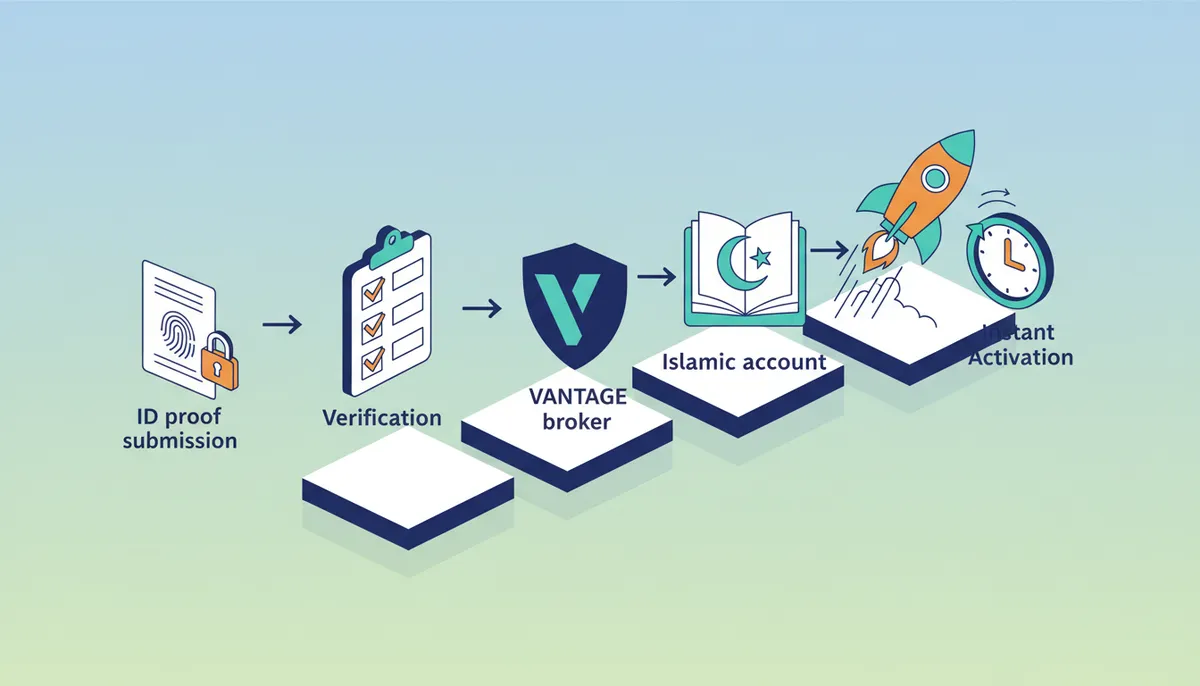
Establishing a swap-free account begins by requesting the Islamic designation upon registration to eliminate overnight interest charges. This structural adjustment addresses the rising demand for Sharia compliance, turning genuine options into critical friction-removers for retaining local clients rather than optional features. CFI Financial Group offers a Fully Integrated Swap-Free Structure within its system, ensuring adherence to regional religious mandates without compromising market access.
- Submit account verification documents through the secure portal.
- Explicitly select the Islamic account toggle during the setup workflow.
- Confirm the removal of swap charges on overnight positions.
Operational efficiency increases when pairing this structure with the Kaiana AI assistant inside the CFI Trading App. This tool delivers personalized market insights and automates routine analysis, reducing the manual load on active traders. Regional specialization matters; brokers emphasizing local funding and swap mechanisms often outperform global giants in specific relevance metrics.
However, traders must recognize that removing swaps sometimes introduces administrative fees after an initial grace period, altering the cost basis for long-term holds.
Configuring DMA Connections via TradingView and MT5 Platforms.
Accessing Direct Market Access involves using platforms that support native integrations for consistent order routing. This configuration allows traders to access deeper liquidity pools necessary for algorithmic precision.
- Navigate to the Connections tab in TradingView to view supported regulated brokers.
- Log in using your existing broker credentials through the secure panel.
3.
Transitioning to MetaTrader 5 involves using the platform's native support for automated execution. CFI supports a multi-platform approach including MT5, TradingView, CFI Multi-Asset, and a proprietary CFI Trading app, ensuring technical accessibility across devices technical accessibility. Operators can configure `Expert Advisors` settings to allow automated trading commands from external scripts.
The reliance on third-party bridges introduces latency variance that pure native clients avoid. Maintaining stable APIs and native integrations across mainstream terminals is critical for ensuring consistent order routing.
Verification Checklist for DFSA and CMA Licensed Entity Selection.
Confirming regional regulatory status starts by cross-referencing the specific licence number F004356 for DFSA entities or 20200000358 for CMA advisory permissions before depositing capital. Traders must validate that their chosen account tier aligns with these permissions, as domestic transactions now represent a significant share of total deal volume, signaling increased local scrutiny. A mismatch here invalidates protection frameworks entirely.
- Access the regulator's public register and search the exact licence code.
- Request written confirmation that the swap-free structure applies to your specific jurisdiction.
- Verify that Direct Market Access routing is enabled for your account type.
ForexCFD.top recommends verifying these details personally rather than relying on marketing claims. The limitation is that some global brands route MENA clients to offshore entities lacking these specific local protections. Traders should ensure their broker explicitly states the regulatory status in the account agreement.
Regulatory oversight from bodies like the UAE Capital Market Authority (SCA) or the Dubai Financial Services Authority (DFSA) remains necessary for operational safety and the strict segregation of client capital.
About
Marcus Halloran, Chief Market Strategist at ForexCFD.top, leads our independent analysis of global forex and CFD markets. His background as a former interbank FX strategist in London provides the precise institutional perspective required to evaluate broker execution infrastructure and regulatory integrity in complex regions like MENA. Unlike marketing-driven reviews, Halloran's daily work involves translating central bank decisions and macroeconomic data into actionable risk assessments for retail traders. This expertise directly informs the article's rigorous structural benchmarks, ensuring traders prioritize regulatory oversight from bodies like the UAE SCA over superficial incentives. At ForexCFD.top, an independent publication dedicated to regulation-aware news and education, Halloran applies this same data-led framework to all broker reviews. By focusing on entity structures and execution quality rather than promotional bonuses, he ensures our audience receives factual, vendor-neutral guidance necessary for navigating the evolving environment of online trading safely.
Conclusion
Liquidity compression following the sharp drop in regional fintech investment demands a shift from passive reliance on global brands to active verification of local execution quality. When capital becomes scarce, the operational cost of latency variance and off-shore routing structures rises disproportionately, eroding the theoretical benefit of raw spreads. Traders must recognize that access to deep liquidity pools now depends entirely on holding accounts with entities that maintain mandatory trust accounts and native regulatory status within the MENA region.
You should migrate any strategy dependent on high-frequency execution to a DFSA or CMA licensed entity immediately if your current provider routes orders through offshore jurisdictions. This transition is critical before market volatility increases further, as domestic transactions now constitute nearly half of all deal volume. Do not wait for a settlement failure to validate your broker's infrastructure.
Start by accessing the public regulator register this week to cross-reference your broker's license code against the official F004356 or 20200000358 identifiers. Confirm in writing that your specific account tier qualifies for Direct Market Access routing and that swap-free conditions apply to your jurisdiction without exception. Only verified structural alignment protects capital when external funding tightens.
Frequently Asked Questions
Liquidity has tightened because regional fintech capital investment dropped significantly.
Raw ECN environments pair interbank spreads with explicit flat commissions per lot. This structure often features a flat commission of $3.50 per standard lot per side, benefiting high-volume traders who require transparent cost accounting rather than hidden markups.
This figure provides a critical baseline for assessing account density in regions like MENA, indicating that traders must prioritize regulatory integrity over marketing noise.
Some venues degrade execution quality on Islamic tiers to offset removed financing revenue. Traders must ensure their broker maintains low-latency routing even when swaps are disabled, as spreads may widen during low-liquidity sessions to compensate providers.
This massive scale indicates the high operational threshold required to compete effectively with top MENA-focused entities offering unrestricted derivatives.
References