
Federal funds rate: Why 3.8% matters for traders
The median federal funds rate projection rose to 3.8% as the FOMC adopted a hawkish hold stance.
Kevin Warsh's Federal Open Market Committee kept the target range at 3.5%-3.75% but scrubbed prior easing bias from the official statement. That deletion, paired with revised Summary of Economic Projections data, confirms a deliberate pivot toward tighter monetary policy.
This isn't business as usual. The FOMC structure facilitated a unanimous twelve-member vote to keep rates steady, yet internal dispersion on future hikes tells a different story. The dot plot mechanics now suggest a potential rate hike later in 2026, a sharp reversal from previous cut expectations. Warsh's skepticism of traditional communication tools intersects with the committee's decision to upgrade core PCE inflation forecasts to 3.3% for the year.
Investors face a complex environment where hawkish policy definitions clash with an upgraded inflation outlook. TD Bank Financial Group data highlights the fracture: nine participants see rates unchanged or lower by year-end, while six expect two or more hikes. This divergence isn't noise; it highlights the volatility inherent in the new leadership's approach to managing elevated uncertainty in the labor market and broader economy.
The FOMC Structure and Hawkish Policy Definitions
FOMC Structure and the Hawkish Policy Definition
The Federal Open Market Committee sets the federal funds rate target range, comprised of Board governors and regional Reserve Bank presidents. Members voted unanimously to maintain the policy rate at 3.5%-3.75%. In this framework, a hawkish stance prioritizes combating elevated inflation over stimulating immediate growth. The definition has expanded: it now encompasses holding rates steady while signaling higher-for-longer constraints through revised projections.
The median forecast for the federal funds rate moved to 3.8%. Potential tightening exists despite the unchanged target range. Removing previous easing bias from the statement reinforces this restrictive posture. Market participants interpret the shift in the dot plot as a clear signal that the neutral rate may be higher than previously anticipated.
Significant dispersion exists among member forecasts. Some participants still expect no further hikes by year-end. This internal disagreement creates uncertainty regarding the durability of the hawkish pivot. Operators must recognize that the target range remains static. The communication strategy has shifted aggressively to manage inflation expectations. Removing forward guidance language increases reliance on real-time data releases rather than policy paths. Such structural opacity complicates liquidity planning for financial institutions dependent on stable rate assumptions.
Applying Core PCE Metrics to Real Rate Decisions
Core PCE inflation strips volatile food and energy prices from federal reserve calculations, serving as the primary gauge for policymakers. They apply this metric to assess underlying price pressures that dictate real rate trajectories. When the Federal Open Market Committee observes Core PCE inflation revised higher to 3.3%, the implication is a distinct shift toward restrictive monetary stances. This specific measurement drives the median projection for the federal funds rate upward.
Current policy levels may remain insufficient to cool the economy. A hawkish Fed definition now relies heavily on these revised projections rather than just immediate rate changes. The limitation of this approach involves the inherent lag in data reporting. Policy errors occur if real-time conditions deteriorate quicker than models predict. Consequently, market participants interpret the elevated median forecast as a commitment to higher borrowing costs for an extended period.
Tension lies between curbing persistent inflation and avoiding unnecessary economic contraction when growth already shows signs of slowing. Operators must recognize that real rate decisions depend entirely on whether these core metrics sustain their upward momentum or begin to revert. Failure to account for this volatility in core measurements could result in mispriced risk across fixed income portfolios.
Hawkish Versus Dovish Stance in Fed Policy
A hawkish stance prioritizes inflation control by removing easing bias from forward guidance. This approach contrasts sharply with dovish policies that favor labor expansion over price stability. The recent statement characterized job gains as largely keeping pace with labor force growth. Stimulus urgency appears reduced. Removing the previous easing bias confirms a strategic pivot toward restrictive monitoring rather than immediate rate cuts.
Global divergence highlights the cost of this rigidity. The Bank of Japan maintains hold settings amidst geopolitical uncertainty while the Fed signals potential hikes. The opportunity cost for holding non-yielding assets like gold becomes pronounced when real rates remain elevated. Prices drive notably below historical peaks. Operators must recognize that characterizing growth as solid despite uncertainty removes the safety net previously offered by explicit easing language. This shift forces market participants to price in volatility rather than rely on central bank support mechanisms. The absence of an easing bias means every data point now carries asymmetric risk for bondholders.
Mechanics of the Dot Plot and Forward Guidance Tools
How the Summary of Economic Projections Generates the Dot Plot
Individual forecasts submitted by FOMC participants create the dot plot through a mechanical median rather than a unified committee vote. Each official assesses the appropriate federal funds rate, and the aggregation of these views forms the Summary of Economic Projections. This process generates a distribution where the central tendency guides market expectations while the dispersion reveals internal dissent. For instance, the median projection for real GDP growth was downgraded to 2.2% in 2026, reflecting a more cautious outlook among the majority of policymakers. The long-term outlook remained anchored at 2.0%, suggesting confidence in potential output despite near-term headwinds.
| Component | Input Source | Aggregation Method |
|---|---|---|
| GDP Forecast | Individual Participant | Median of 19 submissions |
| Rate Projection | Individual Participant | Median "Dot" |
| Unemployment View | Individual Participant | Median Estimate |
Excluding the presiding officer's view from the dataset skews the median calculation because Chair Warsh likely did not submit an interest rate forecast. This absence creates an analytical blind spot where the median dot may not fully capture the leadership's true policy inclination. Market participants must interpret the median projection as a snapshot of voting members only, excluding the Chair's specific numerical guidance.
Interpreting Dispersion in the 2026 Federal Funds Rate Forecasts
Spread analysis of the dot plot helps market participants gauge policy uncertainty rather than relying solely on the median. Nine participants still see the policy rate unchanged or lower by year-end, while six participants expect two or more hikes. Traders view this dispersion as a warning that future moves depend heavily on incoming data rather than a predetermined path.
The Summary of Economic Projections represents the median of individual forecasts submitted by each FOMC participant, yet the width of the distribution reveals significant internal disagreement. A narrow cluster would imply consensus. The current split suggests a fragile equilibrium where small economic shifts could alter the committee's direction. Operators must note that Chair Warsh likely did not submit an interest rate forecast, consistent with his past criticisms of the dot plot as a communication tool. This absence complicates the signal, leaving the market to weigh the six hawkish dots against the nine neutral or dovish ones. Treasury yields rose sharply following the release, reflecting the market's reaction to the updated projections. The dispersion itself becomes a primary indicator of risk for fixed-income portfolios unlike a unified vote. Investors should monitor whether the six expecting hikes can persuade the median to move higher in subsequent quarters. The tension between these factions defines the current trading range more than the static target rate.
Limitations of the Dot Plot Under Chair Warsh's Skepticism
Removal of the easing bias from the statement marks a shift in communication strategy since forward guidance previously included that stance. Kevin Warsh's historical criticism of the dot plot suggests he views the tool as an imperfect communication mechanism rather than a binding commitment. By withholding his own projection, Warsh obscures the central bank's reaction function, forcing markets to rely entirely on the median of remaining participants. This approach complicates efforts to analyze Fed meeting statements for clear directional cues.
Current dispersion illustrates this ambiguity as nine officials see rates unchanged while six anticipate further hikes. Removing the easing bias highlights a reliance on data dependence but removes the stabilizing anchor traders previously used to price long-term bonds. Investors must now scrutinize the Summary of Economic Projections distribution for clues, yet the absence of the chair's specific forecast leaves the median as the sole numerical guide. Heightened volatility arises as the market attempts to infer policy intent from fragmented signals. The federal funds rate path becomes a guessing game dominated by noise rather than signal without a unified narrative.
Warsh's Hawkish Hold Shifts Economic Forecasts Higher
Defining the Revised Summary of Economic Projections Metrics
The Summary of Economic Projections now signals a distinct tightening bias through specific metric adjustments rather than explicit verbal guidance. Unemployment projections show slight improvement, with the 2026 median nudged lower to 4.3% from 4.4%, suggesting the labor market remains tight despite slower growth. Inflation pressures appear more persistent than previously modeled. This upward revision directly fuels the case for maintaining restrictive policy. Markets must price in a potential hike despite the current hold, a divergence that increases volatility around data releases.
Comparing Participant Dispersion: Nine Unchanged vs Six Expecting Hikes
The sharp divide between nine participants expecting stability and six forecasting hikes creates immediate pricing volatility for rate-sensitive assets.
| Viewpoint | Participant Count | Implied Action |
|---|---|---|
| Unchanged/Lower | Nine | Hold current range |
| Multiple Hikes | Six | Tighten policy |
| Median Consensus | N/A | One hike expected |
While the median forecast suggests a single increase, the sizeable minority bloc implies a higher probability of aggressive tightening if inflation persists. Investors often mistake the median dot for a commitment, yet the dispersion indicates significant disagreement on the appropriate policy path. The constraint here is that the dot plot cannot convey the conditional nature of these forecasts, leading traders to carefully weigh the hawkish tail. Consequently, market pricing may remain sensitive to incoming data that resolves the tension between growth concerns and inflation fears. Operators must recognize that the FOMC is not unified, making data dependency a key factor in future decisions. All eyes now turn to the press conference, where Chair Warsh is expected to address his vision for the Fed and answer questions regarding the committee's economic projections. Market participants will scrutinize comments on the $6.8 trillion balance sheet and the frequency of future briefings. Yield curves steepen when such internal friction exists, demanding precise pair selection. Traders should monitor how quickly the six dissenting voices gain traction among the broader committee. A single data point could swing the narrative from pause to hike. The cost of ignoring this split is steep. Liquidity conditions may tighten quicker than the median dot implies.
Market Implications of Removing Easing Bias
Defining the Hawkish Shift After Removing Easing Bias
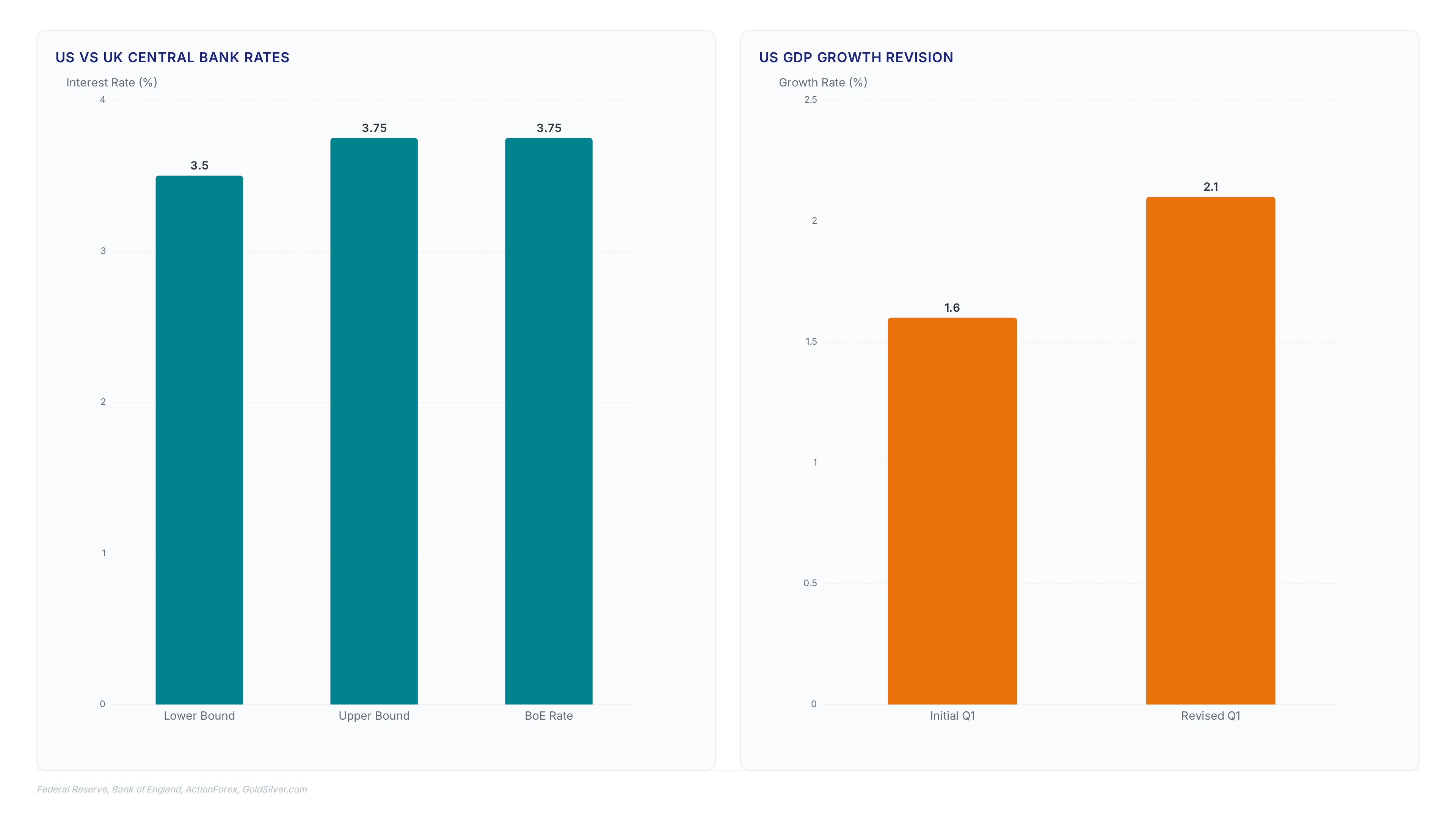
Dropping the easing bias removes the explicit tilt toward accommodation, leaving the statement to describe growth as expanding at a solid pace despite elevated uncertainty. This linguistic pivot from previous guidance signals that the Federal Open Market Committee (FOMC) no longer views downward rate adjustments as the baseline scenario. Consequently, the hawkish hold relies on revised economic projections rather than verbal promises to constrain inflation expectations. This structural change means traders must now parse every adjective in the statement for subtle shifts in tone rather than relying on explicit bias language. Treasury yields rose sharply following the release as the market absorbed the updated projections.
Significant dispersion within the dots regarding the policy rate path creates immediate uncertainty for long-term capital allocation. FOMC members split between holding steady and hiking further, and the resulting volatility presents challenges for corporate planning. Divergent views on future hikes create a foggy signal for bond markets, forcing traders to guess which faction dominates future meetings. Evidence of this global constraint appears as UK markets become increasingly influenced by US monetary policy developments, limiting the Bank of England's ability to pivot independently despite local economic conditions. The median dot fails to capture the width of the distribution, leaving operators exposed to tail risks if the minority bloc gains influence. Network operators and treasurers must navigate an environment where the median projection suggests a hike while a significant portion of the committee sees rates unchanged or lower. Chair Warsh's upcoming press conference draws close attention from market participants looking for indications of whether he pushes back on the more hawkish assessment. Risk managers maintain heightened vigilance while navigating this fractured guidance environment.
About
Vikram Nair, Emerging Markets & Asia FX Writer at ForexCFD.top, brings critical perspective to Federal Reserve policy analysis through his specialized focus on how U.S. Monetary decisions impact developing economies. As the Fed maintains a hawkish hold on the federal funds rate, Nair's daily work involves dissecting the ripple effects on emerging-market currencies like the USD/INR and USD/NGN. His expertise lies in translating complex macro shifts into actionable insights for retail traders in Tier-2 and Tier-3 markets, where capital flows are highly sensitive to U.S. Interest rate differentials. At ForexCFD.top, an independent publication dedicated to regulation-aware forex news, Nair ensures that global central bank decisions are contextualized within local regulatory frameworks and funding realities. This specific intersection of global macro policy and regional market access makes him uniquely qualified to explain why the Fed's stance matters profoundly for traders navigating volatility in Asia and Africa.
Conclusion
Sustained divergence in central bank projections creates a fragile equilibrium where capital allocation stalls. When the median forecast masks a near-even split between hawks and doves, the resulting uncertainty acts as a silent tax on long-term infrastructure planning. Companies cannot hedge effectively against a moving target, and the cost of carrying debt rises not just from the rate itself, but from the volatility premium lenders demand. This environment favors short-term liquidity hoarding over strategic expansion, slowing the very growth the committee seeks to stabilize.
Investors must stop treating the current policy stance as a temporary pause and instead model for a prolonged plateau with upside shocks. The prudent path is to assume rates remain restrictive through the next fiscal cycle, specifically preparing for the scenario where the hawkish minority gains influence. Do not rely on easing biases that the most recent data has explicitly removed.
Start by stress-testing your current debt maturities against a scenario where borrowing costs rise another 50 basis points above the current median expectation. This immediate adjustment ensures your balance sheet survives if the fractured guidance resolves toward tighter conditions rather than the longed-for relief.
Frequently Asked Questions
A hike would push rates above the 3.75% ceiling to combat inflation. This move aligns with the median projection of 3.8% for year-end 2026. Borrowing costs would rise immediately for variable-rate loans and credit lines.
Removing the bias signals a priority on fighting persistent price pressures. Core PCE inflation revised higher to 3.3% drives this restrictive stance. Investors should expect less certainty regarding future rate cuts soon.
The downgrade suggests a more cautious outlook for immediate expansion. Real GDP growth was downgraded to 2.2% in 2026 reflecting slower momentum. Businesses may delay capital expenditures due to tighter financial conditions ahead.
The slight decrease implies the labor market remains relatively tight currently. The 2026 median nudged lower to 4.3% from 4.4% supports this view. Wage pressures may persist despite the broader economic slowdown warnings.
Policymakers now see significantly higher price pressures than before this meeting. Core PCE inflation rose to 3.3% from the prior 2.7% estimate. This sharp increase forces a reevaluation of long-term investment strategies today.
References