
Forex broker risks: Why regulation beats low deposits
You can start trading with as little as a minimal amount, though this low barrier often masks significant execution risks for retail participants.
Regulated forex brokers provide the only viable path to global liquidity, yet their profit models frequently conflict with trader success. While industry voices like DailyForex.com insist professionals must use a broker, the sector relies on nominal minimum deposits to lure beginners who rarely understand the infrastructure behind the screen. The real danger lies in stop-loss hunting, where internal execution engines trigger liquidations seconds before a price recovery. Distinguishing genuine liquidity providers from firms simulating market depth requires more than a glossy website. In 2026, Trustpilot scores and hard regulatory standing remain the only metrics that matter.
The Role of Regulated Forex Brokers in Market Access
Defining the Forex Broker and Regulatory Necessity
A forex broker acts as the mandatory gateway connecting retail speculation to global liquidity pools. Technically, banks and peer-to-peer exchanges allow currency swaps, but they lack the trading platforms and algorithmic support professionals require. Functionally, the firm holds client deposits in segregated bank accounts, ensuring funds remain distinct from corporate operating capital. This structural separation is the primary shield against the insolvency risks plaguing unregulated entities.
Verified oversight drives necessity. Legitimate firms publicly display license numbers, enabling traders to cross-check status with authorities before funding accounts. Without this transparency, you are lending money to a black box.
Broker Efficiency Versus Banks and Peer-to-Peer Alternatives
Regulated brokers outperform banks by offering dedicated trading platforms rather than simple currency swaps. Banks and exchange offices facilitate one-off transactions but lack the infrastructure for frequent speculation or algorithmic trading. Peer-to-peer networks represent the worst option due to elevated counterparty risk and absent regulatory oversight.
Operational efficiency creates the divide. A bank converts currency at high spreads, while a broker grants access to deep liquidity with minimal friction. IG was awarded first place in the 2026 Annual Awards, distinguishing itself with access to 100 available markets or instruments. This breadth allows traders to diversify beyond substantial pairs without opening multiple banking relationships.
The US market presents a sharp divide where only five brokers legally serve residents under CFTC rules. Limited selection implies less pricing competition compared to offshore jurisdictions, creating a constraint between strict legal compliance and cost efficiency. Traders must weigh the safety of CFTC/NFA regulations against the higher leverage found elsewhere. Serious participants require the specialized tools and segregated custody that only a regulated broker provides.
Inside Forex Broker Execution and Stop-Loss Hunting Mechanics
Stop-loss hunting occurs when market makers spike prices artificially to trigger clustered retail orders before reversing direction. This indirect method targets liquidity pools where stop orders accumulate, differing fundamentally from standard slippage caused by normal market volatility. Some market maker brokers engage in this practice to drain accounts, yet the overall risk remains low at firms with serious government-affiliated oversight.
The mechanism relies on the broker acting as the counterparty to client trades rather than routing them externally. When a trader places a stop loss, the market maker sees this liquidity pool, temporarily pushes pricing to fill these orders internally, and profits while eliminating the trader's position at a disadvantageous rate.
| Feature | Standard Slippage | Stop-Loss Hunting |
|---|---|---|
| Cause | Low liquidity events | Intentional price manipulation |
| Frequency | During substantial news | Often during quiet sessions |
| Intent | Market force | Profit extraction |
Traders requiring direct market access should select brokers offering ECN trading to minimize this conflict of interest ECN trading. Even regulated entities operating a market making book face inherent conflicts that segregated accounts do not prevent. Execution quality depends on whether the firm profits from client losses or spread volume. Verification of order routing to external liquidity providers avoids internal matching risks.
Diagnosing Withdrawal Delays and Execution Anomalies
Withdrawal delays often signal that a broker is commingling client funds rather than maintaining required segregated accounts.
Diagnostic tools cannot recover funds once a broker halts operations. Traders facing these issues should immediately document execution logs and contact the regulator. A Forex broker can theoretically steal money, yet verified license holders rarely do so compared to unregulated entities. Persistent technical failures often indicate a breach of custodial duty requiring immediate exit. DailyForex recommends verifying regulatory status before attempting further deposits.
Validating Broker Legitimacy Through Regulatory History
Verify the specific license number on the regulator's official database to confirm active status before depositing funds. Reliance on website badges alone fails to detect revoked credentials or pending enforcement actions.
| Checkpoint | Tier-1 Requirement | Risk Signal |
| Jurisdiction | FCA, ASIC, or CFTC | Offshore registration only |
| History | 10+ years operational | Recent domain creation |
| Oversight | Multiple licenses | Single obscure license |
Safety correlates directly with regulatory depth. Top candidates hold authorizations from multiple strict bodies rather than a single permissive jurisdiction. The most trusted entities demonstrate an operational history spanning over a decade alongside a clean track record in at least one tier 1 regulatory jurisdiction. Windsor Brokers, for instance, uses a founding date in 1988 to establish credibility that newer firms cannot match without significant capital reserves. Traders should review lists of regulated brokers with a clean track record of 10+ years to filter out transient operators prone to failure. Skipping this step exposes traders to unregulated entities that commingle funds and lack legal recourse for withdrawal disputes. A broker lacking long-term scrutiny often defaults to aggressive execution models that prioritize internal profit over client equity protection. DailyForex recommends prioritizing firms with established tier 1 regulatory jurisdiction status to mitigate the risk of stop-loss hunting and capital loss.
Market Leaders and Platform Comparisons for Traders
IQ Option vs eToro: Defining User Base Scale and Verification Limits
IQ Option claims almost 50 million traders, a figure that dwarfs eToro's reported nearly 25 million users. No independently verified data exists for these massive totals, forcing operators to treat them as marketing estimates rather than audited facts. The sheer volume of participants on either platform suggests significant market presence, yet scale does not guarantee superior execution quality or safety.
Brokers can provide connectivity to copy and social trading providers as part of their service suite. Operators should prioritize brokers with transparent regulatory histories over those boasting unverified user metrics. High adoption suggests platform stability. It offers no legal recourse during insolvency. Always verify the specific license number on the regulator's official database before deploying capital.
Applying Copy Trading Capabilities Across Substantial Broker Platforms
Accessing copy trading features is facilitated by brokers that provide connectivity to social trading providers and platforms. Brokers form a core part of the trading infrastructure by granting access to markets and handling orders, either in-house as a market maker or by routing them to liquidity providers. The preference for ECN trading conditions suggests an expanding demand for transparency that pure social platforms struggle to match.
Unlike internal matching engines, direct market access routes orders externally, reducing the conflict of interest where a broker profits from client losses. Execution quality varies. Top brokers distinguished by fast order execution, no requotes, and minimal slippage stand apart from the crowd. Operators must distinguish between marketing claims of asset variety and the technical reality of order routing. Some platforms integrate advanced analytics allowing trades directly from charts, yet this convenience can distract from verifying the regulatory status of the strategy provider. The conflict sits between ease of use and control. Simple interfaces encourage copying but limit the ability to audit the source trader's use or risk exposure manually. Traders should prioritize brokers offering segregated accounts over those promising smooth social integration without verifiable oversight.
IC Markets vs Saxo Bank: Fee Structures and Asset Diversity Analysis
IC Markets ranks among the biggest per daily trading volumes, a distinction driven by its appeal to traders seeking ECN trading conditions with direct market access. This model contrasts sharply with Saxo Bank, which prioritizes a curated multi-asset environment over raw volume metrics. While IC Markets focuses on tight spreads for high-frequency strategies, Saxo offers a broader suite of traditional financial instruments beyond currency pairs. There is no precise figure for the total number of Forex brokers in the world, but with 1,231 MT Forex brokers, the total number should exceed at least 1,500. The trade-off involves platform complexity versus execution speed.
Steps for Selecting a Trusted Forex Broker and Verifying Regulation
Defining Regulatory Verification and License Cross-Checking
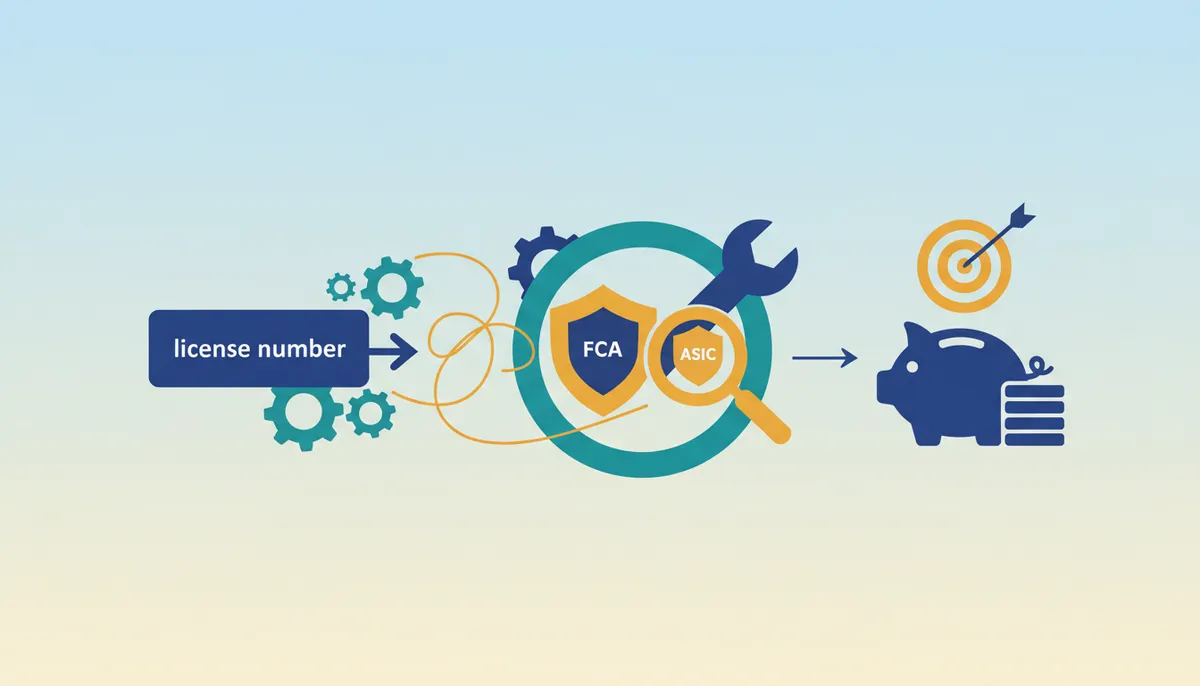
Locate the license number on a broker's footer, then cross-reference that exact string against the official regulator's database to confirm active status. This manual step reveals revoked credentials that static website badges often conceal. Regulated entities display license numbers prominently, yet unverified claims of oversight remain common among offshore operators.
| Verification Step | Action Required | Risk Signal |
|---|---|---|
| License Lookup | Match ID in registry | ID missing or mismatched |
| Jurisdiction Check | Confirm Tier-1 body | Offshore-only registration |
| Status Review | Verify "active" state | Pending enforcement action |
Safety correlates directly with regulatory depth, where top candidates hold authorizations from multiple strict bodies rather than a single permissive jurisdiction. The most trusted entities maintain clean track records across these tiers. Operators relying solely on visual trust markers without database validation expose capital to unmonitored counterparty risk. Regulatory bodies considered "Tier 1" include the FCA, ASIC, CySEC, BaFin, FINMA, MAS, and CFTC, with top brokers holding at least one of these licenses. Ignoring this verification allows bad actors to mimic compliant firms while operating outside legal recourse.
Executing Account Setup with Minimum Deposit Constraints
Opening a live trading account starts by matching your available capital to the broker's specific entry threshold. This requirement creates a hard barrier for traders with limited initial funding, distinguishing them from those who can meet higher capitalization standards. Conversely, some market participants target ultra-low entry points to test execution without significant exposure. Most top-tier providers offer this technical sandbox freely, allowing users to inspect slippage characteristics during volatile news events. Use offerings among top-tier brokers can reach up to 1:500, as seen with both Windsor Brokers and SimpleFX. Traders must verify that the broker segregates client funds regardless of the account size. Selecting a provider requires balancing accessibility against the robustness of their regulatory framework.
Application: Checklist for Validating Broker Safety and Operational History
Verify the regulatory standing by cross-referencing the license number on the regulator's official database before funding any account. This manual step confirms active status rather than relying on static website badges that may hide revoked credentials. Next, confirm that client funds are held in segregated bank accounts to prevent commingling with operational capital. A broker's core activities include acting as the custodian of deposits and profits in these segregated bank accounts. The mechanism here isolates trader deposits from corporate liabilities, ensuring solvency even if the firm faces bankruptcy. However, segregation alone cannot prevent stop-loss hunting if the broker acts as an internal market maker without external audit. The implication is that regulatory oversight must be paired with transparent execution policies to mitigate indirect fund drainage. Finally, assess the operational history, prioritizing entities with a clean track record spanning over a decade. For instance, Windsor Brokers, founded in 1988, demonstrates the longevity required for top-tier safety ratings.
| Validation Step | Critical Indicator | Risk Signal |
|---|---|---|
| License Check | Active DB entry | Missing ID match |
| Fund Custody | Segregated accounts | Commingled pools |
| Track Record | 10+ years clean | Short history |
Traders seeking a verified partner should consult thorough directories that filter brokers based on clean track records and regulatory standing. Selecting a broker without this rigorous validation exposes capital to unnecessary counterparty risk.
About
Sofia Mendes serves as the Broker Reviews & Trading Education Editor at ForexCFD.top, positioning her as the ideal authority to curate this thorough directory of forex brokers. Her daily work revolves around rigorous broker due diligence, where she meticulously evaluates regulation, execution speeds, and fund safety across global jurisdictions. This specific article uses her proprietary methodology for assessing broker reliability, ensuring that every listed entity meets strict regulatory standards before inclusion. At ForexCFD.top, an independent publication dedicated to vendor-neutral market analysis, Sofia applies her expertise to filter out unreliable operators, a critical task for traders in emerging markets. Her deep familiarity with diverse regulatory bodies allows her to connect complex compliance data with practical trading needs. By combining her structured approach to risk management with extensive market coverage, Sofia ensures this list serves as a trustworthy resource for both novice and experienced traders seeking transparent, verified brokerage options.
Conclusion
Low deposits often mask the operational reality that small accounts face higher proportional costs and limited risk buffers. Capital protection relies entirely on the broker's structural integrity, not the size of the initial transfer. The market demands a shift from seeking the lowest entry threshold to verifying the depth of regulatory oversight and the transparency of execution policies.
Prioritize brokers with a decade-long operational history and active license verification over those merely advertising minimal funding requirements. If a provider cannot demonstrate a clean track record spanning ten years or more, treat the platform as high-risk regardless of its use offerings or deposit flexibility. This specific filter separates established custodians from transient entities that may lack reliable solvency measures.
Start by manually cross-referencing your current broker's license number against the official regulator database today to confirm active status. Do not rely on website badges or static claims found in marketing materials. This single verification step validates the entity's legal standing before you expose further capital to potential fund commingling or execution manipulation. Secure your position by ensuring your chosen partner meets these strict longevity and transparency standards.
Frequently Asked Questions
Some brokers allow account activation with just $1. This low entry point attracts beginners but often masks significant execution risks for retail participants who lack capital adequacy.
Windsor Brokers mandates a $100 deposit to open an account. This higher threshold compared to $1 competitors may indicate a focus on more serious traders rather than pure volume acquisition.
Leverage offerings can reach up to 1:500 for qualified accounts. While this increases profit potential, it simultaneously demands strict capital management to avoid rapid liquidation during market volatility.
Peer-to-peer networks represent the worst option due to absent regulatory oversight. Unlike regulated firms offering segregated accounts, these networks expose traders to unlimited counterparty risk without legal recourse.
IG secured first place in the 2026 Annual Awards. This distinction highlights their provision of 100 available markets, offering traders broader diversification options than many competing platforms provide.
References