
Corecore inflation in Japan drops to 2.1%: BOJ trap
Core-core inflation in Japan fell to 2.1% in May per BOJ data, masking the sticky 2.7% headline rate driven by energy shocks.
Monetary normalization feels inevitable until you look at the math. Volatile energy costs are diverging sharply from underlying wage dynamics, creating a trap for policymakers. While headline core inflation stays elevated due to Middle East tensions, the core-core inflation figure tells a different story about domestic price stability, having steadily declined from its 3.6% peak last June. This disconnect forces a brutal choice: tighten policy to combat external cost-push pressures or risk stalling the fragile wage-price flexible that has taken years to cultivate.
The Bank of Japan views the trimmed mean estimate dropping to 1.5% as the only signal that matters amidst rising fuel costs. Premature rate hikes could dismantle the very economic progress the BOJ seeks to protect.
The Critical Role of Core-Core Inflation in Japanese Monetary Policy
Defining Core-Core Inflation vs Sticky Energy Prices
Core-core inflation strips out energy costs to expose underlying price trajectories. This stands in sharp contrast to standard core CPI metrics that retain volatile fuel components. Standard core CPI calculations in Japan remove fresh food but keep energy prices, creating a statistic that stays stubbornly high during supply shocks. Recent data shows this measure at 2.7% in May, following a 2.8% estimate in April. The persistence of these figures reflects ongoing pressure from import costs rather than domestic demand. Conversely, the corecore metric dropped to 2.1% last month from 2.2% in April. Excluding energy reveals a less jumpy trajectory for base categories.
Policymakers prioritize this distinction because rising energy costs linked to geopolitical conflict drive cost-push dynamics unrelated to wage growth. Tightening policy based on sticky headline numbers risks crushing the very wage-price dynamism the Bank of Japan seeks to cultivate. Reacting to transient external shocks could stall economic recovery driven by sustainable internal factors. Operators must monitor both to distinguish between temporary volatility and structural shifts. This divergence complicates the central bank's mandate, as policymakers must avoid tightening policy based solely on transient external shocks.
The institution recently raised its fiscal year 2026 core inflation forecast to a range of a modest share, 3.0%, acknowledging persistent upward pressure from global energy markets. Such revisions reflect the difficulty in separating temporary supply constraints from sustainable wage-driven increases. Maintaining the policy rate at 0.75% during the April 2026 meeting demonstrated this caution, with governors splitting votes amid conflicting data signals. Rising costs linked to the conflict in the Middle East continue to distort standard core CPI calculations, keeping that measure elevated while the core-core trend descends.
| Metric Component | Included in Core CPI | Included in Core-Core |
|---|---|---|
| Fresh Food | No | No |
| Energy Costs | Yes | No |
| Services | Yes | Yes |
Premature rate hikes targeting energy-induced spikes risk crushing the domestic wage-price flexible established since the pandemic. The cost of misidentifying the inflation source is measurable: tightening against supply shocks reduces output without fixing the root cause. True demand-pull inflation stems from wage growth, whereas current spikes reflect external supply shocks unrelated to domestic consumption capacity. Distinguishing these forces prevents the central bank from tightening policy against a weakening economy based on transient price surges.
| Metric Type | Components | Driver |
|---|---|---|
| Core CPI | Excludes fresh food, includes energy | Import costs, weak yen |
| Core-Core | Excludes fresh food and energy | Domestic wages, services |
Conflating these distinct inflationary mechanisms is dangerous. Rising energy costs linked to the conflict in the Middle East push headline numbers upward artificially. Meanwhile, underlying trends show moderation, with trimmed mean estimates falling to 1.5%. If policymakers react to the sticky surface figure without recognizing the moderating core-core trend, they risk crushing the very wage-price flexible they seek to cultivate.
Previous data indicates the core consumer price index rose just 1.4% yearonyear in April 2026, marking a four-year low before recent volatility. This divergence confirms that current pressure is not broad-based. A premature rate hike triggered by misidentified cost-push factors would stifle investment while failing to address the root supply constraints. The Bank of Japan must verify that price increases are sustainable before acting.
Analyzing the Wage-Price Flexible and External Energy Shocks
Defining the Wage-Price Flexible Amid Energy Shocks
External energy shocks transmit mechanically to domestic wages when import spikes force labor negotiations, distinct from organic demand-pull growth. Rising energy costs linked to the conflict in the Middle East have been a primary driver pushing core inflation expectations upward, creating a cost-push scenario. This flexible differs fundamentally from demand-pull inflation, which originates from strong domestic consumption and tight labor markets rather than supply constraints. Global gas prices soared after QatarEnergy halted LNG production following attacks in Iran on March 2, 2026, directly increasing Japan's import bill.
- Supply shocks raise production costs for utilities and transport.
- Higher operating costs trigger wage demands to match living expenses.
- Firms pass costs to consumers, creating a feedback loop.
| Feature | Cost-Push Flexible | Demand-Pull Flexible |
|---|---|---|
| Primary Driver | Import prices, supply shocks | Domestic consumption, wage growth |
| Policy Response | Wait for supply stabilization | Tighten monetary policy |
| Risk | Stagflation if tightened prematurely | Overheating if left unchecked |
The steepening Phillips curve illustrates how labor shortages amplify this transmission, yet tightening policy against cost-push forces risks crushing the very wage growth the Bank of Japan seeks to sustain. Misidentifying this signal leads to premature rate hikes that stifle recovery while failing to address the root supply constraint. Policymakers must distinguish transient external drivers from sustainable internal momentum to avoid policy errors. This metric isolates domestic price pressures by excluding outliers that distort the headline figure during supply shocks. Standard core calculations retain energy costs, making them susceptible to external geopolitical events like the conflict in the Middle East.
Supplementary budgets targeting energy bills risk cementing temporary import spikes into permanent price levels. The Takaichi administration is expected to maintain an expansionary fiscal policy stance, potentially injecting capital that sustains elevated demand despite supply constraints. This approach misidentifies the inflation driver; cost-push dynamics from the Middle East require supply adjustments, not demand stimulation. Fiscal transfers effectively monetize external shocks, transforming a transient balance-of-payments issue into structural domestic inflation.
| Policy Action | Primary Target | Inflationary Risk |
|---|---|---|
| Energy Subsidies | Household costs | Sustains price floor |
| Direct Transfers | Disposable income | Fuels demand-pull loop |
| Rate Hikes | Currency stability | Crushes wage growth |
Goldman Sachs Research forecasts the Japanese economy to expand by 0.8% in 2026, driven primarily by domestic demand. Injecting further fiscal stimulus into this narrow growth margin creates a feedback loop where wage pressures accelerate without corresponding productivity gains. Fiscal support masks the pain of adjustment but prevents the relative price corrections necessary to clear the market. Operators must distinguish between supporting liquidity and propping up inefficient price levels.
Strategic Policy Responses to Sticky Cost-Push Inflation
Distinguishing Wage-Driven Inflation from Middle East Cost-Push Shocks
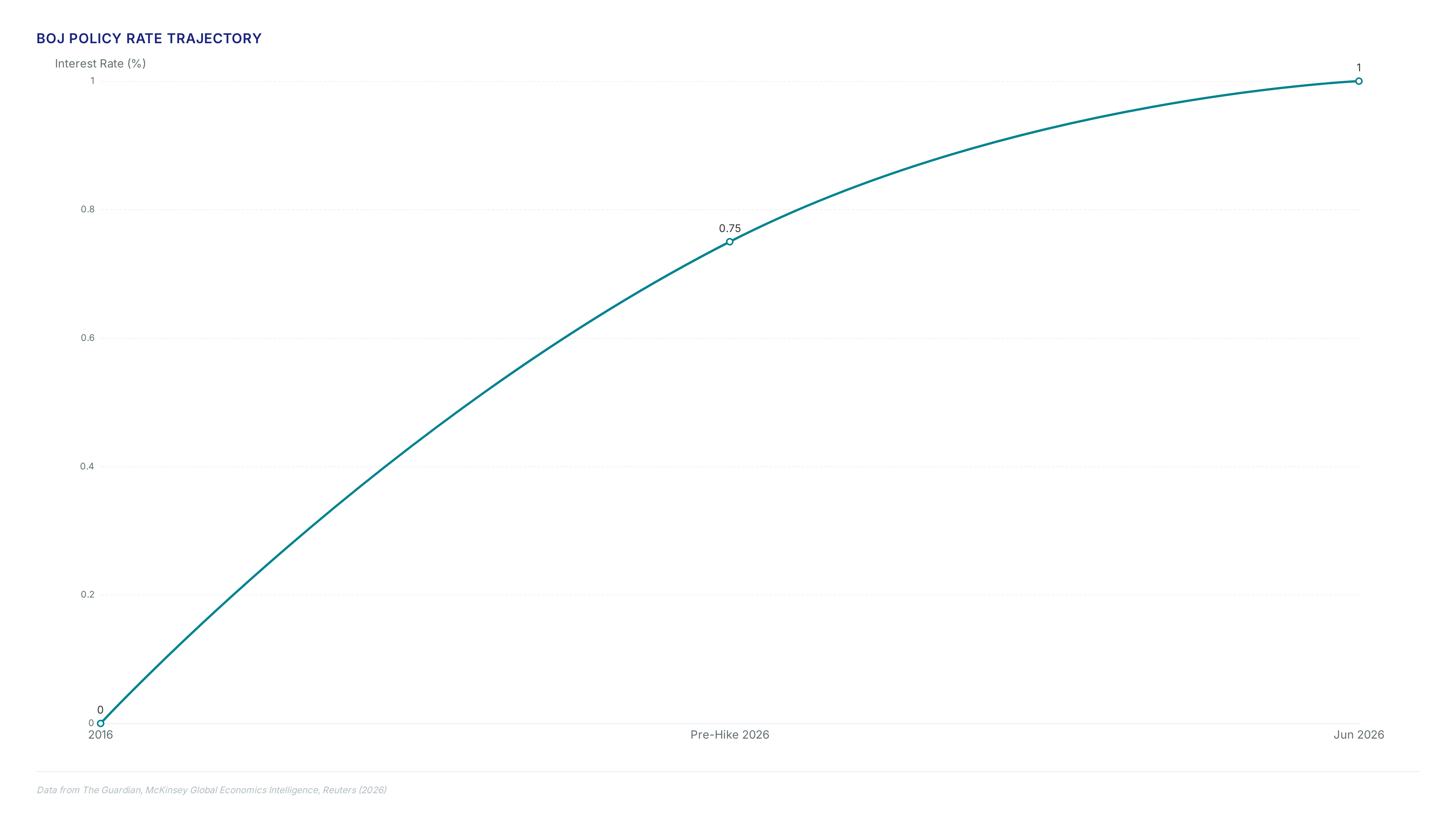
Japan targets an inflation platform driven by wage pressures, yet current data reflects cost-push dynamics from the Middle East conflict. This divergence complicates policy because rising energy costs linked to the conflict in the Middle East represent an external supply shock rather than sustainable domestic demand. Policymakers risk crushing the emerging wage-price flexible if they tighten monetary conditions against transient import spikes. The Bank of Japan faces a specific tension: normalizing policy while avoiding premature tightening that stifles growth. Commitment to further interest-rate hikes remains conditional on distinguishing these drivers, as hiking against supply constraints reduces output without fixing prices. Unlike core CPI, which includes volatile energy components, organic inflation stems from labor market tightness and consumption capacity.
Tightening policy for the wrong reasons threatens the economic recovery built since the pandemic. The central bank must isolate transient price surges from structural shifts to prevent unnecessary contraction. Misidentifying the source of inflation could reverse years of progress toward stable growth.
Applying the June 15, 2026 Rate Hike to Normalize Policy Amid External Shocks
The Bank of Japan raised its short-term policy rate by 25 basis points to 1.00% on June 15, 2026, reaching the highest level since 1995. This action directly addresses whether the central bank should tighten policy despite persistent external shocks from the Middle East. However, tightening based on cost-push inflation carries the risk of crushing the wage-price flexible that policymakers aim to cultivate. The BOJ must distinguish between temporary import spikes and sustainable demand growth before committing to further hikes. Market participants note that premature tightening could destabilize an economy still recovering from pandemic-era disruptions. The central bank remains committed to additional increases only if economic developments support a broader recovery. This cautious stance acknowledges that Japan's debt burden complicates aggressive monetary contraction. Operators should monitor upcoming data releases for signals on whether wage pressures are becoming the primary inflation driver. Such a shift would validate continued normalization efforts. Without this transition, policy errors could derail the emerging recovery.
Navigating Policy Traps When Temporary Energy Shocks Mask Sticky Domestic Trends
Misinterpreting transient energy import costs as permanent domestic demand forces the Bank of Japan into a policy trap. Ryozo Himino, Deputy Governor, faces a dilemma where core readings remain elevated due to external shocks while the underlying trimmed mean trends lower. Tightening monetary conditions against such supply-side spikes risks crushing the fragile wage-price flexible built since the pandemic. The danger lies in conflating cost-push inflation with sustainable growth. If policymakers raise rates to combat imported price surges, they effectively tighten financial conditions against a weakening domestic economy. This error could stall the very organic demand recovery the central bank seeks to cement. Expansionary fiscal measures complicate this navigation further. The Takaichi administration's plan for supplementary budgets targeting energy bills may inadvertently cement temporary import spikes into permanent price levels. Such actions change a transient balance-of-payments issue into a structural fiscal burden.
Goldman Sachs Research projects steady growth driven by domestic demand, yet this forecast assumes stable policy expectations. A misstep now reverses years of progress toward normalizing the yield curve. The cost of error is disproportionately high the Japan's debt burden. Operators must differentiate these signals because core inflation remains sticky by including import costs, whereas the trimmed mean isolates domestic momentum improved than broader indices calculated by Trading Economics. Misreading energy-driven noise as sustainable demand prompts premature tightening that crushes wage growth. Policy errors occur when central banks react to transient supply shocks rather than persistent domestic pressure.
- Forecasters must discount energy-driven volatility when modeling the neutral rate trajectory.
- Rate path assumptions require separating transient import costs from structural wage growth.
- Premature normalization based on headline data threatens the fragile economic platform.
- Operators using Coverage Pillars should configure alert thresholds that flag deviations between core-core and trimmed mean metrics.
Ignoring this split leads to erroneous predictions of rapid rate increases. The cost of misinterpretation is a policy error that stalls growth while inflation remains externally driven.
Risk of Misreading Middle East Cost-Push as Domestic Demand
The March 2 LNG supply halt creates a specific false positive where imported energy costs mimic organic wage-pressure flexible growth. Policymakers observing sticky headline prints risk conflating this external shock with the sustainable domestic demand required for tightening. The core-core inflation metric provides the necessary filter, yet the divergence between energy-heavy indices and underlying momentum creates a policy trap. Tightening against supply-side spikes risks crushing the fragile economic recovery before it solidifies. Operators must distinguish these signals because Japan's price structure relies heavily on volatile fuel imports rather than the sticky services sector seen elsewhere. External analysis confirms that global oil price trajectories will likely drive convergence toward targets by 2027 as shocks fade global oil prices. Relying on headline data alone ignores the reality that US-style median expectations do not anchor Japanese pricing power in the same manner US median inflation expectations Forecasts projecting steady expansion depend entirely on avoiding this misinterpretation of transient data domestic demand The Coverage Pillars framework recommends isolating non-energy components to prevent premature rate hikes that stifle growth. Failure to separate these drivers results in a contractionary error where the central bank fights a battle against geography rather than demand.
About
Sofia Mendes, Broker Reviews & Trading Education Editor at ForexCFD. Top, brings a unique perspective to the analysis of Japan's core-core inflation data. While her daily work focuses on vetting regulated brokers and developing risk-management curricula for retail traders, understanding macroeconomic drivers like the Bank of Japan's inflation metrics is necessary for her audience. The distinction between sticky core inflation and the more volatile core-core figure directly impacts currency volatility, particularly in USD/JPY pairs that her readers actively trade. Her role at ForexCFD. Top requires translating these fundamental shifts into actionable insights, ensuring traders understand the risks behind market moves. This approach aligns with the publication's commitment to vendor-neutral, factual analysis, helping traders navigate markets driven by diverging global inflation trends without hype or speculation.
Conclusion
Headline noise obscures underlying momentum, creating a specific operational fragility: policy lag becomes amplified when decision-makers react to transient energy shocks rather than structural wage dynamics. As global supply chains remain volatile, relying on aggregate indices invites a contractionary error where temporary import costs are mistaken for sustainable domestic overheating. This misalignment forces an unnecessary tightening cycle that stifles capital expenditure before organic recovery solidifies. The operational cost of this confusion is not merely theoretical; it manifests as stalled hiring and deferred infrastructure projects that weaken long-term productivity.
Policymakers must explicitly decouple energy-volatile components from their primary decision matrices by Q3 2026, prioritizing trimmed-mean metrics over headline prints during periods of geopolitical instability. This shift requires a disciplined refusal to hike rates based solely on imported inflation spikes unless core services show sustained acceleration above a moderate threshold. Start by auditing your current inflation forecasting models this week to ensure they weight non-energy core metrics at least significantly higher than headline figures during supply shocks. Only by filtering out these external variances can institutions avoid premature normalization that derails the fragile transition away from ultra-loose policy. The path forward demands distinguishing between geographic bad luck and genuine demand pressure.
Frequently Asked Questions
Core-core inflation excludes volatile energy costs that standard core CPI retains. Recent data shows core-core at 2.1% while standard core CPI remains sticky at 2.7%, revealing divergent underlying price trajectories.
Rising energy costs from Middle East conflicts drive standard core CPI higher while core-core falls. This external shock keeps the headline measure at 2.7% despite domestic trends dropping to 2.1%.
Tightening policy against energy shocks risks crushing the sustainable wage-price dynamic. Policymakers fear reacting to the 2.7% headline rate could stall recovery, ignoring the safer 2.1% core-core signal.
The trimmed mean estimate has fallen to 1.5%, supporting the view that underlying pressure is easing. This aligns with the core-core metric dropping to 2.1%, suggesting less jumpy domestic price trends.
Core-core inflation has steadily descended from a 3.6% peak last June to 2.1% currently. This consistent decline contrasts with sticky energy-driven metrics, indicating improved domestic price stability over time.