
Regulated forex broker: Why survival beats hype
Trading with a regulated forex broker isn't just about compliance; it's about survival. Agencies enforce strict rules like fund segregation because history proves that without them, broker insolvency turns client capital into unsecured debt.
The thesis is blunt: regulatory oversight is the only mechanism ensuring market integrity. Without these mandates, brokers operate without accountability, leaving investors exposed to significant financial loss. This guide details how regulatory oversight enforces ethical operations and why client funds must remain separate from company assets. We walk through specific verification steps, including checking registration with the Commodity Futures Trading Commission in the United States or the Financial Conduct Authority in the UK. We also analyze how U.S. Regulations cap forex use at 50:1 for substantial currency pairs to shield retail investors from excessive risk (forex use). These risk management measures are not optional; they are the bedrock of navigating the foreign exchange market securely.
The Critical Role of Regulatory Oversight in Forex Market Integrity
Defining Regulated Forex Brokers and Capital Standards
A regulated forex broker functions under authorized supervision to enforce strict capital and segregation rules. These entities must maintain adequate capitalization levels to absorb market shocks while keeping client assets entirely separate from corporate operational funds. This structural firewall prevents the misuse of trader deposits for business expenses or risky proprietary bets. Regulatory bodies mandate these segregated accounts at top-tier banks to ensure liquidity remains intact during insolvency events.
Compliance extends beyond balance sheets to include regular reporting and adherence to financial conduct standards. A regulatory agency actively monitors these filings to verify that the broker follows all financial laws and risk management protocols. This oversight creates a verifiable trail of accountability that unregulated entities simply ignore. The definition of legitimacy now hinges on this transparent disclosure of pricing and execution policies.
Strict supervision introduces a tangible cost for market participants despite the safety gains. Regulatory frameworks create distinct product offerings, such as specific use limits and hedging rules, particularly for U.S. Clients versus international traders. Traders gain fund protection through segregation and adherence to anti-money laundering (AML) and know your customer (KYC) requirements, though they may encounter different operational constraints compared to offshore alternatives.
Used metals and forex trading carry significant risk of loss. Clients should verify that their chosen firm holds active registration with recognized authorities before depositing capital.
Applying KYC and AML Protocols in Broker Operations
Know Your Customer (KYC) protocols mandate strict identity verification before any trading activity begins. Every regulated broker must implement technical checks for identity, address proof, and financial background to prevent illicit access. This process defines the AML obligation for brokers as a continuous duty to monitor transaction patterns rather than a one-time entry check.
Operational integrity relies on keeping client assets distinct from corporate capital. Brokers are legally required to maintain segregated accounts at top-tier banks, ensuring customer funds remain untouched during operational shortfalls. This separation acts as the primary defense against misappropriation when liquidity crises occur.
Regulatory scrutiny drives a tangible split in product availability across regions. Distinct use limits and hedging rules emerge for U.S. Clients versus international traders due to divergent compliance requirements. The constraint of this fragmentation is reduced uniformity, yet the benefit is enhanced local investor protection.
| Feature | Unregulated Entity | Regulated Broker |
|---|---|---|
| Fund Safety | Commingled assets | Segregated accounts |
| Transparency | Opaque pricing | Full disclosure mandated |
| Recourse | None | Legal arbitration available |
Traders must recognize that used metal positions carry inherent risks of rapid loss. The publisher advises verifying license numbers directly with authorities before depositing capital.
Use Caps and Fraud Protection Mechanisms
U.S. This hard ceiling defines the maximum exposure a trader can assume relative to their deposit. International entities may offer use up to 1:1,000, creating a stark divergence in product offerings for U.S. Clients versus global counterparts. In contrast, unregulated brokers may lack oversight, leaving traders vulnerable to fraudulent activities such as manipulation of prices, conflicts of interest, and misuse of client funds.
The primary goal of regulation is to shield traders from fraud and abuse inherent in opaque markets. Segregated funds ensure that client capital remains untouched by operator liabilities. Regulated brokers are required to provide full disclosure of significant details regarding pricing, spreads, commissions, and policies to ensure transparency. Traders seeking a regulated forex broker prioritize this structural safety and the security of their funds over the potential risks associated with unchecked gearing.
Regulated Versus Unregulated Brokers and the Safety of Client Funds
Fund Segregation Mechanics Under CFTC and FCA Rules
Regulated brokers must legally separate client deposits from corporate operating capital to prevent commingling. In the United States, firms register with the Commodity Futures Trading Commission (CFTC) and join the National Futures Association (NFA) to enforce this firewall. This structure ensures that if a broker faces insolvency, trader assets remain untouched by creditors seeking corporate repayment.
The mechanism relies on holding funds in distinct accounts at top-tier banks rather than internal ledgers. Technical compliance requires segregated accounts that physically isolate user liquidity from business expenses. Across the Atlantic, the Financial Conduct Authority (FCA) mandates similar separation, often bolstered by participation in compensation schemes. These safety nets provide a technical backstop for client funds should the broker fail financially.
| Feature | CFTC/NFA Requirement | FCA Standard |
|---|---|---|
| Fund Location | Separate Bank Accounts | Segregated Client Money Rules |
| Insolvency Result | Client Funds Protected | Compensation Scheme Access |
| Oversight Body | NFA / CFTC | FCA / UK Government |
A critical limitation arises when brokers operate across borders without matching licenses. A firm compliant with CFTC rules may not offer the same protection to clients under other jurisdictions if local mandates differ. The operational reality is that regulatory coverage varies significantly, leaving gaps for traders assuming global uniformity. Some entities hold multiple Tier-1 licenses to mitigate this, yet others restrict services entirely to avoid conflict. Traders must verify that their specific entity falls under the strictest the authority. Failure to confirm this distinction exposes capital to unnecessary legal risk during liquidation events.
Operational Impact of FIFO Rules and Hedging Restrictions
The First-In-First-Out (FIFO) rule technically prevents hedging by automatically offsetting the oldest open position when an opposing one is opened, effectively locking U.S. Traders into single-direction exposure per currency pair. This mechanism forces a netting logic where buying EURUSD while holding a short position immediately closes the initial trade rather than creating a hedge. Such a constraint fundamentally alters risk management, as traders cannot lock in profits on one leg while waiting for the other to resolve.
Regulatory scrutiny continues to drive a separation between markets, with distinct product offerings emerging for U.S. Clients versus international clients due to divergent compliance requirements. While global entities often permit simultaneous long and short positions, the FIFO Rule Implementation mandates a strict chronological closure that eliminates this flexibility. Use limits for minor currency pairs in the United States are restricted to 20:1 under current regulatory frameworks, compounding the strategic shift away from complex offsetting strategies common offshore.
| Feature | U.S. Regulated Environment | International/Offshore |
|---|---|---|
| Hedging | Prohibited via FIFO | Permitted |
| Position Closing | Oldest First | Any Order |
| Minor Pair Use | 20:1 Cap | Variable/Higher |
Should I choose a regulated broker? Yes, if fund safety and legal recourse outweigh the need for hedging flexibility.com/regulated-vs-unregulated-forex-brokers-what-you-need-to-know/) and fraud protection but lose the ability to manage positions dynamically during high volatility. Unregulated venues may offer freedom, yet they lack the structural firewalls that prevent capital misappropriation.
U.S. Use Caps Versus International Flexibility
The 50:1 use cap on substantial pairs defines the maximum risk exposure for U.S. Retail traders under CFTC rules. This strict ceiling contrasts sharply with international regulated brokers that may offer up to 1:1,000 use, creating a bifurcated global market structure. The mechanism limits buying power to prevent rapid account depletion during volatile swings, whereas offshore entities allow larger notional positions with minimal margin.
Clients versus international clients due to divergent compliance requirements. S. Traders sacrifice position sizing flexibility for enhanced fraud protection and capital certainty. Conversely, accessing higher use in offshore zones introduces counterparty risk that strict U.S. Oversight eliminates. Traders must weigh the liquidity advantage of global use against the security of domestic legal recourse.
Step-by-Step Verification of Broker Regulatory Status and Licenses
Defining Official Regulatory Databases and License Numbers
Validation starts by finding the specific license number on a corporate homepage. This alphanumeric string acts as the primary key for querying official registries maintained by bodies like the National Futures Association in the United States. Claims of oversight remain unverified assertions without this specific identifier. Traders must cross-reference the firm's name and registered address against the database entry to detect discrepancies that signal fraud.
- Navigate to the regulator's official website, such as the Financial Conduct Authority register for UK entities.
- Input the provided license code into the search field to retrieve the active status.
- Confirm that the authorized activities listed match the financial instruments offered to you.
Limitations emerge when firms claim dual regulation yet hold a license for a different business class, such as insurance rather than derivatives. Operators exploit this ambiguity to appear compliant while bypassing capital requirements. Skipping this step exposes traders to entities that do not legally segregate client funds. Unlike verified firms, these operators commingle assets, leaving traders with no legal recourse during insolvency. Transparent, searchable records matter more than opaque promises of safety.
Executing Step-by-Step Checks on NFA and FCA Registers
Locate the claimed license number on the broker's footer to begin the verification workflow. This alphanumeric string acts as the primary key for querying official registries like the National Futures Association database in the United States.
- Navigate to the regulator's official portal, such as the Financial Conduct Authority register for United Kingdom entities.
- Input the provided license ID into the search field and verify the entity name matches exactly.
- Confirm the status reads "Active" rather than "Authorized" with restrictions or "Ceased."
- Contact the regulatory authority directly if the database entry lacks clarity on specific permissions.
Marketing claims often diverge from actual regulatory scope, a tension sharpened post-Brexit. Implementation of Brexit altered the scope of FCA licenses, restricting their availability to UK traders rather than the broader EU market. A common failure mode occurs when traders assume a UK license grants global protection, only to find the entity operating under a weaker offshore arm for their specific region. Simple capitalization checks miss these jurisdictional gaps that leave funds exposed to local insolvency laws outside Tier-1 zones. The NFA membership requirement forces U.S. brokers to adhere to strict CFTC rules, yet international firms may hold a valid license while routing clients to unregulated subsidiaries. The specific entity accepting the deposit must hold the license, not the parent company. This granular check prevents the scenario where a regulated brand name masks an unregulated trading desk. Failure to validate the exact legal entity renders the segregated accounts promise legally unenforceable in the trader's jurisdiction.
Identifying False Regulatory Claims and Unscrupulous Brokers
False regulatory claims vanish when you cross-reference the broker's footer against the official NFA registry. Some unscrupulous brokers may falsely claim to be regulated, making due diligence necessary before opening an account or depositing funds. A missing entity name in the database confirms the license number is fabricated. Reputation risks often surface in trader discussions before regulators act. Check online forums and review websites for feedback from other traders regarding the broker's reputation and status. Consistent complaints about withdrawal delays serve as an early warning signal that license data cannot hide.
- Search the specific license ID on the regulator's portal to verify active status.
- Scan community threads for unresolved complaints about frozen assets or slippage.
- Reject any firm that refuses to clarify discrepancies found in public records.
Regulatory coverage varies notably; some brokers hold multiple Tier-1 licenses like Tickmill, while U.S.-only brokers are strictly bound by CFTC/NFA rules which prohibit certas like hedging. Aggressive marketing frequently outpaces actual compliance capacity. A broker might display a valid number but operate under a different legal entity that lacks oversight. This structural gap leaves capital exposed despite apparent authorization. Always confirm the legal entity name matches the license holder exactly.
Measurable Benefits of Regulated Trading Environments for Retail Investors
Defining Investor Protection via Segregated Accounts
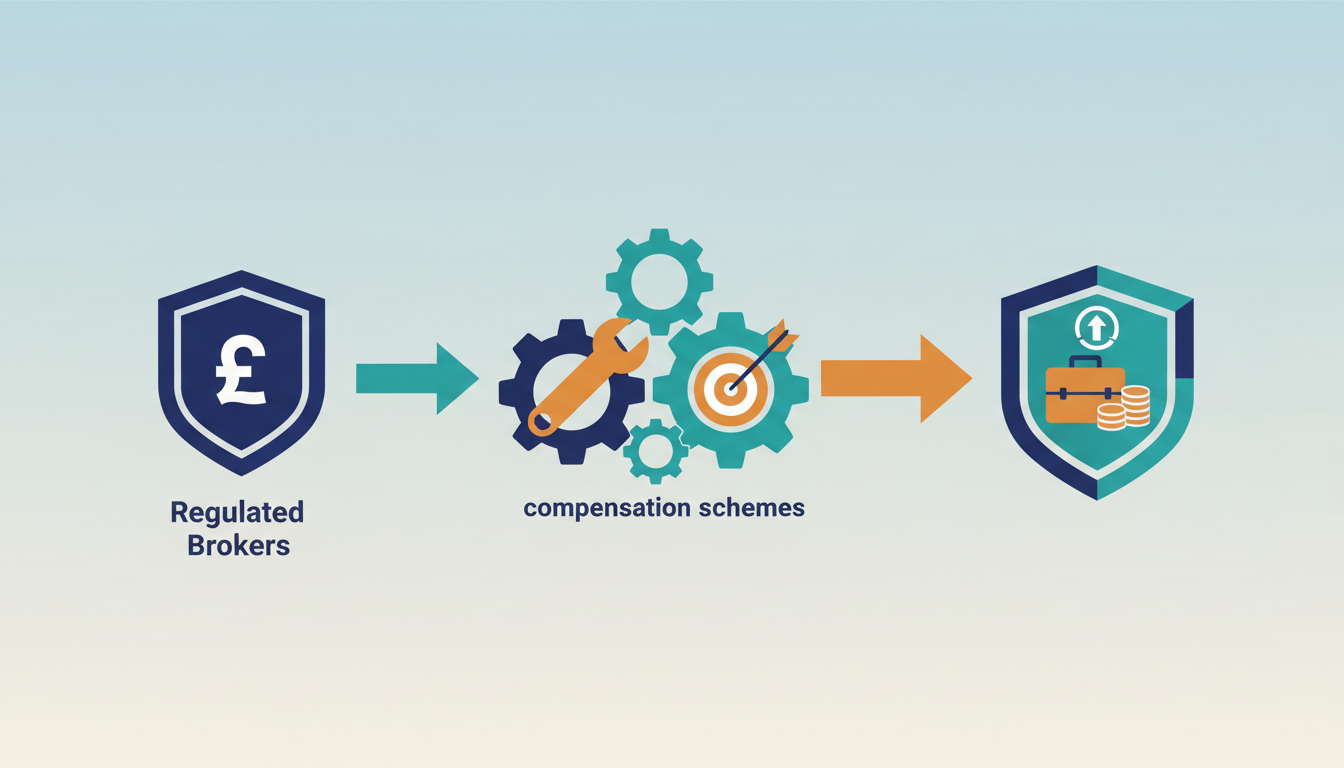
Client capital stays safe only when segregation of accounts physically separates trader funds from corporate operating cash. Regulated entities must park this money in segregated accounts held at top-tier banks, creating a structural firewall that isolates investor assets from company liquidity crises. If a broker goes insolvent, the legal ownership of these assets remains with the client rather than the firm, preventing automatic consumption of trader equity. Compensation schemes often add another layer of security, covering protected funds up to specific limits should a failure occur. This system stops balance sheet commingling, though it cannot erase market losses or guarantee profits during extreme volatility. Unregulated operators frequently blend these pools, letting operational shortfalls drain client deposits.
Traders verify this protection by confirming licenses with authorities like the CFTC or NFA. These agencies monitor activities and enforce strict financial conduct rules. Approval by a governmental authority subjects the firm to rigorous oversight, making such regulation vital for online financial trading.
Applying U.S. Use Caps to Limit Retail Risk
Strict use limits of 50:1 for substantial pairs and 20:1 for minors act as the primary mechanical barrier against rapid capital depletion for retail participants. The regulatory caps mandated by the CFTC and NFA force a mathematical discipline that prevents the excessive gearing common in offshore jurisdictions. International brokers may offer use up to 1:1,000, yet the U.S. Model prioritizes shielding retail investors from the volatility that triggers margin calls. Reduced buying power is the cost, but this constraint eliminates the specific risk profile where sudden market gaps wipe out accounts instantly.
Market separation grows as regulatory scrutiny drives distinct product offerings for U.S. Clients versus international ones due to divergent compliance needs. Some international regulated brokers offer spreads starting at 0.4 pips with use up to 1:1,000, while U.S. Regulated brokers adhere to stricter use constraints to ensure market integrity. Accepting lower use is the implicit cost of safety, providing assurance that the broker operates under guidelines designed to protect trader interests. A secure trading environment relies on this compliant framework to apply risk limits effectively.
Verifying Broker Compliance with Cyber Security Protocols
Verification of cyber security protocols begins by confirming the broker implements strict KYC Verification Protocols before allowing any activity. This technical gate requires identity proof and financial background checks to secure the platform against unauthorized entry. Every regulated broker must enforce these safeguards to maintain data protection standards necessary for safe forex trading, adhering to strict anti-money laundering (AML) and know your customer (KYC) requirements to help prevent financial crimes. Mandated full disclosure of significant details regarding pricing, spreads, commissions, and policies ensures transparency. Security-focused entities like Swissquote demand a minimum deposit, whereas cost-driven peers might prioritize different competitive advantages while maintaining compliance.
Regulatory guides for 2026 emphasize Tier-1 status as a primary metric for depth of security. A expanding emphasis on regulation counts and compensation scheme coverage shifts focus from just low costs to security depth. Traders must ensure their chosen firm adheres to these rigid data protection rules regardless of promised returns. Failure to validate these steps leaves capital exposed to entities ignoring fundamental risk management measures.
About
Aisha Rahman serves as the Gold & Commodities Analyst at ForexCFD.top, where her daily work demands rigorous vetting of trading platforms. This specific expertise makes her uniquely qualified to discuss regulated forex brokers, as her analysis of XAUUSD and oil markets relies entirely on the integrity of the underlying execution venues. At ForexCFD.top, an independent publication dedicated to vendor-neutral market news, Aisha evaluates brokers based on strict regulatory compliance to protect retail traders in emerging markets. Her professional experience reviewing Islamic finance compatibility and swap-free accounts requires deep knowledge of how regulators enforce client fund segregation and ethical conduct. Consequently, her insights into why traders must choose authorized brokers stem directly from her role ensuring that the platforms recommended to the site's global audience meet high standards of transparency and safety.
Conclusion
Scaling a trading operation reveals that low spreads offer no protection when liquidity vanishes during volatility events. The operational cost of ignoring Tier-1 status is not merely theoretical; it manifests as an inability to withdraw funds when market stress tests broker solvency. Traders must recognize that accepting lower use is the explicit price for a secure trading environment that honors compensation schemes. Prioritize brokers with reliable cyber security protocols and mandatory KYC Verification Protocols over those advertising minimal entry barriers. This shift ensures that data protection and capital safety remain intact regardless of market conditions.
You should immediately verify the specific compensation scheme coverage of your current broker before adding any new capital this week. Do not wait for a crisis to discover your firm lacks the regulatory depth required for 2026 standards. Focus on entities that enforce strict risk management measures rather than those chasing volume through loose compliance. By validating these structural safeguards now, you secure a foundation capable of withstanding future regulatory shifts. Start by reviewing the licensing details on your broker's footer to confirm their jurisdiction matches their marketing claims today.
Frequently Asked Questions
Your funds remain safe because rules require keeping client money separate from company assets. This segregation ensures liquidity remains intact during insolvency events, preventing your deposits from being used to pay business debts.
United States regulations limit forex leverage to 50:1 for major currency pairs to protect investors. This hard ceiling defines the maximum exposure you can assume relative to your deposited capital.
Yes, strict identity verification is mandatory before any trading activity can begin. Every regulated broker must implement technical checks for identity and address proof to prevent illicit access and financial crimes.
You should search the specific database of the regulatory authority the broker claims to represent. For example, United States traders can check the National Futures Association database to confirm active registration.
Regulated brokers provide access to legal arbitration channels that unregulated entities simply ignore. This oversight creates a verifiable trail of accountability, allowing you to seek formal resolution for disputes.
References