
Gold prices drop: Why margin calls beat war fears
Gold sits 7% below its starting line. S&P Global Ratings confirms inflation persists, proving a hard truth: geopolitical risk no longer guarantees safe-haven flows when interest rates climb to crush energy-driven price spikes.
The drop started with CME Group margin hikes. These forced liquidations in COMEX gold futures triggered a cascade. While the Strait of Hormuz disruption initially spiked demand, the resulting energy crisis pushed headline CPI to 4.2% in the U.S. and 4.8% across emerging markets. These numbers box central banks like the ECB into a corner. They must prioritize yield increases over liquidity, directly punishing non-yielding assets.
This analysis dissects the structural drivers of the 2026 gold correction. We examine how interest rate mechanics override traditional commodity hedges. The discussion compares gold performance against surging AI stocks and evaluates whether current inflation pressures allow for a genuine recovery. Market participants must understand that ending the Middle East conflict does not instantly reverse the economic aftereffects keeping policymakers reactive.
Defining the Structural Drivers of the 2026 Gold Correction
CME Margin Hikes as the Primary Catalyst for Gold's 7% Decline
Technical constraints often override fundamental narratives. In early February, the CME Group increased margin requirements for COMEX gold futures. Gold prices fell to per ounce following CME Group's announcement of margin hikes on February 2, 2026. This mechanical shift forced used participants to post more capital or face immediate liquidation, driving prices down sharply.
Rising margin requirements act as a forced seller mechanism regardless of fundamental value, creating a distinct disconnect between price and physical demand. Investors must distinguish between this technical deleveraging and a fundamental change in the long-term outlook for precious metals. ForexCFD reminds clients that used metals trading involves significant risk of loss.
Mechanics of Forced Liquidation When COMEX Margin Requirements Rise
Traders cannot hold positions without funding, leading to indiscriminate selling. This flexible explains why gold falls even when geopolitical risks remain elevated. The opportunity cost of holding non-yielding assets increases when capital is tied up in collateral rather than yield-bearing instruments.
Following the announcement of these hikes, spot gold fell as traders unwound positions rapidly. The market has since deteriorated further, with the metal now trading significantly below its starting level for the year. Rising margin requirements act as a forced seller mechanism regardless of fundamental value, creating a reflexive loop where volatility begets more volatility. During the February margin event, silver prices collapsed significantly to a fraction of their prior value per ounce, significantly underperforming the yellow metal as traders fled to cash.
*Used metals trading involves significant risk of loss and is not suitable for all investors.*
Analyzing the Mechanics of Interest Rates and Geopolitical Risk on Commodities
Opportunity Cost Mechanics When Yields Rise on Non-Yielding Gold
The 4.2% inflation rate in the U.S. forces a restrictive monetary stance that mechanically elevates the opportunity cost of holding bullion. Unlike bonds, deposits, or dividend-paying stocks, gold generates no cash flow to offset rising financing costs. Central banks hike rates to combat price pressures, and the opportunity cost of parking capital in a zero-yield asset jumps immediately.
This flexible creates a direct inverse relationship between real yields and precious metal valuations. Historical analysis indicates that a mere 1% increase in mining supply can trigger a 1.70% price decline, yet yield shocks often propagate quicker than physical supply adjustments. Market participants must monitor Federal Reserve rhetoric closely, as pricing models now anticipate multiple rate hikes rather than cuts. The limitation of this mechanic is its asymmetry; rising yields crush gold, while falling yields do not always guarantee a rally if liquidity remains tight. Investors tracking the impact of supply shocks should note that yield-driven corrections often precede physical market rebalancing.
*Islamic Account Note: Swaps on overnight positions may conflict with Sharia principles; consult your ForexCFD advisor regarding swap-free accounts.* *Risk Warning: Used commodities carry high risk; you can lose more than your initial deposit.*
Applying CPI Data to Forecast Fed Rate Cuts and Gold Trajectory
Sticky price growth keeps the Federal Reserve locked into restrictive policies that suppress non-yielding assets like bullion. Traders monitor CME Group's FedWatch to gauge probability shifts regarding future hikes rather than cuts. U.S. Headline CPI data drives these expectations. If inflation surprises to the upside, gold faces renewed selling pressure near the $4,000 psychological support. Conversely, a break above the resistance level could signal a temporary reprieve from bearish momentum.
Persistent inflation forces central banks to keep rates higher for longer, extending the pain for precious metals. Used trading on commodities carries significant risk, and losses can exceed initial deposits. ForexCFD.top provides these insights for educational purposes within regulatory frameworks. Islamic account holders should verify swap-free status for overnight positions, as standard contracts may involve impermissible interest elements. Always assess your risk tolerance before engaging with volatile assets like XAUUSD.
Lingering Inflation Risks from Strait of Hormuz Disruption
Gold (XAUUSD) holds near record highs because reopening the Strait of Hormuz does not instantly erase embedded inflation. Oil prices fall and gasoline costs decline, yet the economic transmission of energy shocks persists for months. This lag prevents immediate safe-haven demand from reversing, even as active conflict de-escalates between the U.S. Israel, and Iran.
Current price durability appears fragile against persistent yield pressure. Opportunity cost rises quicker than supply chains normalize. Financial markets price in forward-looking data; by the time heads of state declare victory, algorithms have already discounted the peace. Disrupted shipping lanes keep real yields elevated, favoring AI equities over non-yielding metals. Investors should monitor micro-gold-silver-and-copper-monthly-update for physical tightness signals that technicals miss.
*Trading used commodities involves significant risk of loss. ForexCFD is an introducing broker; clients trade with regulated counterparties. Islamic accounts available upon request; swap-free status depends on the underlying liquidity provider.*
Comparing Gold Against AI Stocks and Alternative Safe-Haven Assets
Capital Rotation Dynamics Between AI Equities and Precious Metals
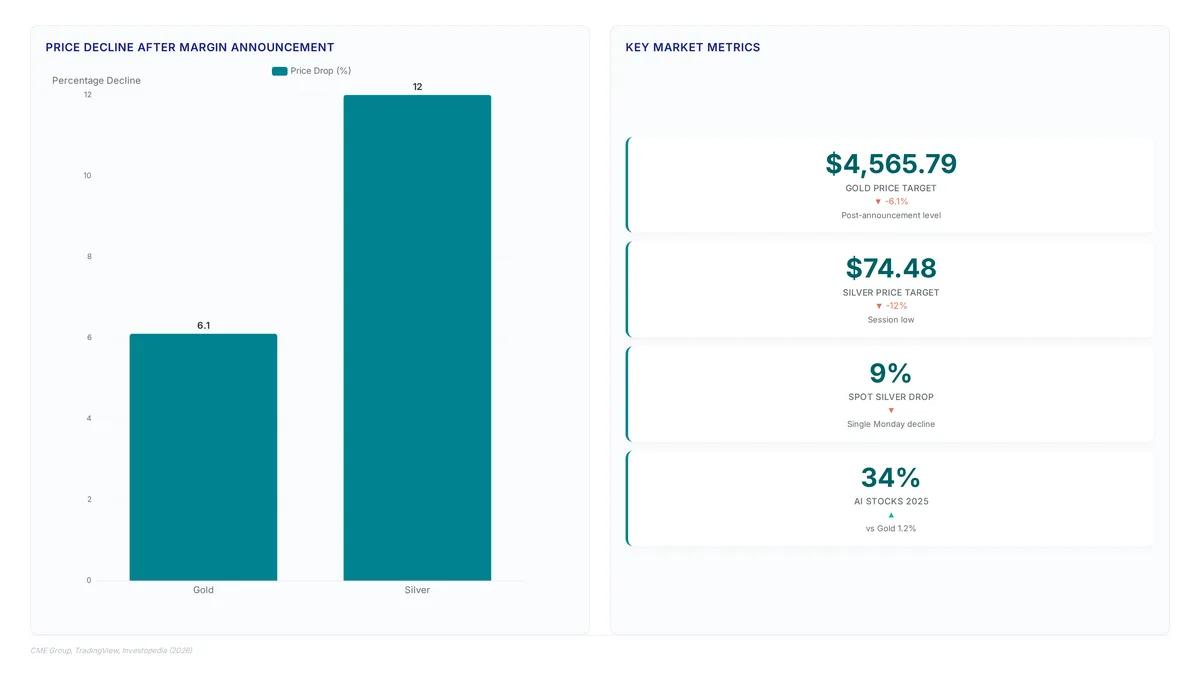
Liquidity flows aggressively toward high-growth AI equities as investors chase yield in a rising rate environment. Capital migrates away from safe-haven assets like gold despite lingering geopolitical tensions in the Middle East. Markets price in rate expectations that elevate the opportunity cost of holding bullion while technology sectors absorb available risk capital.
| Dimension | Gold (XAUUSD) | AI Equities |
|---|---|---|
| Yield Profile | Zero income generation | High growth potential |
| Rate Sensitivity | Negatively impacted by hikes | Tolerant of volatility |
| Capital Flow | Outflow due to margin calls | Inflow from risk appetite |
Margin requirements for precious metals contracts rose recently at the CME Group. This move forced used liquidation and precipitated a sharp fall in prices. Traders now face higher capital thresholds just as bond yields remain stubborn. The metal loses appeal relative to income-generating tech stocks when real rates rise. Gold cannot compete on yield. Geopolitical fear alone cannot sustain prices when the Federal Reserve maintains a hawkish posture. Risks remain acute during these rotations because margin requirements increase the cost of holding positions. Oil prices fall now that the Strait of Hormuz has partially reopened. Gold has not soared. Persistent economic aftereffects block the path. Headline inflation declines slowly. Real yields stay elevated. Bullish momentum hits a cap. Historical data indicates that when inflation caused investors to reprice long-term Fed rates notably, gold prices were pushed down even while inflation was running hot. Some analysts fear this pattern is repeating. Sticky prices force central banks to maintain restrictive policies. This flexible creates a difficult environment for gold performance during inflation versus deflation.
Capital rotation into AI equities further reduces liquidity for precious metals while policymakers await concrete data. Geopolitical de-escalation alone cannot trigger a rally if monetary policy remains tight. Bulls face this structural limitation.
*Trading used metals involves concrete risk.*
Gold Price Reaction to Geopolitical De-escalation Versus AI Stock Momentum
Prices remain trapped below starting levels despite the partial Strait of Hormuz reopening. Lingering inflation prevents immediate central bank pivots. Oil costs drop. The economic aftereffects of the disruption keep real yields elevated. Non-yielding bullion misses its traditional post-crisis surge.
Capital increasingly favors AI equities over precious metals as investors price in rate expectations. Geopolitical de-escalation reduces fear premiums. Persistent inflation maintains high opportunity costs for holding gold. Previous rallies occurred when rate expectations collapsed toward zero. Current conditions favor income-generating assets.
| Asset Class | Primary Driver | Current Momentum |
|---|---|---|
| Gold (XAUUSD) | Real yields & Fear | Negative due to yield drag |
| AI Stocks | Growth & Yield | Positive despite volatility |
| Silver | Industrial demand | Down slightly month-over-month |
Market forward-looking mechanisms discount future inflation relief rather than celebrating present peace. This divergence exists. Ending the conflict alone fails to trigger a 'golden spring' because Federal Reserve policy remains reactive to sticky price data. Another headwind for gold is the strong rally in AI stocks, which may keep money flowing into equities instead of precious metals. Liquidity chases yield until rate cut narratives dominate. Gold remains vulnerable to further consolidation.
Gold trading involves documented risk due to use and may not be suitable for all investors. This analysis is for educational purposes only and does not constitute financial advice.
Applying Market Trends to Determine the Best Time to Buy Gold Post-Conflict
Defining Post-Conflict Gold Entry Points Amid Lingering Inflation
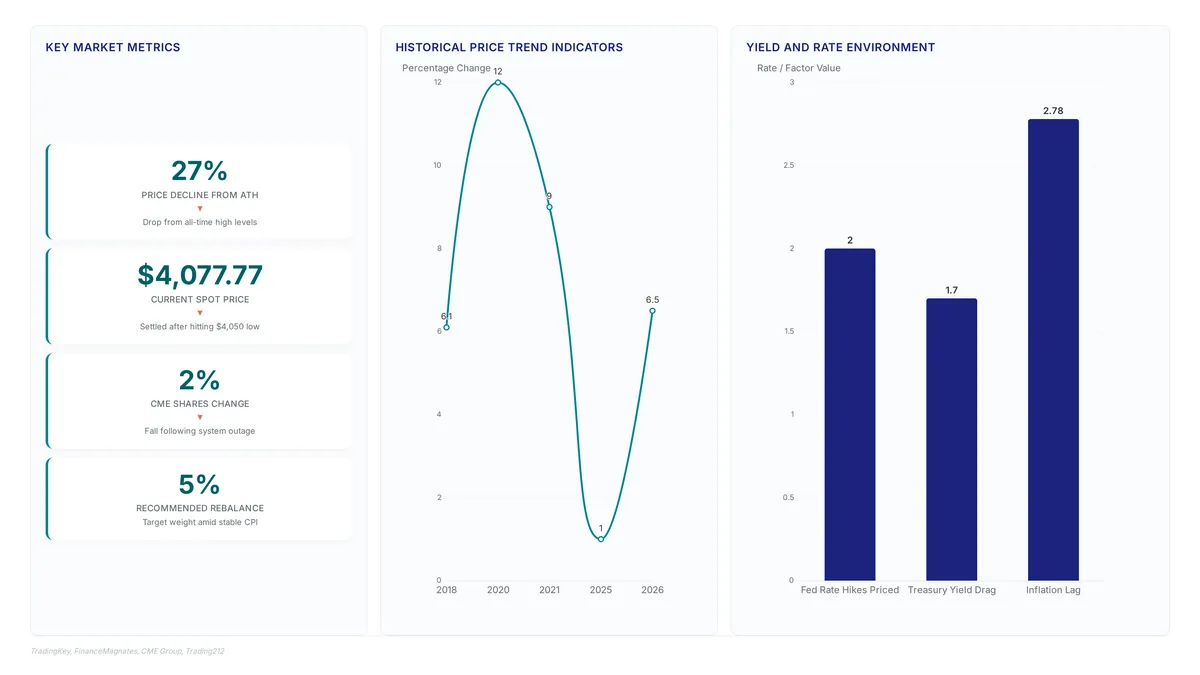
A valid entry point for XAUUSD emerges only when market pricing acknowledges that inflation pressures do not disappear overnight; the process takes months. The definition requires distinguishing between the cessation of active conflict and the economic lag where U.S. Treasury yields remain elevated.
Traders often mistake de-escalation news for an immediate buy signal, yet the Federal Reserve may maintain restrictive policy until core metrics cool. This creates a false dawn where geopolitical risk fades but opportunity cost remains prohibitive for non-yielding assets. Analysts noted on June 24, 2026, that gold moved from being "loved" to "hated" by market participants, marking a significant sentiment shift that often precedes a true bottom (sentiment). Investors must wait for the Middle East tension premium to fully exit the price before factoring in real yield compression. *Gold trading involves measurable risk; used positions can result in losses exceeding your initial deposit.*
Applying Fed Rate Hike Expectations to Gold Portfolio Allocation
Traders should delay XAUUSD accumulation while markets price two potential rate hikes into the yield curve. This specific pricing action indicates that opportunity costs for holding non-yielding bullion remain elevated despite geopolitical de-escalation. Investors analyzing gold price trends must recognize that U.S. Treasury yields have been slow to decline, creating a tangible drag on spot prices even as conflict risks fade.
The mechanism operates through real yield expansion; when nominal rates rise quicker than inflation expectations, the implicit cost of holding gold increases. Current market positioning reflects this tension, with traders increasing bets on US rate hikes as gold prices extend declines to trade around $4,020 during early Asian sessions.
Note that used metals trading involves notable risk of loss and may not be suitable for all investors. Clients using Islamic accounts should verify swap-free status on overnight positions, as standard rollover fees may conflict with Sharia compliance requirements.
Application: Risk of Capital Rotation from Precious Metals to AI Equities
Capital rotation into high-growth technology sectors creates a distinct liquidity drain on XAUUSD even as geopolitical tensions ease. The strong rally in AI stocks acts as a powerful magnet, keeping money flowing into equities instead of precious metals during periods of uncertainty. Investors asking should I invest in gold now must recognize that without a distinct lack of alternative high-yield opportunities, bullion struggles to attract the volume necessary to reverse recent losses.
This flexible persists because financial markets are forward-looking; positive news regarding easing inflationary pressures may already be priced into gold by the time central banks soften rhetoric. Traders monitoring the CME Group Volatility Index can gauge implied volatility, yet this metric alone cannot offset the sheer opportunity cost presented by booming tech valuations. The risk analysis suggests that the best time to buy gold post-conflict is not merely when wars end, but when equity momentum visibly stalls. Until the Federal Reserve pivots or tech rallies fade, the opportunity cost of holding non-yielding assets remains a structural headwind. ForexCFD.top advises monitoring equity market momentum as a contrarian indicator for gold liquidity rather than relying solely on conflict de-escalation signals.
About
Aisha Rahman serves as the Gold & Commodities Analyst at ForexCFD.top, where she leads the publication's flagship XAUUSD coverage. In her daily work, Aisha analyzes how macro drivers like CME margin changes and geopolitical tensions in the Middle East directly impact price action, mirroring the specific forces outlined in this article. Based in the Gulf, she brings a critical regional perspective to global market volatility, particularly regarding how conflict near the Strait of Hormuz influences trader sentiment. At ForexCFD.top, an independent news source dedicated to retail traders, Aisha applies her rigorous framework connecting real yields and risk events to actionable market insights. Her analysis ensures that complex movements in the gold market are explained with the clarity and factual depth required by traders navigating uncertain economic landscapes.
Conclusion
Gold faces a structural liquidity drain as capital rotates toward high-growth technology sectors, creating an environment where traditional safe-haven demand cannot offset the opportunity cost of holding non-yielding assets. While geopolitical tensions usually support bullion, the current market flexible prioritizes equity momentum, forcing gold to confront selling pressure near the $4,000 psychological support level. This divergence means that even positive inflation data may fail to trigger a sustained rally if real yields remain elevated and investors continue pricing in future rate hikes. The risk is not merely a temporary dip but a prolonged period of underperformance relative to risk assets until the Federal Reserve clearly pivots or tech valuations stagnate.
Traders should delay aggressive long positions until equity momentum visibly stalls or real yields compress significantly. Do not attempt to catch a falling knife based solely on conflict de-escalation signals. Instead, start this week by correlating XAUUSD price action with real yield movements to identify if the inverse relationship is strengthening. Only when technology sector inflows decelerate should you consider scaling into a position, aiming for a rebalanced portfolio weight rather than a speculative surge.
Frequently Asked Questions
Margin hikes forced immediate liquidations, dropping gold a portion This mechanical selling creates a disconnect between price and physical demand, forcing leveraged traders to unwind positions rapidly regardless of underlying geopolitical fundamentals or long-term value.
Silver collapsed a portion as traders fled to cash during liquidity constraints. This underperformance highlights how industrial metals face amplified selling pressure compared to gold when margin requirements rise and forced deleveraging occurs across the broader precious metals complex.
A 4.2% inflation rate forces restrictive monetary stances that increase opportunity costs for non-yielding assets. Central banks prioritize yield increases over liquidity, directly punishing bullion holders who receive no cash flow to offset rising financing costs in this high-rate environment.
Historical data shows a 1% mining supply increase can trigger a 1.70% price decline. However, yield shocks often propagate faster than physical supply adjustments, meaning interest rate changes currently impact valuations more severely than gradual shifts in underground production volumes.
Ending conflicts does not instantly reverse economic aftereffects keeping policymakers reactive to inflation. Markets anticipate rate hikes rather than cuts for months, suggesting that geopolitical calm alone cannot overcome the structural headwinds facing non-yielding assets today.
References