
Inflation data: Why PCE beats CPI for Fed calls
J. P. Morgan Global Research assigns a 35% recession probability to 2026. In this climate, the upcoming US PCE inflation print is not just another data point; it is the definitive gauge for Federal Reserve policy. It overshadows noisier metrics like CPI that frequently mislead retail investors.
Divergent global monetary policies are fracturing the economic environment. Traditional hedges may fail here. We must first dissect the mechanical differences between PCE and CPI calculations to understand why central bankers ignore the latter during rate deliberations. Next, we analyze how PMI indicators and minutes from the Riksbank and Banxico signal a coordinated, albeit uneven, global slowdown.
Finally, the analysis outlines strategic portfolio adjustments necessary when consumption downshifts in developed markets, as predicted for late 2025. While China's PBoC maintains benchmark lending rates at 3.00% despite mixed retail data, Western central banks face a narrower path. Misreading core inflation could trigger the very downturn J. P. Morgan warns against. Understanding these mechanics is necessary for capital preservation in a year where error margins have vanished.
The Distinction Between PCE and CPI Inflation Metrics
Core PCE vs CPI Methodological Divergence
Formulas drive outcomes. While Core inflation removes volatile food and energy costs to show underlying trends, PCE and CPI assign different weights to components. The Consumer Price Index locks its basket using household surveys, causing shelter costs to dominate the calculation with a roughly one-third share. Conversely, the Personal Consumption Expenditures index employs chain-weighting to adapt to consumer substitution, assigning notably lower weight to housing while increasing exposure to healthcare services. Identical raw price data produces divergent headline outputs depending on the metric selected. In April, Canadian headline inflation printed 0.4% M/M and 2.8% Y/Y, while core inflation was 0.2% M/M and 2.1% Y/Y.
Fed Policy Shifts Driven by Core PCE Forecasts
The Federal Reserve System prioritizes Core PCE because chain-weighting better captures consumer substitution away from expensive goods. May data hints at a 3.4% Y/Y rate. Forecasters expect the monthly print to reach 0.35%, pushing the six-month annualized rate to 4.1%. This acceleration explains why recent inflation data missed expectations on the downside for growth but upside for price persistence. Consequently, the dot plots displayed a distinct hawkish shift, moving the median projection from one rate cut to one hike. This reversal occurred during the FOMC meeting where participants submitted updated economic projections.
CPI vs PCE: Energy Price Sensitivity Analysis
CPI uses a fixed basket; PCE applies chain-weighting to capture substitution during oil shocks. This structural difference dictates sensitivity. Crude prices fell by more than USD 17/bbl in May, creating immediate divergence between the two indices. The Consumer Price Index retains higher exposure to gasoline costs, whereas the Personal Consumption Expenditures metric dampens this volatility through formulaic adjustments. Identical pump prices generate larger headline swings in CPI reports than in PCE releases. While energy weakens in June following the US-Iran agreement, supply chain frictions persist elsewhere. Strategists face a blind spot: PCE smooths energy spikes that actually impact consumer sentiment and discretionary spending power. Ignoring the raw CPI energy shock while watching the smoother PCE core creates a liquidity planning error.
Mechanics of Central Bank Rate Decisions and PMI Indicators
Decoding BoJ Bond Tapering and LPR Stability Mechanisms
The Bank of Japan raised the policy rate by 25bps to 1.00%, marking its highest level in 31 years while pausing bond purchase reductions at JPY 2tln. This dual approach uses quantity controls via bond purchases to manage yield curve steepness alongside the new price signal. Operators must distinguish between the explicit rate hike and the implicit liquidity cap, as the pause prevents abrupt market dislocation. However, maintaining flat purchase volumes while raising rates creates a tension in balance sheet normalization that limits further tightening speed. The pause signals a preference for gradualism over aggressive quantitative contraction, forcing markets to price in slower normalization than a pure rate hike suggests.
Liquidity injections now exceed CNY 400bln daily, a sharp rise from prior sub-CNY 1bln operations documented in regional strategy analyses. This mechanism decouples short-term interbank funding costs from the benchmark lending rate, allowing targeted support without altering mortgage pricing. Persistent reliance on overnight repos rather than rate cuts may fracture transmission efficiency if bank risk appetite remains.
| Mechanism | Primary Tool | Transmission Target |
|---|---|---|
| BoJ | Rate hike + Purchase pause | Yield curve control |
| PBoC | Repo volume surge | Interbank liquidity |
Future hikes depend on whether wage growth sustains inflation above target, a condition not yet fully met.
Interpreting Flash PMI Price Pressures as Inflation Signals
Flash PMI commentary signaling "most worrying" price levels in three years indicates imminent 4% inflation within the Eurozone. This metric functions as a leading indicator because purchasing managers report input costs before they appear in consumer baskets. Input cost inflation is driven globally by surging raw material prices, creating immediate pressure on downstream goods. However, emerging market central banks face a different reality. The divergence in policy response stems from differing inflation tolerances and currency stability risks.
| Indicator | Signal Type | Inflation Horizon |
|---|---|---|
| Flash PMI | Leading | 1, 3 months |
| PPI | Coincident | 3, 6 months |
| CPI | Lagging | Current state |
Operators must distinguish between transient energy spikes and broad-based input cost persistence. This specific supply-chain friction does not automatically trigger broad monetary tightening but alters capital expenditure timelines. The limitation of Flash PMI data lies in its survey nature; it measures sentiment and intended pricing rather than executed transactions. Consequently, a sudden geopolitical de-escalation can reverse these expectations quicker than physical inventory cycles allow. Strategic portfolio adjustments should weight price pressure signals against actual tariff implementation schedules rather than headline sentiment alone.
This policy stasis contrasts sharply with Governor Pan's pledge to add overnight reverse repo instruments to refine interest rate transmission efficiency. Such divergence creates a fragile equilibrium where emerging markets face tighter constraints than advanced economies, forcing more aggressive local tightening cycles. Hardware procurement costs rise directly from Section 232 tariffs raised on imported steel and aluminum, squeezing infrastructure capital expenditure budgets.
| Central Bank | Stance | Primary Tool | Risk Factor |
|---|---|---|---|
| RBA | Hold | Cash Rate | Supply inflation |
| PBoC | Liquidity | Reverse Repos | Transmission lag |
| Fed | Hawkish | Rate Hikes | EM spillover |
Reading central bank minutes requires isolating language on transmission mechanisms rather than just rate targets. The Federal Reserve System notes that emerging market inflation forecasts rose significantly more than advanced economy projections, signaling distinct pressure points. Operators must differentiate between benchmark rate stability and actual liquidity conditions, as overnight operations now exceed previous baselines by wide margins. A failure to distinguish these signals leads to mispriced duration risk in cross-border portfolios. The cost of ignoring this split is measurable in widened credit spreads for import-dependent sectors.
Strategic Portfolio Adjustments Based on Divergent Global Policies
Defining Divergent Policy Signals Across Fed, BoC, and RBA Mandates
The Fed maintained its benchmark rate but removed forward guidance to stress a commitment to price stability. This rhetorical shift signals a data-dependent stance where market participants must now parse every statement for clues on future moves rather than relying on explicit projections. In contrast, BoC money market pricing reflects a dovish bias, anticipating slight easing by year-end as energy volatility subsides. The divergence sharpens when observing that Canadian inflation metrics are expected to ease toward target levels, whereas US core measures remain sticky above comfort zones.
Tracking rate hike probabilities requires monitoring specific labor and price data releases rather than broad central bank commentary. For instance, the Federal Reserve System now emphasizes real-time employment figures alongside inflation prints to gauge restriction levels. This differs from the RBA, which holds rates steady despite global supply shocks driving input costs higher. The limitation of this fragmented approach is that cross-border capital flows may become erratic as yield spreads widen unpredictably between North American and Australian debt issuers. Operators must therefore hedge against sudden liquidity shifts caused by these asynchronous policy cycles.
| Central Bank | Primary Focus | Market Expectation |
|---|---|---|
| Fed | Core PCE Stability | Hawkish Hold |
| BoC | Energy Volatility | Dovish Easing |
| RBA | Employment Data | Unchanged Rate |
Meanwhile, the joint meeting outcomes confirm that advanced economies are no longer moving in lockstep, creating distinct regional risk profiles.
Executing the Weekly Economic Calendar for Cross-Regional Signal Validation
Parse the Thursday US PCE print against Friday's Tokyo CPI to validate global inflation persistence before adjusting duration. This cross-regional check prevents overreacting to isolated data noise that fails to manifest in Asian consumer prices.
- Map the economic calendar to identify overlapping release windows for US PCE and German Ifo indices.
- Calculate the divergence between core prints and emerging market trajectories, noting that EM inflation forecasts recently shifted to 5.5% emerging markets.
- Validate energy pass-through by checking if Tokyo CPI rises match the expected upward pressure from a weaker JPY.
- Execute portfolio rebalancing only if both regions confirm sticky price trends rather than transient spikes.
| Indicator | Region | Validation Signal |
|---|---|---|
| Core PCE | US | Primary rate driver |
| Tokyo CPI | Japan | Energy pass-through check |
| Ifo Business Climate | Germany | Demand-side confirmation |
The limitation of this framework arises when geopolitical events dampen the significance of standard reports, such as developments near the Strait of Hormuz obscuring true price signals. Fee structures for cross-shipped volume will increase on April 1, 2026, affecting costs for high-frequency traders analyzing these prints fee on bundles. Ignoring the Tokyo validation step risks misinterpreting US-specific energy volatility as a broad-based inflationary surge requiring aggressive policy response.
Checklist for Updating Rate Hike Probability Models Using Dot Plot Shifts
Align probability matrices immediately when the median FFR projection shifts from cuts to hikes based on updated SEP data.
- Extract the revised median federal funds rate and cross-reference it against recession probability models to stress-test duration assumptions.
- Recalibrate energy weightings in core inflation forecasts, noting that crude volatility often decouples from final consumer prints during geopolitical accords.
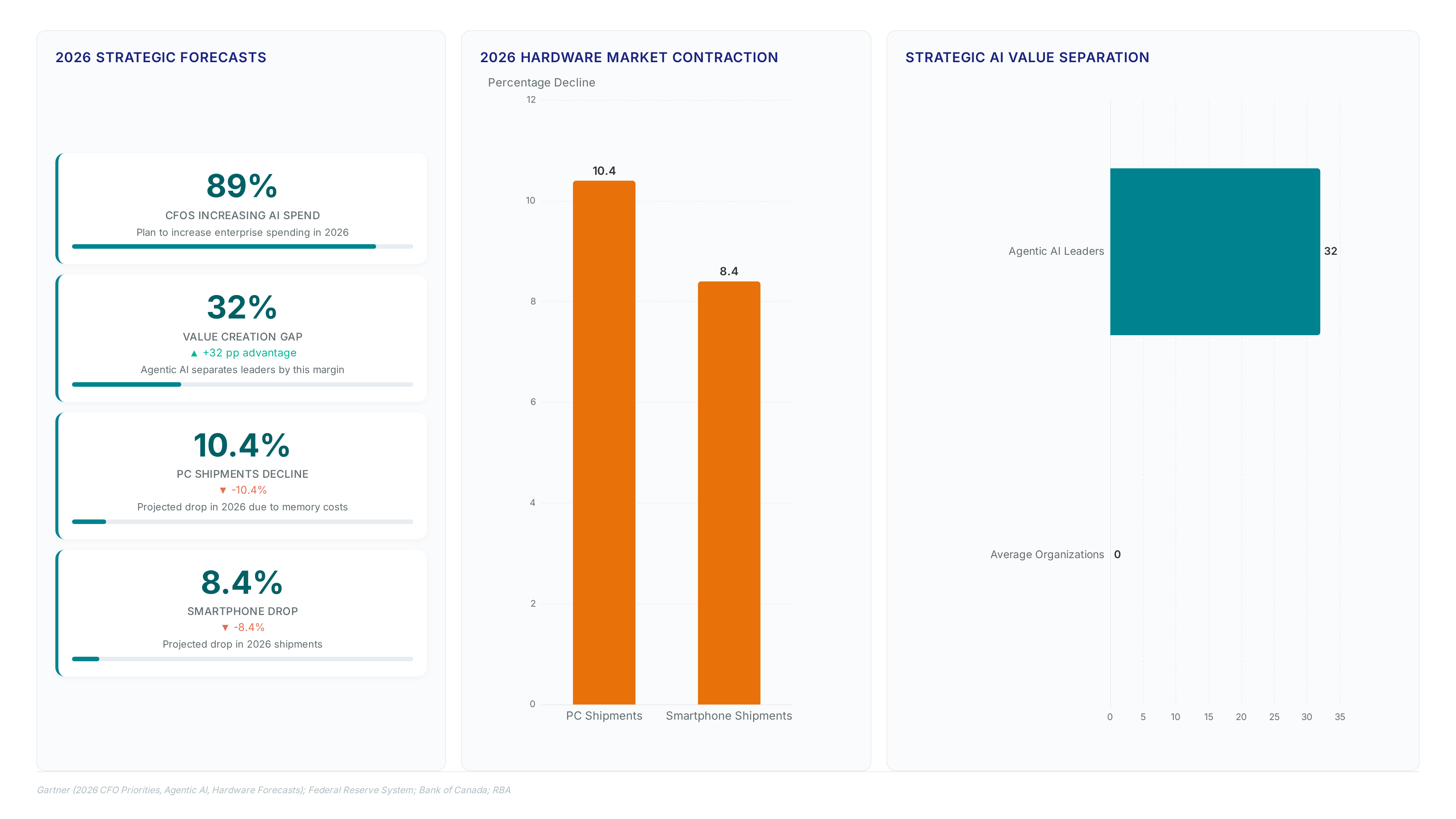
- Adjust model inputs for enterprise spending shifts, as CFO AI allocation trends now signal structural cost inflation unrelated to labor tightness.
The primary limitation involves lagging employment data, which frequently contradicts real-time inflation signals during transition quarters. Operators must prioritize edge computing deployment metrics over traditional surveys to capture immediate cost pressures. This approach reveals hidden input surges before they manifest in official PPI releases. The implication for traders is a narrower window for reaction; waiting for monthly aggregates guarantees entry after the curve steepens. Coverage Pillars recommends integrating these high-frequency indicators to avoid being trapped by backward-looking dot plot revisions. Failure to adjust for these leading variables results in mispriced interest rate risk across fixed income portfolios.
Investors should rebalance duration exposure immediately as Westpac forecasts a rebound to 45k jobs in Australia, pushing the unemployment rate down to 4.4%. This labor tightening contradicts the softening energy environment, requiring a shift from broad bond indices to active duration management based on specific data prints. Portfolio managers must prioritize the economic calendar to anticipate volatility around US PCE releases, where core prints continue to drive rate hike probabilities. The divergence between Australian employment strength and US price stability mandates creates a tactical window for rotating capital into sectors less sensitive to prolonged high rates.
Execution requires more than static allocation; it demands flexible risk controls. The cost of ignoring these signals is measurable capital erosion during rapid repricing events. Coverage Pillars recommend stress-testing allocations against simultaneous supply and policy shocks. This calculation reveals whether the median FFR projection will tilt toward additional hikes or stabilize near current levels. Legacy payment infrastructures impose a hidden tax that erodes margins during high-rate environments, accelerating the transmission of policy tightness to real economic activity. The limitation lies in data latency; monthly releases lag real-time price pressures, forcing reliance on Deloitte's growth forecasts to bridge the informational gap before official prints arrive. Consequently, network capacity planning must align with liquidity conditions that tighten disproportionately when the six-month annualized metric exceeds peer expectations.
- Retrieve the latest core PCE month-over-month print from official Bureau of Economic Analysis releases.
- Annualize the figure using a six-month window to smooth volatility inherent in single-month data.
- Adjust portfolio duration based on whether the calculated rate supports a hike scenario or a prolonged pause.
Coverage Pillars recommends embedding this logic into automated trading algorithms to mitigate latency risks during high-volatility windows.
About
Sofia Mendes, Broker Reviews & Trading Education Editor at ForexCFD. Top, brings a distinct risk-management perspective to the analysis of US PCE inflation data. While her daily work focuses on vetting regulated brokers and developing trading education materials, understanding core macroeconomic drivers like the PCE index is necessary for evaluating market volatility and broker execution quality during high-impact news events. As the Federal Reserve weighs this key inflation metric against interest rate decisions, retail traders face heightened slippage risks and spread widening. Mendes connects these macroeconomic shifts to practical trading realities, explaining how inflation surprises can alter currency pairs and gold prices. Her expertise ensures that the discussion moves beyond raw data to address how traders should adjust their strategies and broker selection criteria when navigating the turbulence caused by key releases like the PCE report.
Conclusion
Raw material surges and sticky core prints reveal a critical fragility: tariff-induced input costs are now decoupling from labor dynamics, creating a false signal for rate cuts. As Section 232 measures push industrial metals higher, the lagging employment data currently masking this pressure will eventually force a recalibration of duration assumptions. Operators relying solely on monthly aggregates risk mispricing fixed income exposure just as consumption downshifts in late 2025. The window to adjust before the yield curve steepens further is narrowing, specifically as enterprise AI spending masks underlying structural inflation unrelated to wage growth.
Traders must immediately decouple energy volatility from broad inflation forecasts to avoid reacting to transient geopolitical noise rather than structural shifts. Start by auditing your duration hedges against high-frequency edge computing metrics this week, specifically looking for input cost surges in industrial supply chains that precede official PPI releases. Do not wait for the next Federal Reserve dot plot revision, as these backward-looking indicators will likely lag the real-time cost pressures now visible in sector-specific data. Prioritizing these leading variables allows for a proactive stance against mispriced interest rate risk before the probability of a 2026 recession materially impacts portfolio liquidity.
Frequently Asked Questions
Shelter costs dominate the CPI calculation with a roughly 33% share. Conversely, the PCE index assigns notably lower weight to housing while increasing exposure to healthcare services through chain-weighting methods.
Copper and brass mill shapes climbed 15.7% in price due to Section 232 tariffs raised to 50% on imported steel and aluminum. These industrial price shocks transmit faster to the PCE index.
Forecasters expect the monthly print to reach 0.35%, pushing the six-month annualized rate to 4.1%. This acceleration explains why recent data missed expectations on the downside for growth.
While headline inflation printed 2.8% year-over-year, core inflation was 2.1% year-over-year. These gaps matter because infrastructure cost inflation driven by tariffs alters input prices that feed differently.
J.P. Morgan Global Research assigns a 35% recession probability to 2026. This upcoming US PCE inflation print demands immediate scrutiny as it serves as the definitive gauge for Federal Reserve policy.