
PBOC fixing sets 6.7733 rate
The PBOC sets the daily USD/CNY reference rate at roughly 6.7733. This number is not a market discovery; it is a policy boundary. While global volumes swell, Beijing retains strict control over the yuan's trajectory through calculated midpoint adjustments.
The PBOC fixing acts as the primary lever in China's unique system, where the renminbi fluctuates within a rigid 2% band around the official midpoint. Unlike the U. S. Federal Reserve, which relies on free-float dynamics, Chinese authorities apply counter-cyclical factors to manually steer exchange rates against pure market pressure. Investors read these signals directly: a stronger-than-expected midpoint often signals a direct intervention to halt depreciation, while a weaker fix suggests tolerance for economic headwinds.
The stakes are enormous. Daily FX trading volume hit $9.6 trillion per day in April 2025, according to Bank for International Settlements data. Yet, even as Gartner predicts AI agents will intermediated $15 trillion of B2B spend by 2028, the human element of statecraft in Beijing remains the ultimate variable. (Gartner's strategic predictions for 2026) Understanding the mechanics of this midpoint determination is not optional; it is the baseline requirement for surviving the volatility of the world's second-largest economy.
The Role of the PBOC Fixing in China's Managed Floating Exchange Rate System
PBOC USD/CNY Fixing and the 2% Trading Band Mechanics
At 0115 GMT, the PBOC USD/CNY fixing establishes a daily midpoint that anchors the managed floating exchange rate system created in 1994. The People's Bank of China, holding roughly trillions of dollars in assets, calculates this level by weighing closing prices against global currency movements. Traders read deviations from expected levels as direct policy signals concerning capital stability. A stronger midpoint indicates active resistance to depreciation pressure whereas a weaker fix implies tolerance for currency softening. This mechanism enables the regulator to offset pro-cyclical sentiment while retaining market inputs.
Rigid bands create a binary liquidity environment. The sheer volume of global FX trade, reaching $9.6 trillion daily, exerts constant pressure on this bounded system. Operators must monitor the 7-day reverse repo rate, currently fixed at 1.40%, as shifts here often precede adjustments to the fixing formula. Such constraints limit arbitrage opportunities yet increase hedging costs during volatility spikes.
Rare, marketdriven rates Policy Anchor 7day reverse repohttps://www.avatrade.com/education/central-banks/pboc
Managed Floating Exchange Rate Implementation Since 1994
Formalized in 1994, the managed floating exchange rate system merges official and swap rates to anchor the renminbi. This structure integrates market supply with state guidance, distinguishing onshore trading from offshore volatility. Unlike pure floats, this regime mitigates crisis susceptibility while preserving policy autonomy for emerging markets. The PBOC sets the daily USD/CNY reference rate at 0115 GMT to establish a session midpoint.
Market participants monitor this signal to gauge capital flow constraints versus export competitiveness goals. Tension exists between stabilizing owner's equity against unrealized FX losses and maintaining liquidity depth. Businesses face hidden costs from fluctuations that impact balance sheets at month-end close. Legacy infrastructure exacerbates these risks through transaction failures that erode margins during settlement windows.
- The system allows discrete adjustments to counter pro-cyclical sentiment without abandoning market inputs.
- Offshore yuan pricing often diverges from the onshore band during global stress events.
- Policymakers balance financial stability objectives against the need for currency flexibility.
- The 1994 merger created a durable framework for handling volatile capital flows.
- State guidance remains the dominant variable in midpoint determination.
PBOC Counter-Cyclical Factors Versus Free-Float Central Banks
The PBOC employs counter-cyclical factors to neutralize pro-cyclical sentiment, diverging from free-float mandates held by western peers.
Substantial currencies transitioned to floating arrangements in March 1973, ending the Bretton Woods fixed-peg era for the dollar and Deutsche Mark. This historical shift established the free-float regime where the U. S. Federal Reserve and European Central Bank allow exchange rates to clear via market supply. In contrast, the People's Bank of China adjusts its policy stance, recently outlining a "moderately loose" direction during its January 2026 work conference. Such explicit annual framing guides the renminbi distinct from offshore yuan volatility.
Balancing export competitiveness with capital flight prevention creates friction. A purely market-driven rate might overshoot during stress, threatening financial stability. The managed floating exchange rate prevents this overshoot but requires constant administrative calibration. Operators must distinguish between genuine liquidity shifts and policy-driven midpoint adjustments. Failure to decode the counter-cyclical factor leads to mispriced risk in onshore versus offshore spreads. Reduced autonomy for private capital allocation during global shocks represents the cost of this stability.
Mechanics of Midpoint Determination and Market Intervention Tools
Algorithmic Inputs Defining the Daily CNY Midpoint
The PBOC calculates the daily USD/CNY midpoint using a weighted formula blending the prior close, currency basket moves, and a discretionary counter-cyclical factor. This algorithmic input smooths volatility by offsetting pro-cyclical market sentiment, a mechanism distinct from pure floats. The calculation incorporates forward-looking expectations rather than relying solely on historical spot rates. Market infrastructure costs influence participation depth; direct transaction fees for futures average a modest fee across the trade lifecycle. Lower barriers exist elsewhere, as CFD analysis shows an average direct fee of just a nominal amount. These cost structures affect liquidity distribution around the official.
Regulatory constraints further shape the calculation environment. Non-bank payment institutions must deposit 100 percent reserves against managed digital yuan, creating a liquidity cost that commercial banks do not face. This requirement tightens available capital for arbitrage during fixing windows. The reporting dealers segment, valued at USD 371.4 million in 2024, serves as the primary conduit for these official rates.
| Input Component | Function | Constraint |
|---|---|---|
| Previous Close | Anchors to market reality | Lagged by 24 hours |
| Basket Moves | Reflects global strength | Weighted by trade volume |
| Counter-Cyclical Factor | Guides expectations | Discretionary policy tool |
Operators cannot model the fix perfectly because the counter-cyclical variable remains opaque. This ambiguity forces reliance on policy signals rather than pure quantitative analysis.
PBOC Liquidity Adjustments and State Bank Coordination
On January 6, 2026, a substantial yuan reverse repo operation signaled immediate liquidity tightening to enforce the trading band. This specific injection adjusts the cost of capital for market makers, strong adherence to the official USD/CNY midpoint. These institutions act as transmission mechanisms, executing large-scale transactions that stabilize the currency without altering the published reference rate directly.
The policy stance remains anchored to the 7-day Reverse Repo Rate, which guides broader monetary conditions alongside direct FX intervention. A tension exists between maintaining this moderately loose posture and preventing capital flight during periods of dollar strength. Operators must distinguish between routine liquidity management and defensive maneuvers designed to halt depreciation trends.
| Intervention Trigger | Primary Tool | Expected Outcome |
|---|---|---|
| Yuan weakens past band edge | Direct yuan selling by state banks | Immediate rate stabilization |
| Excess offshore liquidity | Reverse repo absorption | Increased shorting costs |
| Pro-cyclical sentiment surge | Counter-cyclical factor adjustment | Midpoint deviation correction |
Digital currency reserves now factor into liquidity calculations, as wallet balances count toward the reserve requirement base. This structural change alters the opportunity cost for commercial banks holding digital yuan, indirectly influencing their willingness to provide offshore liquidity. Failure to coordinate these levers risks decoupling the onshore fix from offshore deliverable forwards.
PBOC Active Management Versus Western Free-Float Regimes
PBOC intervention relies on state bank coordination, contrasting sharply with the rare direct FX actions of the Fed or ECB. The Chinese central bank actively manages liquidity to enforce the trading band, whereas Western peers typically allow market forces to dictate exchange rates outside of extreme crises. This structural divergence means the PBOC absorbs volatility on its balance sheet rather than transmitting it to domestic equities.
| Feature | PBOC Managed Regime | Western Free-Float |
|---|---|---|
| Intervention Frequency | Daily midpoint calibration | Rare, emergency-only |
| Primary Tool | State bank guidance | Market pricing |
| Volatility Sink | Central bank reserves | Corporate owner's equity |
| Policy Signal | Fixing deviation | Forward guidance |
Hidden costs manifest differently across these systems; in free-float environments, businesses face unrealized gains or losses on balance sheets due to month-end rate fluctuations. The PBOC model sacrifices some market pricing efficiency to protect local firms from such accounting shocks. Global reserve status adds complexity, especially since the yuan joined the IMF SDR basket in 2016, increasing scrutiny on its management. The trade-off for China is reduced speculative noise versus the continuous drain on foreign reserves required to maintain the peg. Operators must recognize that stability here is a purchased commodity, not an emergent market property.
Strategic Interpretation of Fixing Signals for Forex Investors
Decoding PBOC Fixing Signals for Depreciation Pressure
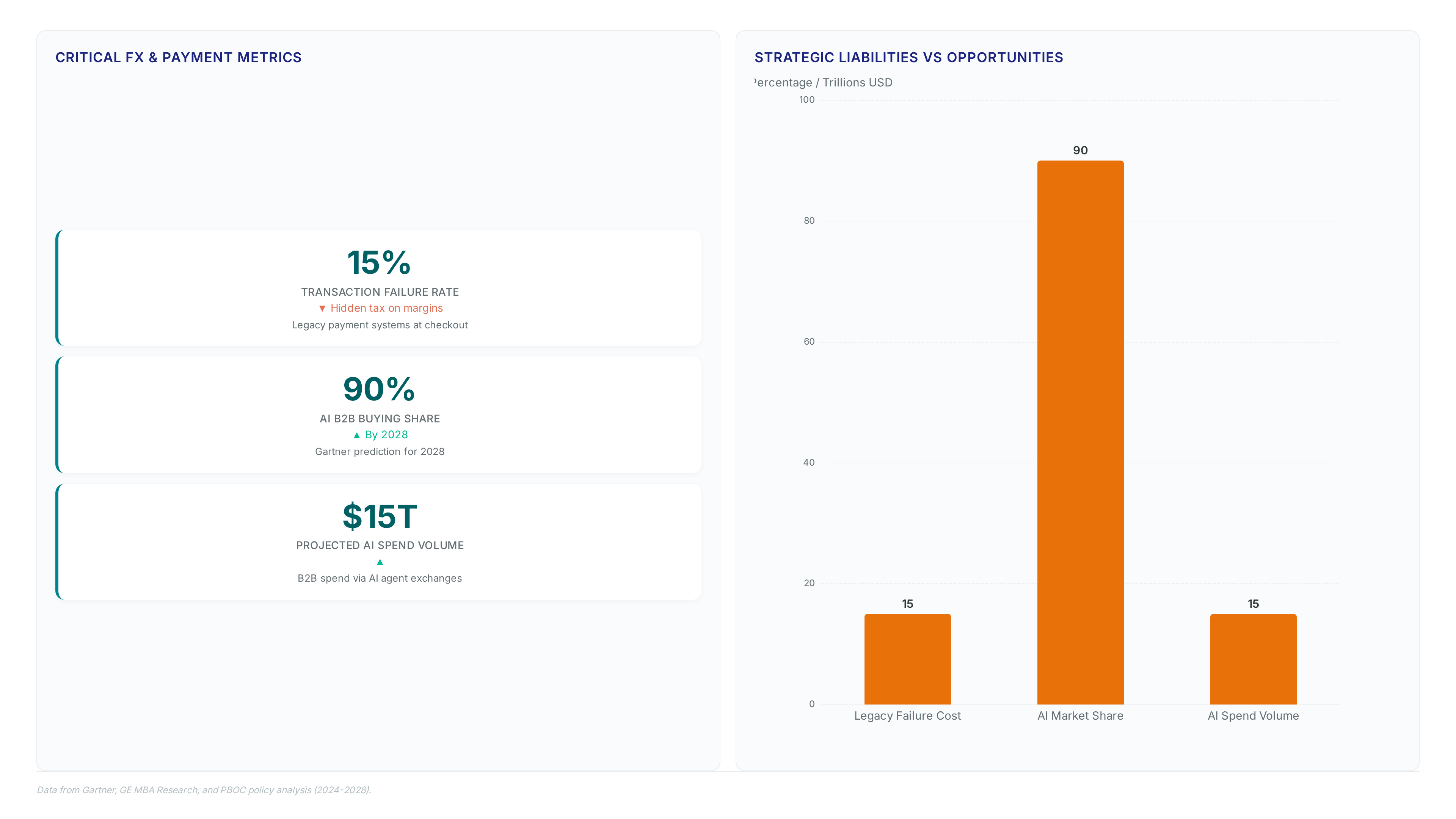
A stronger-than-expected CNY midpoint indicates the PBOC leans against depreciation pressure through discretionary algorithmic calibration. This specific configuration of the counter-cyclical factor signals active resistance to capital outflows rather than passive market tracking. Investors monitor this deviation to gauge immediate policy intent, distinguishing between mechanical adjustments and deliberate stabilization efforts. However, this signal remains ambiguous without context from the upcoming fifteenth five-year plan (2026, 2030), which will redefine long-term exchange rate management priorities. The cost of misinterpreting a weak fixing as tolerance rather than temporary liquidity stress is immediate position loss during volatility spikes.
Conversely, a weaker fixing suggests tolerance for a softer currency, often reacting to dollar strength or domestic economic headwinds. Market participants must differentiate between strategic devaluation and reactive drift, a distinction clarified by the timing of the annual work conference where the "moderately loose" stance was formalized. The limitation here is that short-term fixing signals can contradict the broader monetary policy anchor if liquidity conditions diverge sharply from the 7-day reverse repo rate. Operators should treat the daily fix as a tactical guide, not a standalone strategic mandate.
FX Positioning Strategies During Global Volatility Spikes
Adjusting positions requires reading the fixing as a discrete policy signal when US rate expectations shift or trade tensions rise. A stronger-than-expected midpoint indicates Beijing leans against depreciation pressure, while a weaker fix signals tolerance for currency softening to support competitiveness. Investors must weigh this against hidden balance sheet risks; unrealized gains or losses on owner's equity often surge from month-end exchange rate fluctuations before cash settlement occurs.
Forecasting the midpoint demands monitoring the interplay between capital stability and financial market confidence rather than relying solely on mechanical formulas. The upgraded digital yuan framework now treats e-CNY as digital deposit money, enhancing cross-border trade efficiency and reducing reliance on traditional channels during volatility spikes. This structural shift alters how liquidity flows through state banks, making the counter-cyclical factor even more critical for smoothing pro-cyclical sentiment.
| Volatility Trigger | Policy Signal Interpretation | Positioning Action |
|---|---|---|
| US Rate Hike | Tolerance for softer CNY | Reduce long CNY exposure |
| Trade Tensions | Active defense of stability | Hedge via options near band edges |
| Capital Outflow | Stronger fix to stem tide | Align with state bank buying |
Monitoring depreciation risks involves tracking legacy payment failures that cause a 15% transaction failure rate at checkout for some global firms, creating strategic liabilities that erode margins. Such friction amplifies pressure on the trading band, forcing the PBOC to choose between defending the rate or absorbing volume shocks. The limitation remains that misreading the signal during these spikes leads to immediate mark-to-market losses, as the central bank absorbs volatility on its balance sheet rather than transmitting it to domestic equities.
Validating Currency Priorities Against the Fifteenth Five-Year Plan
Cross-reference daily fixing deviations against the fifteenth five-year plan (2026, 2030) This upcoming legislative framework will reshape how the central bank manages exchange rates to address structural imbalances. Investors must verify if current midpoint strength supports the plan's goal of gradual FX convertibility reforms rather than short-term stability alone. The expectation is that Beijing
Operationalize this validation using a two-step verification process for midpoint forecasting:
- Assess if the counter-cyclical factor aligns with the digital yuan's role in cross-border trade reduction.
- Confirm that liquidity injections match the strategic shift away from traditional SWIFT reliance via the upgraded digital yuan framework.
A discrepancy between a weak fixing and the plan's internationalization targets signals potential policy friction. The cost of ignoring this misalignment is exposure to sudden regulatory pivots once the National People's Congress unveils the final text. Failure to adjust FX positioning before the March reveal risks holding assets contrary to the new structural mandate.
Operational Steps for Analyzing FX Intervention and Digital Yuan Impacts
Defining PBOC Intervention Mechanics and Digital Yuan Reclassification
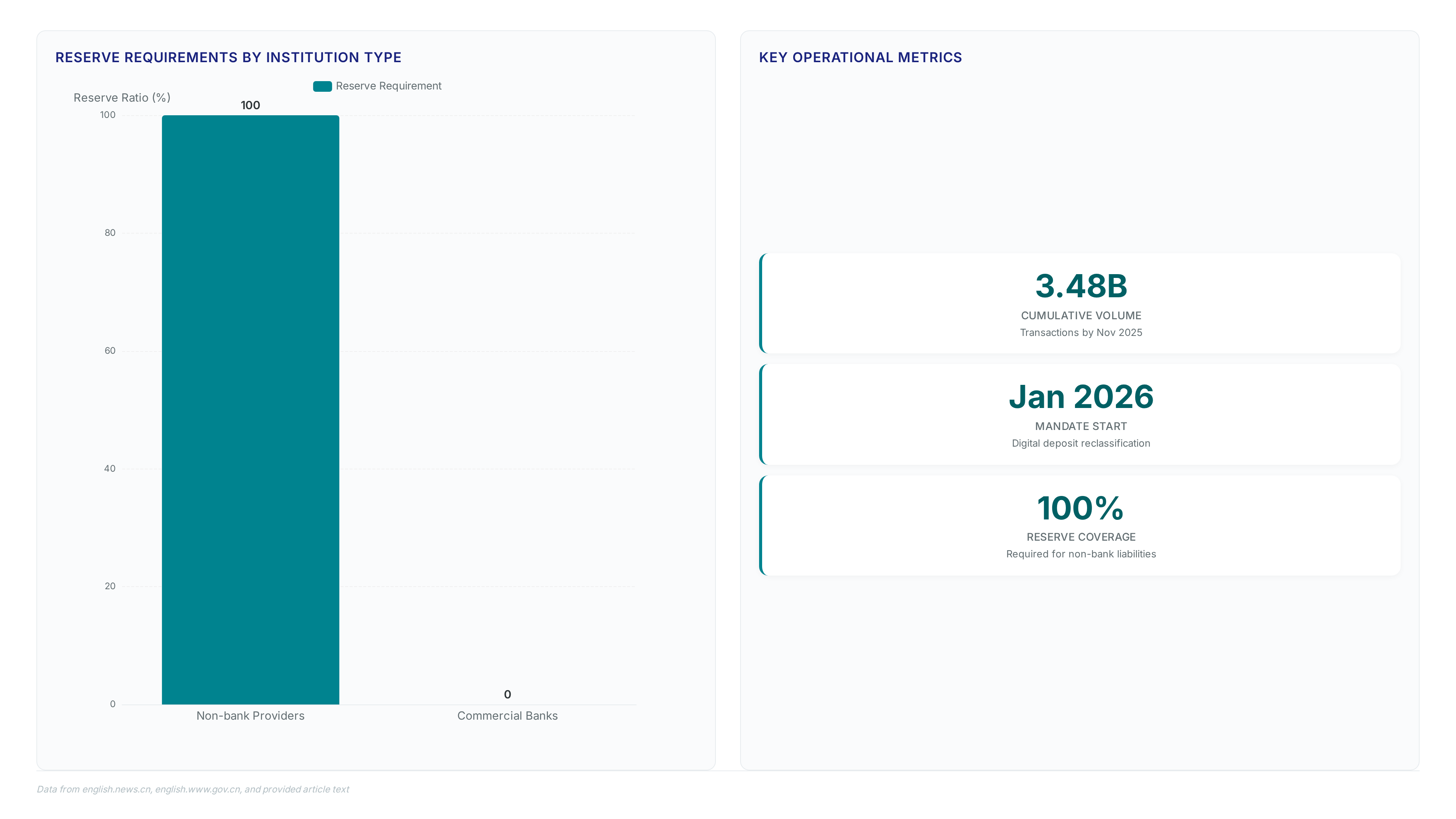
1.2.3. Regulatory reclassification proven January 1, 2026, designates e-CNY as digital deposit money, altering reserve calculations for commercial institutions. 4. Non-bank payment providers must now hold 100 percent reserves against managed digital currency, creating a distinct liquidity cost compared to traditional deposits.
Cumulative transaction volume reached 3.48 billion by November 2025, providing the data density required for this granular reserve requirement enforcement. The shift to digital deposit money standardizes how wallet balances count toward regulatory bases, removing previous ambiguities in capital treatment.
Non-bank payment processors must now validate 100 percent reserve coverage against all managed digital currency liabilities. This mandate eliminates the fractional reserve advantage previously enjoyed by non-bank entities, creating a direct liquidity cost. Operators must reconfigure internal ledgers to recognize that wallet balances held at authorized commercial banks now count toward the calculation base.
- Audit all e-CNY liabilities to confirm full backing with central bank reserves.
- Map commercial bank wallet accounts to ensure they qualify under the new reserve requirement framework.
- Adjust liquidity buffers to offset the capital inefficiency of holding non-yielding reserve assets.
The operational tension lies between maintaining sufficient settlement liquidity and minimizing the opportunity cost of idle capital. Unlike commercial banks, non-banks cannot deploy these reserves for yield-generating loans. The reclassification effectively treats private payment tokens as public money, removing use from the sector.
About
Aisha Rahman serves as the Gold & Commodities Analyst at ForexCFD. Top, where she specializes in macro-driven market movements and safe-haven asset flows. Although her primary focus lies in precious metals, her expertise in global currency dynamics makes her uniquely qualified to analyze the PBOC's USD/CNY reference rate. As gold prices often react sharply to shifts in the Chinese Yuan and broader Asian FX sentiment, understanding this daily fixing is critical for her coverage of commodity markets. In her daily work tracking XAUUSD and oil, Aisha monitors how central bank signals influence retail trader positioning across emerging markets. Her analysis connects these high-level monetary decisions to practical trading implications for the site's global audience. By using ForexCFD. Top's commitment to vendor-neutral, factual reporting, she ensures that complex macroeconomic events, such as China's exchange rate management, are explained clearly without hype, helping traders navigate volatility with informed perspective.
Conclusion
China's FX mechanism now faces structural friction from the liquidity trap created by rigid e-CNY reserve mandates, not merely from central bank intervention volumes. As non-bank institutions hoard capital to meet 100 percent backing requirements, interbank rates decouple from the policy anchor, creating a hidden tightening that standard midpoint analysis fails to capture. This divergence forces a recalibration of risk models; relying on the reference rate as a pure signal of monetary stance is now dangerous because it ignores the frozen collateral sitting in non-yielding reserve accounts. The market effectively faces a dual-rate system where official parity masks acute funding stress in the shadow banking sector.
Institutions must pivot immediately to liquidity-adjusted forecasting rather than tracking the reference rate alone. By Q2 2026, any firm holding significant CNY exposure should integrate non-bank reserve data into their volatility models to avoid mispricing tail risks. Ignoring this structural drain will lead to erroneous bets on yuan liquidity conditions. Start by auditing your counterparty's reserve coverage ratios this week to assess their actual capacity to settle large transactions without triggering interbank spikes. This specific stress test reveals the true cost of capital in the new regime improved than any headline figure.
Frequently Asked Questions
The yuan fluctuates within a rigid 2% band around the official midpoint set by the PBOC. This constraint allows discrete adjustments to counter sentiment while retaining market inputs for stability.
The People's Bank of China holds roughly $6.0 trillion in assets to calculate the daily reference level. This massive balance sheet enables the regulator to effectively offset pro-cyclical market sentiment.
Global FX trade reaches $9.6 trillion daily, exerting constant pressure on China's bounded exchange rate system. Such immense volume limits arbitrage opportunities yet increases hedging costs during volatility spikes.
Operators must monitor the 7-day reverse repo rate, currently fixed at 1.40%, as shifts often precede adjustments. Changes here indicate potential updates to the calculation logic for the midpoint.
Gartner predicts AI agents will intermediate $15 trillion of B2B spend by 2028, though statecraft remains key. Despite this growth, the human element in Beijing dictates the ultimate currency variable.