
Australia inflation: Why 3.6% core beats headline
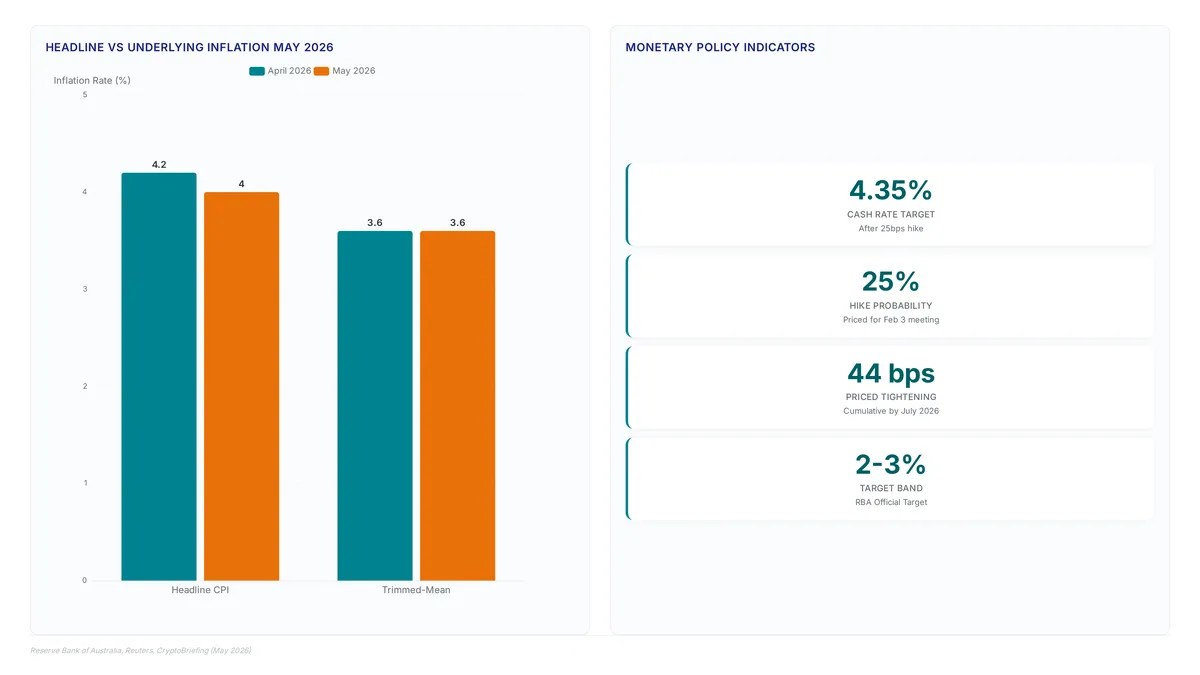
Australia's annual inflation slowed to 4.0% yoy in May, yet the trimmed mean CPI accelerated to 3.6% yoy according to ActionForex. Temporary relief in energy costs feels good, but it is misleading. Underlying price pressures remain stubbornly high. The headline figure dropped from 4.2% yoy in April, driven almost entirely by an 11.9% monthly collapse in automotive fuel prices reported by ActionForex. Volatile components like fuel mask the reality that domestic inflation is not broadly easing.
While headline metrics suggest progress, the RBA's preferred measure tells a different story. The monthly trimmed mean CPI rose 0.4%, exceeding the 0.3% forecast and marking the highest level since late 2024. Services inflation continues to drive costs upward even as goods prices moderate. Policymakers cannot ignore this split when considering future rate decisions.
This article examines why core inflation metrics are diverging from headline data and what sector-specific drivers are sustaining price growth. Housing and food costs contribute to persistent pressure despite falling fuel prices. We also analyze the monetary policy implications of this entrenched underlying inflation for the Australian economy.
Divergence Between Headline and Core Inflation Metrics
Headline CPI vs Trimmed Mean: Defining Australia's Inflation Metrics
Australia's headline CPI registered 4.0% year-over-year for May 2026, dropping from the 4.2% April reading as fuel costs collapsed. This headline CPI metric captures total price changes across the consumer basket but remains highly sensitive to volatile energy swings. The Reserve Bank of Australia instead prioritizes the trimmed mean gauge, which excludes extreme price movements to reveal persistent underlying pressure. This preferred measure climbed to 3.6% in May 2026, accelerating from the previous 3.4% year-over-year rate and reaching the highest level since late 2024.
Temporary energy shocks mask stubborn inflation in other sectors. Headline inflation slowed due to falling fuel prices. The acceleration in the trimmed mean indicates that underlying price pressures have not eased. This structural difference forces a reassessment of the inflation trajectory by the RBA. The central bank cannot ignore embedded services inflation simply because energy prices fell.
Applying Disinflation Analysis to May 2026 Fuel Price Collapses
Disinflation describes a deceleration in the rate of price increases, distinct from falling absolute prices, yet temporary energy shocks often obscure this definition. Australia's May data illustrates how a sharp 11.9% monthly plunge in automotive fuel costs, following a 7.0% drop in April, drove the headline index lower without curing broad domestic pressures. This divergence occurs because headline inflation captures all basket items, allowing volatile energy swings to mask persistent strength elsewhere. Conversely, the RBA monitors trimmed mean metrics that strip out these extreme movements to gauge underlying momentum.
| Metric Focus | Primary Driver | Policy Signal |
|---|---|---|
| Headline CPI | Energy & Fuel | Temporary relief |
| Trimmed Mean | Services & Housing | Persistent pressure |
The headline figure cooled. Analysis confirms the decline stemmed largely from energy factors rather than a broad-based easing. Services inflation accelerated. This highlights a tension where surface-level data suggests relief while core realities demand continued vigilance. Policymakers are focused on determining whether underlying inflation is becoming embedded in the economy, particularly as services inflation moved opposite to goods inflation. The apparent success of disinflationary forces in May represents a statistical artifact of energy volatility rather than a fundamental shift in the inflation trajectory. Consequently, the data reinforces the central debate facing policymakers: headline inflation is moving lower, but the underlying inflation problem has yet to show convincing signs of fading. This divergence creates a specific policy trap where temporary fuel relief obscures sticky services inflation.
| Metric Focus | Signal Strength | Policy Implication |
|---|---|---|
| Headline CPI | Transient | Misleadingly dovish |
| Trimmed Mean | Persistent | Justifies hawkish stance |
Core measures reached the highest level since late 2024. Price pressures are becoming embedded in the economy. Market pricing reflects this heightened vigilance, with a 25% probability assigned to a rate hike occurring at the Reserve Bank of Australia's next meeting scheduled for February 3. Relying on headline data may obscure the persistence of services inflation, which accelerated to 3.7% year-over-year. Operators must prioritize core gauges over transient energy moves when forecasting yield curve shifts. Analysts note that the divergence between falling headline numbers and rising core inflation suggests the RBA is unlikely to provide a decisive answer on whether tightening is finished until underlying pressures show convincing signs of fading.
Operators analyzing this data must isolate volatile energy inputs to reveal the underlying trend. Current projections suggest headline inflation could rise later in 2026, driven by increases in fuel and raw material costs, indicating current relief may be temporary. This creates a policy tension where falling headline numbers mask rising core pressures. Market participants are pricing this risk, adjusting bond yields to reflect potential rate increases despite the monthly miss. Relying on headline data offers a distorted view of embedded price pressures. Traders should focus on the trimmed mean, which excludes these volatile items to show true momentum. Ignoring the fuel distortion leads to incorrect assumptions about the speed of disinflation. The practical takeaway is that the improvement in headline figures was largely attributed to the collapse in fuel prices and government excise reductions.
Housing Cost Risks Driving Core Measure Upward
Residential rents and imputed costs rising 6.5% yoy mechanically anchor the Trimmed Mean CPI above the central bank's comfort zone. This specific component acts as a heavy weight in the consumption basket, preventing broad disinflation even as volatile energy prices collapse. Market participants now price this persistence into bond yields, reflecting the risk that policy rates must remain restrictive to contain these domestic pressures.
The divergence creates a distinct policy trap where falling goods prices mask the acceleration in services.
| Component | Trajectory | Impact on Core |
|---|---|---|
| Housing | Accelerating | Upward |
| Goods | Decelerating | Downward |
| Services | Sticky | Upward |
Housing was the biggest contributor to overall inflation, rising notably alongside food and transport costs which remained elevated. The cost of maintaining the current policy stance involves accepting slightly restrictive monetary conditions to gauge ongoing inflation risks. Operators must recognize that headline misses offer false comfort when shelter costs continue to drive the inflation narrative upward with such force. The report suggests it is unlikely to provide a decisive answer on whether the RBA is finished tightening, reinforcing the central debate facing policymakers. This divergence creates a policy bind where falling energy prices mask stubborn domestic price pressures. The trimmed-mean inflation measure excludes volatile items to reveal these underlying trends.
Misreading these signals carries a substantial cost. Financial instruments are fully pricing in cumulative increases totaling 44 basis points by July 2026. Such aggressive forward guidance implies that inflation normalization remains elusive in the near term. Operators must recognize that market pricing often anticipates regulatory pivots before official statements confirm them. The divergence between transient fuel drops and entrenched service costs creates a volatile environment for rate expectations.
*Disclaimer: This content is for educational purposes only and does not constitute financial advice. This breach indicates that underlying inflation remains above the target range, prompting concerns about persistence. Policymakers are focused on determining whether underlying inflation is becoming embedded in the economy.
| Indicator | Status | Implication |
|---|---|---|
| Headline CPI | Falling | Temporary relief |
| Trimmed Mean | Rising | Embedded pressure |
| Services | Accelerating | Policy risk |
Operators must recognize that services inflation has accelerated even as goods inflation eased, presenting a complex challenge for the central bank. The window for a soft landing narrows as core metrics diverge from headline trends.
Strategic Risks of Embedded Inflation in the Services Sector
Risks: Defining Embedded Inflation Risks in Australian Services
Temporary price shocks harden into permanent wage and price-setting behaviors when inflation becomes embedded. This risk concentrates in the services sector, where accelerating costs now drive the gap between headline and core metrics. Falling energy prices improve the headline figure, yet underlying pressure remains stubborn. Upward shifts in inflation expectations alter consumer spending habits. Critics suggest further tightening risks stalling economic growth unnecessarily. Inaction carries the cost of allowing secondary inflation to take hold across the broader economy. Yield markets react sharply to the central bank's tone regarding these risks. Normalization depends on addressing the divergence where underlying inflation has yet to show convincing signs of fading. Underlying problems persist despite transient headline improvements until services cool. Energy-related factors drove the decline in headline inflation rather than a broad-based easing in domestic price pressures. Current inflation sits well above the official 2% target band, reflecting an aggressive technical reality. However, relying solely on this acceleration introduces distinct operational risks for rate decision modeling.
- Lag effects of previous hikes might not yet be fully visible in the data.
- Global commodity shocks could distort the signal further before normalization occurs.
The timeline for inflation normalization hinges on whether underlying pressures subside without triggering a recession. Network operators and traders face a complex environment where headline inflation is moving lower, but the underlying inflation problem has yet to show convincing signs of fading. Monetary policy navigates this terrain carefully.
Risks: Services Sector Divergence as a Barrier to Inflation Normalization
Persistent domestic price pressures in the services sector delay normalization despite falling energy costs. Temporary energy relief masks entrenched domestic pricing power, creating a specific hazard.
| Metric | Trend Direction | Primary Driver |
|---|---|---|
| Headline CPI | Downward | Energy price collapse |
| Trimmed Mean | Upward | Services sector demand |
| Goods Inflation | Easing | Global supply chains |
| Services Inflation | Accelerating | Domestic wage pressures |
High expectations becoming embedded in wage-setting behaviors generates secondary inflation risks, according to analysts. Bond yields adjust rapidly to reflect tighter policy needs, pricing in the cost of ignoring this wedge.
- Wage-price spirals lock in higher baseline operating costs for service providers.
- Consumer spending habits shift permanently if inflation expectations rise.
- Premature easing could occur if energy-driven headline drops lull policymakers.
- Data reinforces the central debate facing policymakers today.
Energy-driven headline drops may lull policymakers into premature easing, which represents a critical limitation.
About
Sofia Mendes serves as the Broker Reviews & Trading Education Editor at ForexCFD.top, where she oversees the platform's educational resources and regulatory analysis. Her expertise in macroeconomic indicators is necessary for interpreting complex data like the trimmed mean CPI, a critical gauge of underlying inflation that directly influences central bank decisions. While her daily work often focuses on vetting broker regulations and teaching risk management, understanding these core economic drivers allows her to contextualize how volatility impacts retail traders globally. The trimmed mean CPI removes extreme outliers to reveal true price trends, a nuance vital for the fundamental analysis ForexCFD.top provides its audience. By connecting high-level economic shifts to practical trading implications, Sofia ensures that traders in emerging markets receive clear, actionable insights. This approach aligns with ForexCFD.top's mission to deliver vendor-neutral, education-first content that helps traders navigate market-moving events with confidence and informed caution.
Conclusion
Relying on falling fuel prices to signal broad economic cooling is a dangerous miscalculation when underlying pressures intensify. The divergence between headline relief and rising core metrics creates a false sense of security that often precedes policy errors. Operators must recognize that temporary energy dips do not neutralize the operational cost of entrenched services inflation. The real breakage point occurs when wage-setting behaviors lock in these higher baselines, making future normalization significantly more expensive and operationally disruptive for capital-intensive sectors.
Decision-makers should treat the current data as a warning to stress-test portfolios against sustained higher-for-longer rate scenarios rather than anticipating immediate relief. Do not model for a rate cut until the services component demonstrates a consistent downward trajectory over two consecutive quarters. This timeline accounts for the lag effects that often distort real-time analysis.
Start by auditing your exposure to domestic service providers with high labor cost sensitivity this week. Replace any assumptions based on headline figures with models weighted heavily toward the Trimmed Mean CPI to accurately reflect the persistent inflationary environment. This specific adjustment ensures your strategy aligns with the actual cost pressures facing the economy rather than transient energy fluctuations.
Frequently Asked Questions
Headline CPI dropped to 4.0% as fuel costs collapsed sharply. However, the trimmed mean accelerated to 3.6% because sticky services inflation offset the temporary energy relief.
Automotive fuel costs plunged 11.9% monthly following a prior 7.0% decline. This massive drop drove the headline index lower while masking persistent underlying pressure in other sectors.
Markets assign a 25% probability to a rate hike at the next meeting. This reflects investor concern that underlying inflation remains above the central bank's target band.
Goods inflation slowed to 4.2% while services inflation accelerated to 3.7%. This divergence highlights how labor and housing costs continue driving price pressures despite cheaper goods.
The monthly trimmed mean rose 0.4%, exceeding the 0.3% forecast. This unexpected acceleration suggests domestic price pressures are becoming embedded rather than fading as hoped.
References