
Economic Calendar: Filter 196 Countries for Real Trades
Tracking 196 countries of data makes the economic calendar necessary for filtering global market noise.
This tool transforms raw economic indicators into actionable intelligence by allowing traders to isolate specific events like GDP releases or interest rates that drive asset prices. Rather than guessing at market direction, users can rely on chronological data linked directly to fundamental drivers. The TradingView platform aggregates these updates, providing short explainers and expert forecasts to clarify potential impacts on stocks, Forex, or bonds.
Readers will learn how to use data filtering options to sync events with specific time zones and strategy needs. The discussion covers configuring the interface to display only high-importance categories, such as tax announcements or production metrics. Finally, the article details how comparing actual results against historical forecasts helps design event-driven strategies that adapt to global economic shifts.
The Role of Economic Indicators in Global Market Analysis
GDP, CPI, and Interest Rates as Market Movers
Gross Domestic Product sums the market value of final goods to signal health. Expanding output lifts equity valuations while contraction forces defensive positioning across global portfolios. This metric anchors the fundamental analysis required for long-term strategic allocation.
The Consumer Price Index gauges inflationary pressure in consumer markets. Rising figures suggest diminished purchasing power and frequently precede market downtrends as central banks tighten policy. Traders monitor these releases on the Economic Calendar to anticipate volatility spikes before they impact asset prices.
Interest rate decisions by central authorities typically exhibit an inverse relationship with stock market performance. Share prices often fall as borrowing costs rise and bond yields become comparatively attractive. This flexible directly influences Forex pairs, where higher rates usually strengthen the domestic currency against peers with lower yields.
| Indicator | Primary Market Impact | Typical Asset Reaction |
|---|---|---|
| GDP | Growth signal | Stocks rise, Bonds fall |
| CPI | Inflation signal | Stocks fall, Gold rises |
| Interest Rate | Cost of capital | Currency strengthens, Stocks fall |
Simultaneous divergence in these indicators creates complex trading environments. A high GDP print alongside surging CPI forces a choice between growth chasing and inflation hedging. The Bank of England repo rate decisions illustrate how regional variances in these metrics drive cross-border capital flows. Ignoring the interplay between these three forces exposes portfolios to unmanaged macro risk.
Filtering High-Impact US and EU Data Releases
Filtering the Economic Calendar by high impact status isolates volatility triggers like Fed decisions. Operators configure this view to exclude noise, focusing strictly on events capable of moving liquidity across substantial pairs. The interface allows selection of specific weeks or days while synchronizing time zones to match local trading sessions. Users define parameters to display only GDP releases or tax announcements, removing lower-tier data that rarely shifts price action.
Visual cues assist rapid identification; the system highlights high impact news bars in blue to signal immediate attention requirements. This method proves necessary when tracking divergent trends between US inflation figures and EU growth metrics. During periods of geopolitical tension, such as the Brexit negotiations, traders relied on real-time updates to navigate GBP and EUR fluctuations. The tool supports multi-dimensional filtering by country, ensuring analysts can isolate US economic calendar events from European releases without manual sorting.
| Filter Type | Function | Strategic Use |
| Impact Level | Sorts by Low, Medium, High | Isolates volatility spikes |
| Country | Selects specific nations | Focuses on regional drivers |
| Category | Limits to GDP, Labor, etc. | |
| Targets sector-specific moves |
The current US interest rate sits at 3.75 %, while recent Consumer Price Index read t Consumer Price Index readings reached 4.2 %. Divergence between these actuals and forecast data often dictates directional bias for the session. Relying solely on US data ignores the contagion risk from EU ZEW index surprises. Traders must weigh local inflation against global sentiment to avoid false breakouts. The Help Center details further customization options for advanced filtering strategies.
Validating Global Indicators from 196 Countries
The TradingView Economic Calendar aggregates approximately 20 million economic indicators across 196 nations to anchor global analysis.
Operators must validate regional data against specific institutional definitions rather than generic labels. For instance, the BoE interest rate decision explicitly defines the repo rate applied to open market operations with counterparties like banks and securities firms. Ignoring this distinction leads to misinterpreting liquidity conditions in Sterling pairs. A strong validation checklist requires cross-referencing local releases with the thorough global scope provided by the underlying database.
| Region | Primary Validation Target | Data Specificity Required |
|---|---|---|
| United Kingdom | Repo Rate | Counterparty definition |
| Eurozone | ECB Decision | Inflation vs. Growth |
| Global | GDP Growth | Final goods value |
Tracking GDP growth across countries demands attention to the market value of final goods produced, not headline percentages. Similarly, when users track US inflation rate divergences, they must align actuals against consensus figures to spot volatility triggers. The sheer volume of available data points means noise often masquerades as signal without strict filtering.
Automated feeds risk missing contextual shifts in how indicators are calculated locally. Identical metric names do not imply identical methodologies across borders. Traders who fail to verify the specific composition of an index face unexpected drawdowns during release windows. Precision in definition protects capital improved than speed alone.
Mechanics of Data Filtering and Event Interpretation
Defining Actual, Forecast, and Prior Data Points
Market surprise lives in the gap between Actual, Forecast, and Prior figures. Statistical agencies publish the Actual number, which algorithms instantly compare against the Forecast consensus. Liquidity shifts rapidly when these two values diverge notably as positions rebalance. The Prior value sets a historical baseline from the previous period so traders assess momentum instead of isolated performance. Distinct columns organize these metrics for immediate visual triangulation of data surprises.
| Metric | Definition | Strategic Role |
|---|---|---|
| Actual | The real value released at event time | Triggers immediate volatility |
| Forecast | The consensus expectation | Sets the market bar |
| Prior | The previous period's value | Establishes trend direction |
Operators interpret the Actual release relative to the Forecast rather than in absolute terms. Strong economic growth depresses asset prices if the figure falls short of embedded consensus expectations. Price action reflects new information rather than known quantities through this mechanism. Short explainers and expert forecasts appear directly within the tool to contextualize variances before execution. This structure prevents misreading a positive headline number that actually constitutes a negative surprise. The Help Center offers further detail on navigating these specific data points effectively.
Filtering Events by Country, Time Zone, and Category
Precise toolbar selection of specific weeks prevents calendar time zone mismatch errors for global traders. Configuration limits event flow to match strategy needs by displaying only the GDP releases or tax announcements. Multi-dimensional filtering allows users to select countries and sync times directly within the mobile app. Granular control solves the common problem with missing economic events caused by unfiltered data deluges. This tool emphasizes visual synchronization of events with user strategies through customizable filters for countries and time zones directly on the toolbar. Over-filtering creates a blind spot where uncorrelated geopolitical shocks emerge from ignored regions. Traders often miss secondary contagion effects when restricting views solely to G20 members. Reduced situational awareness during cross-border liquidity crises is the constraint of excessive narrowing.
- Select the period by choosing a specific week via the upper toolbar.
- Limit the event flow by a specific category such as labor data.
- Choose countries to sync events with strategy needs.
This deployment constraint requires balancing focus with breadth to maintain effective risk oversight.
Isolate divergence by filtering for HIGH IMPACT NEWS events highlighted in blue within the interface. This visual cue separates volatile market movers from background noise so traders focus only on data capable of shifting liquidity. Users must configure the system to display specific weeks while synchronizing time zones to match local trading sessions.
- Select the High impact filter to remove medium and low-tier distractions.
- Compare the Actual release against the consensus Forecast immediately upon publication.
- Validate the deviation direction to anticipate algorithmic rebalancing across substantial pairs.
Ignoring the divergence between realized figures and expert predictions leads to misinterpreting momentum shifts. A positive GDP reading can trigger selling if it falls below consensus forecasts, creating counter-intuitive market reactions.
| Data Point | Function | Risk if Ignored |
|---|---|---|
| Actual | Realized economic value | Misjudging immediate volatility |
| Forecast | Market consensus estimate | Missing algorithmic entry signals |
| Prior | Historical baseline | Overlooking trend momentum |
Operators often mistake raw number strength for market direction without considering the forecast gap. The Help Center details how to customize these views for G20 members specifically. Market surprise drives movement rather than the absolute value of the indicator itself.
Configuring the Calendar for Strategic Event Tracking
Configuring Weekly Views and Time Zone Sync
Traders must select the specific week via the upper toolbar to anchor analysis to a fixed seven-day window. This action prevents scrolling errors during high-volatility periods when focus is paramount. The interface allows narrowing this timeline further to inspect a single day's economic releases in granular detail.
Synchronizing the display to a local time zone ensures that event timestamps match the operator's trading session exactly. Global markets operate continuously, and a mismatch here causes missed entries or premature position sizing. The system supports multi-dimensional filtering to align these temporal settings with specific strategy needs effectively. Users can configure the time zones directly within the toolbar to eliminate conversion math during live execution.
- Click the week selector on the top navigation bar.
- Choose the desired time zone from the dropdown menu.
- Apply country filters to isolate the GDP releases.
Unlike platforms focusing on commentary, this setup prioritizes visual synchronization for rapid decision-making. A common failure mode involves ignoring the time sync, leading to confusion during overlapping London and New York sessions. Correct configuration transforms the Economic Calendar from a passive list into an active risk management tool.
Applying Country and Category Filters for ECB Decisions
Isolate ECB interest rate decision volatility by restricting the view to Eurozone members and monetary policy categories. Traders often miss critical shifts because they monitor global data deluges rather than specific jurisdictional outputs. The interface permits limiting event flow to GDP releases or specific tax announcements, removing noise from non-the economies.
- Access the upper toolbar to select the current week and synchronize the display to your local time zone.
- Filter the country list to show only European Union members, excluding G20 outliers without direct Euro exposure.
- Apply the High impact category filter to highlight bar charts in blue, isolating only the most significant market movers.
This configuration prevents the common operational failure of reacting to low-probability events while ignoring central bank signals. Unlike platforms focusing on commentary, this visual synchronization aligns event timestamps directly with user strategy needs on the mobile app.
| Filter Setting | Target Value | Strategic Outcome |
|---|---|---|
| Country | European Union | Removes USD/GBP noise |
| Category | Interest Rate | Isolates ECB decisions |
| Impact | High | Filters low-volume data |
Operators must recognize that failing to filter by category results in alert fatigue during overlapping session hours. The Help Center documents these toggles, but practical application demands strict discipline in excluding non-necessary regions. Only confirmed monetary policy changes from the ECB should trigger position rebalancing in Euro pairs.
Validating Event Importance Levels and Forecast Divergence
Highlight bar charts in blue to isolate HIGH IMPACT NEWS and filter out medium or low-tier distractions.
- Select the High impact filter to remove medium and low-tier distractions.
- Compare the Actual release against the consensus Forecast immediately upon publication.
- Validate the deviation direction to anticipate algorithmic rebalancing across substantial pairs.
Operators often miss that a matched forecast still causes volatility if the Prior value revision was significant.
Raw numbers lack context without understanding market expectations embedded in the consensus. A positive GDP reading can trigger selling if it falls below these forecasts. Traders should consult the Help Center to master these comparative tools.
Applying Economic Data to Trading Decisions
How CPI and Interest Rate Data Define Market Direction
Rising Consumer Price Index (CPI) values pressure central banks to tighten monetary policy. This mechanic forces a measurable inverse relationship between borrowing costs and equity valuations. Higher rates make bond yields attractive, pulling capital from risk assets like stocks. A central bank rate is the charge a lender applies, and it usually moves stock markets in the opposite direction; share prices tend to fall when interest rates rise. Currency values and global stock sentiment shift as these decisions alter the cost of capital. Traders watch how releases diverge from consensus forecasts to spot directional changes. The platform lets users overlay these events on charts to visualize price reactions through the Supercharts interface.
Comparing Actual prints to forecasts reveals market surprises. This analysis defines the volatility inherent in macro trading.
Executing Trades Around High-Impact US and EU Releases
GDP stands as a key US indicator, calculated by the Bureau of Economic Analysis with data gathered by the Bureau of Labor Statistics. Strategy adjustments for Fed decisions rely on monitoring the divergence between actual and forecast figures rather than guessing the headline number. The EU ZEW index measures analyst optimism for the next six months and serves as a vital leading indicator for Eurozone sentiment. Operators must distinguish between noise and signal when filtering the global economic events that drive price action. Mobile interfaces now allow traders to access these built-in calendars via the Explore icon without leaving charting views. Reaction times remain sharp even when away from a desktop terminal.
| Indicator | Source Entity | Primary Market Impact |
|---|---|---|
| US GDP | Bureau of Economic Analysis | USD Liquidity |
| EU ZEW | ZEW Centre | EUR Sentiment |
| CPI | Bureau of Labor Statistics | Inflation Expectations |
Blindly following the headline number ignores the revision risk inherent in initial employment figures, including the unemployment rate, payrolls, and job openings. Smart capital waits for the second wave of orders to enter after the initial spike fades.
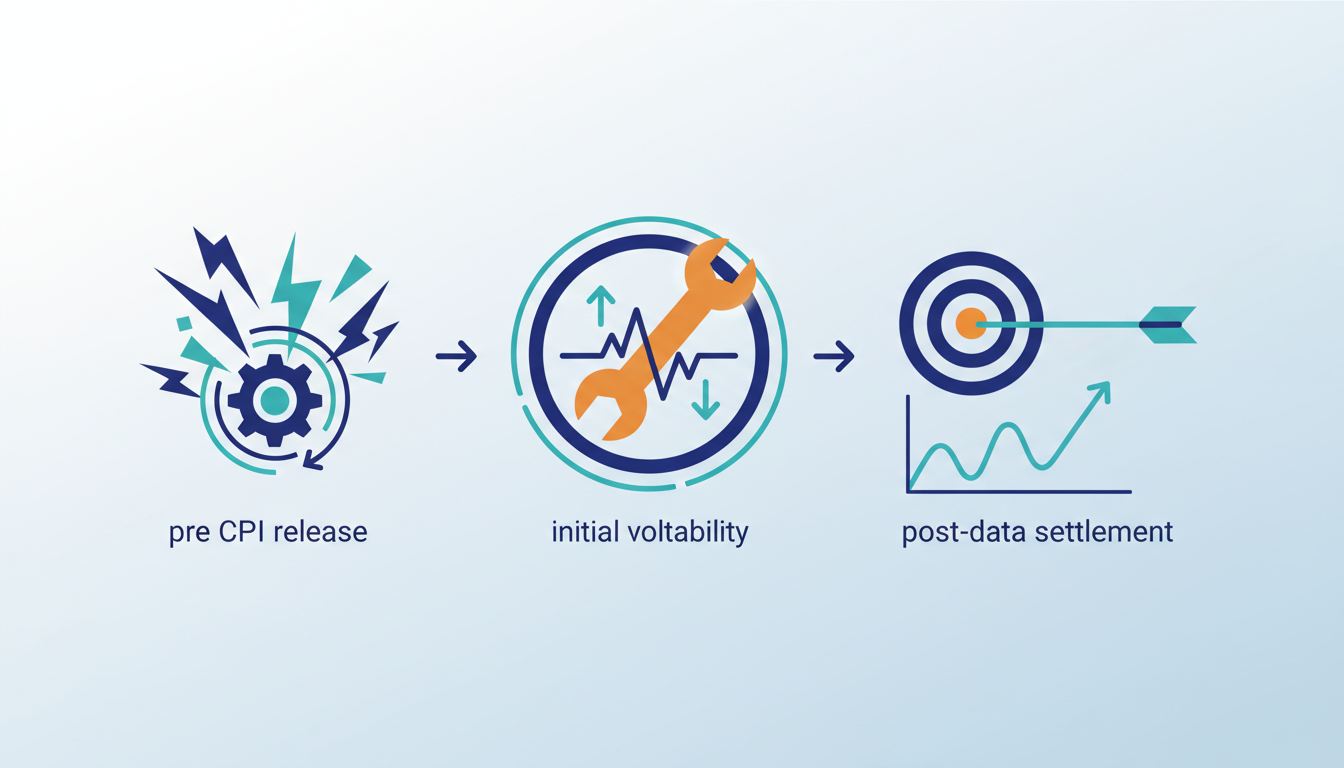
Volatility Risks When Trading Pre-Release CPI Data
Observing the Actual print against the Prior value before committing capital remains the safest strategy.
About
Vikram Nair, Emerging Markets & Asia FX Writer at ForexCFD.top, brings specialized expertise to the complexities of the economic calendar. His daily work focuses on translating macroeconomic data into actionable insights for retail traders in Tier-2 and Tier-3 markets, specifically covering currency pairs like USD/INR and USD/NGN. Because emerging market volatility is often driven by central bank decisions and key releases like CPI or GDP, Nair's deep familiarity with these specific indicators makes him uniquely qualified to guide readers through calendar navigation. At ForexCFD.top, an independent publication dedicated to regulation-aware trading education, Nair routinely analyzes how global events impact local liquidity and legal trading conditions. This article connects his practical experience monitoring the RBI and CBN to the broader utility of economic scheduling tools. By using his background in macro-to-FX translation, the piece offers a factual, risk-aware approach to using economic events for strategic planning rather than speculation.
Conclusion
Scaling this approach reveals that revision risk often outweighs the initial headline shock, creating a hidden operational cost for traders who react instantly to raw data. The divergence between the current US interest rate and the Consumer Price Index reading proves that static analysis fails when monetary policy lags behind real-time inflation. You must prioritize the second wave of liquidity over the initial spike because smart capital waits for the noise to settle before establishing position size. Relying solely on mobile interfaces for execution during these high-volatility windows introduces latency that desktop terminals do not, demanding a stricter protocol for entry timing during global releases.
Adopt a conditional strategy where you delay entry until the Actual print confirms a trend against the Forecast consensus, specifically avoiding trades within the first fifteen minutes of US GDP or ZEW announcements. This discipline prevents you from becoming liquidity for algorithmic spikes that reverse before human reaction times can adjust. Do not treat every calendar event as a mandatory trading opportunity; select only those with clear divergence.
Start this week by configuring your economic calendar to hide low-impact events and highlight only those with a history of causing significant USD liquidity shifts.
Frequently Asked Questions
Traders access deep historical time series for comprehensive analysis. The platform aggregates approximately 20 million economic indicators to allow detailed comparison of consensus figures against actual released data.
Yes, users filter events by three distinct levels of importance. This allows traders to highlight high impact news bars in blue and ignore lower-tier data that rarely shifts price action.
Users limit event flows to specific categories like GDP or tax announcements. This targeting helps design event-driven strategies that adapt quickly to global economic shifts without manual sorting distractions.
The calendar displays actual results alongside expert forecasts for divergence analysis. Seeing these variances helps traders understand trends and avoid false breakouts during complex macro environments.
Operators can select time zones to sync events with strategy needs. This feature ensures traders in any region track chronological updates accurately without calculating time differences manually.
References