
EUR/USD: Fed's 60% Tightening Odds Trap the Pair
The Federal Reserve isn't guessing; they are committed. With FOMC projections pointing to a 60% probability of September tightening, the EUR/USD pair sits trapped. This isn't speculation. It is the direct result of a unanimous push for restrictive policy while global growth diverges.
RoboForex analysis shows the pair stuck in a tight consolidation range between 1.1378 and 1.1414. The market waits for labor data to break the deadlock. While Deloitte forecasts reliable US GDP, the MACD indicator on H4 charts screams bearish momentum. The signal line stays firmly below zero. Technical weakness matches the macro reality: currency appreciation needs fresh fuel, not just priced-in rate hikes.
We are looking at how Fed hawkishness drives price action even as oil prices cool and inflation expectations moderate. Stochastic oscillators flash early warnings of momentum shifts before breakouts happen. We will map specific H4 chart patterns to pinpoint entries targeting the 1.1315 downside or the 1.1470 corrective ceiling.
The Role of Federal Reserve Hawkishness in Driving Dollar Strength
Defining the Fed's Hawkish Stance and Tightening Bias
The Federal Open Market Committee voted 12-0 to hold the target range at 3-1/2 to 3-3/4 percent. That unanimity defines a hawkish stance. They maintain restrictive rates to crush inflation, period. This tightening bias relies on a floor system where the central bank pays 3.65% on reserve balances. This rate arbitrages the proven rate within the 3.50%-3.75% corridor.
Market participants read this rigidity as a clear signal: price stability beats growth acceleration. Traders see the 60% probability pricing for September tightening and understand the US dollar strength already reflects these expectations. Without new employment data, there is little room for further appreciation. The mechanical result is a bearish consolidation pattern. The market ignores the status quo and waits for a deviation from the projected path.
How Fed Rate Hike Probabilities Drive EUR/USD Movements
Market pricing assigns a 29% probability to a July rate hike. This directly suppresses the EUR/USD pair, which opened near 1.1381. The yield differential creates an advantage that compels algorithmic systems to short the euro against the US dollar based on interest rate parity models. Traders watch Federal Reserve noon buying rates as the definitive benchmark for these calculations, ignoring retail execution prices.
The inflation outlook diverges sharply. US data supports tightening while eurozone pressures ease, limiting the European Central Bank's ability to match Federal Reserve aggression. Aggressive hiking risks a recession that could ultimately weaken the dollar, creating a tension between immediate yield capture and long-term growth risks. North American trading volume dominates, ensuring US monetary policy signals transmit rapidly through global liquidity pools. Operators using deep learning models for signal generation must adjust parameters for this heightened sensitivity to FOMC communication. Hedging strategies must align with these probabilistic shifts. Failure to do so exposes portfolios to abrupt valuation corrections during data releases.
Oil Price Declines and Data Dependency Risks for Dollar Strength
Oil prices dropped to pre-conflict levels. This sharp decline reduces inflationary pressure, removing a primary catalyst for further US dollar appreciation. Falling energy costs limit the Federal Reserve's justification for aggressive tightening without fresh employment data. As eurozone inflation eases, the divergence between Fed and ECB monetary policy sharpens. Yet, the dollar faces consolidation risks absent new macro triggers.
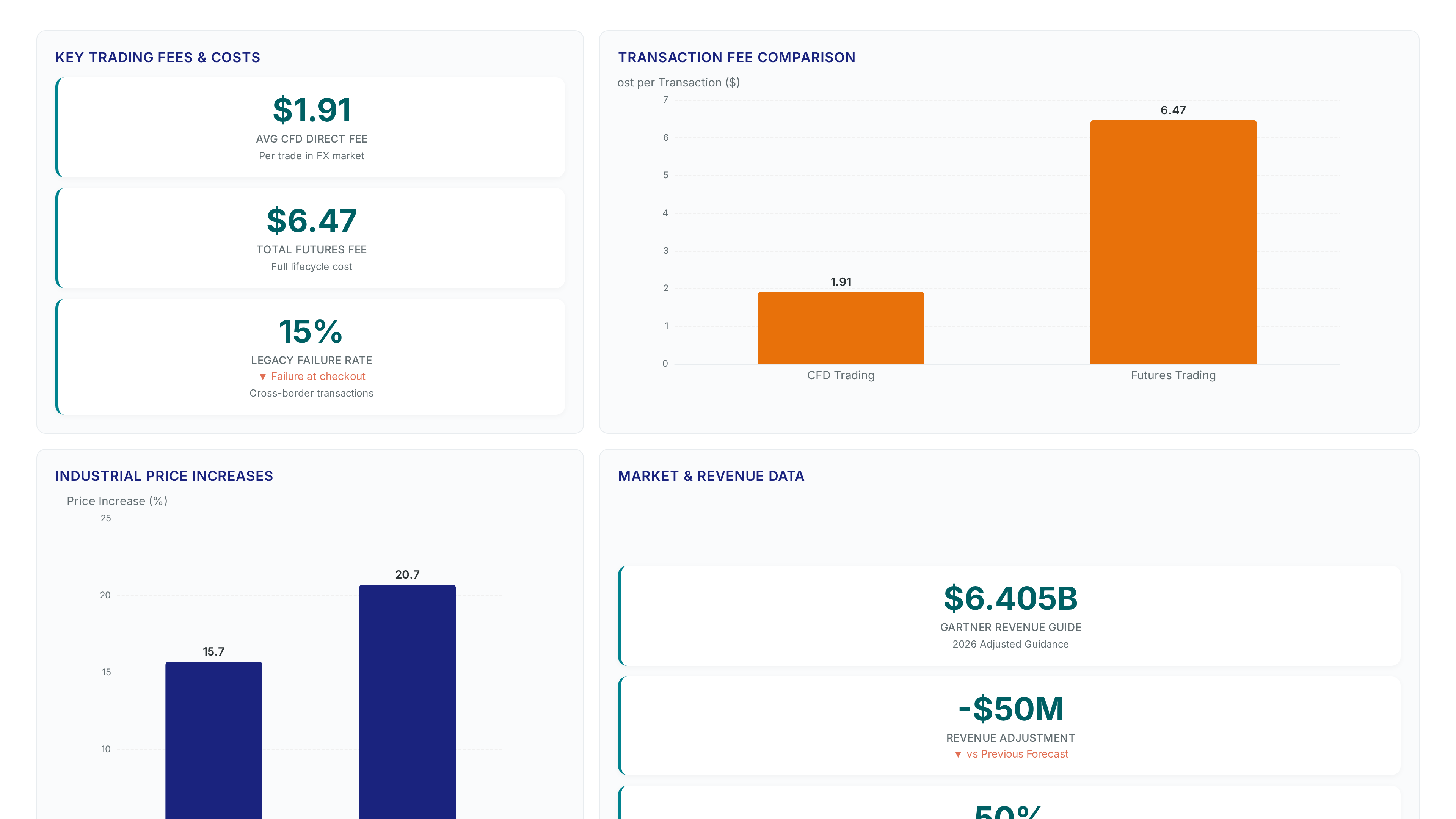
Infrastructure input costs send a conflicting signal. Steel mill products saw a 20.7% year-over-year price increase, driven by tariffs that sustain core inflation independent of energy markets. This persistence complicates the inflation outlook for the US versus the eurozone.
Consequently, further currency gains require strong data releases to overcome the current stall. Deloitte forecasts 4.5% GDP growth premised on expansionary fiscal policy. Such a rate could demand higher yields if labor markets tighten. Without these catalysts, a moderate correction remains probable as markets price in existing hawkishness.
For forex desks, data dependency creates a binary outcome. Strong jobs reports extend the rally. Neutral prints invite profit-taking as the threat from energy-driven inflation recedes.
How MACD and Stochastic Oscillators Signal Momentum Shifts
MACD Signal Line Mechanics Below Zero
Persistent negative momentum defines the current EUR/USD environment. The MACD signal line stays below zero while trending downward. Short-term moving averages remain notably below longer-term averages, creating continuous sell pressure without needing fresh catalysts. Price action consolidates near | 1.1405 | on the H4 chart while the indicator warns of an impending breakdown toward | 1.1315 |.
Modern trading infrastructure increasingly relies on deep learning technologies to interpret these divergences quicker than manual analysis allows. Institutions like the Bank of China deploy such algorithms to forecast signals. Retail traders face latency disadvantages when momentum shifts abruptly. Slippage during volatility spikes becomes the cost of ignoring these automated signals. Execution expenses further erode profits during consolidation phases. The average direct fee for CFD trading sits at $6.47 per transaction, often hidden within spreads rather than charged as explicit commissions.
| Feature | Bearish MACD (0) |
|---|---|
| Momentum | Negative / Accelerating |
| Signal Action | Sell / Short |
| Risk Profile | Downside breakout |
A decisive move below the support level validates the bearish thesis. Failure to break lower suggests the market is pricing in the Federal Reserve stance prematurely. Traders must distinguish between genuine trend continuation and exhausted selling pressure before committing capital to the downside.
Stochastic Oscillator Reversal from 80 to 20
The Stochastic oscillator confirms this outlook. Its signal line sits near 80 and turns sharply lower towards 20. This specific mechanical transition from overbought territory validates the bearish consolidation observed on the H1 chart where price action stalls below | 1.1414 |. Modern algorithmic trading infrastructure processes these divergence patterns faster than manual execution allows. Rapid decay in momentum often traps late buyers who misidentify the initial dip as a support bounce rather than a trend confirmation.
Correcting an incorrect trade based on these technical signals requires a disciplined approach to risk management. Hidden transaction costs can erode profits during volatile reversals. Legacy payment systems cause a 15.7% failure rate at checkout for cross-border firms, adding another layer of operational risk.
- Identify the precise candle where the signal line crosses below the 80 threshold.
- Compare current price action against the | 1.1378 | support level to confirm breakdown validity.
- Execute an exit or reversal only after the H4 close confirms the directional shift.
Apply deep learning applications to forecast such forex signals. Relying solely on static indicator readings puts you at a disadvantage. Waiting for full confirmation risks higher slippage on entry, but acting too early is dangerous. A sharp turn towards 20 does not guarantee a sustained crash if macro catalysts intervene. Price may consolidate within the | 1.1315 | range before selecting a final direction, punishing premature aggression.
Breakout Risks in EUR/USD Consolidation Ranges
Breaching the | 1.1378 | support floor immediately exposes the pair to a decline toward | 1.1315 |. This downside breakout scenario aligns with persistent negative momentum where the MACD signal line remains below zero. Traders misinterpreting this consolidation as accumulation face significant risk. An upside breach toward | 1.1414 | offers limited reward, potentially triggering only a corrective move to | 1.1470 | before reversing.
The following table contrasts the risk profiles for each breakout direction:
| Direction | Trigger Level | Primary Target | Secondary Target |
|---|---|---|---|
| Upside | > 1.1414 | 1.1470 | 1.1385 |
| Downside | 1.1414 | 1.1470 | Drop below 1.1385 |
| Downside | Close Forecast | Breakdown below 1.1378 | High slippage on futures |
| Dovish Miss | Employment/Inflation < Forecast | Rejection at 1.1414 | Spread widening on CFDs |
| Inline Print | Data matches consensus | Range bound 1.1381, 1.1405 | Commission decay dominates |
Newer fintech entrants apply prop-style platforms that enforce strict risk discipline rather than relying purely on algorithmic speed during these releases. This structural difference matters when negative momentum accelerates suddenly. Without a significant data surprise, the market lacks the volume to sustain a breakout beyond the immediate liquidity grab. Wait for the H1 close outside the range before committing capital to a directional bias.
About
Marcus Halloran serves as the Chief Market Strategist at ForexCFD. Top, where he specializes in G10 macroeconomics and central bank policy. His extensive background as a former interbank FX strategist in London uniquely qualifies him to dissect the complex dynamics driving the EUR/USD pair. In this analysis, Halloran uses his daily work interpreting Federal Reserve communications and FOMC projections to explain the current US dollar strength.
His expertise in interest-rate differentials allows him to translate hawkish Fed signals into actionable insights for retail traders. At ForexCFD. Top, an independent publication dedicated to vendor-neutral FX majors coverage, Halloran applies his deep understanding of monetary tightening cycles to assess probability shifts in rate hikes. This article reflects his core competency: converting high-level macro positioning data regarding the 3-3/4 percent funds rate into clear, factual market narratives without hype.
Conclusion
Liquidity fragmentation during high-impact data releases creates a hidden operational tax. Spread widening exceeds the statistical edge of breakout strategies, eroding nominal gains. While central bank arbitrage defines the macro backdrop, the retail trader's real adversary is the asymmetric cost structure embedded in CFD execution during volatility spikes. Relying on H4 consolidation boundaries without accounting for post-release mean reversion invites capital decay. Algorithms frequently engineer false breaks to harvest stop-loss orders before establishing true direction. The market offers probability distributions that shift instantly upon data injection, not clarity.
Traders must abandon reactive entry models during employment prints. Adopt a deferred confirmation protocol valid only after a full hourly candle closes outside the established range. This approach sacrifices early entry price for significantly higher conviction, filtering out the noise where most capital is lost. Implement this rule immediately by backtesting your last ten trades against H1 close data rather than tick spikes to quantify your current exposure to fake-outs. Adjust your risk parameters this week to reduce position size significantly specifically for the thirty-minute window surrounding US inflation reports. This defensive posture preserves equity during low-probability environments, ensuring you retain enough capital to exploit genuine structural shifts when they finally materialize.
Frequently Asked Questions
Market pricing currently assigns a 29% probability to a rate hike occurring in July. This low likelihood suggests traders expect the Federal Reserve to pause before implementing further tightening measures soon.
Projections indicate a 60% probability that the Federal Reserve will implement tightening measures by September. This majority expectation drives the current bearish momentum observed in the EUR/USD pair today.
The central bank pays 3.65% on reserve balances to manage the effective rate. This specific rate helps arbitrage the effective rate within the established 3.50% to 3.75% corridor effectively.
Steel mill products saw a 20.7% year-over-year price increase, sustaining core inflation pressures. This rise offsets some disinflationary effects from declining oil prices, complicating the overall inflation outlook significantly.
The Federal Reserve targets an effective rate within the 3.50% to 3.75% corridor. This range guides their floor system implementation framework while they monitor diverging global growth factors closely.