
Inflation persistence: Goolsbee's 3 warnings
With the federal funds rate held at the target range by the FOMC as of June 17, 2026, inflation persistence remains the decisive variable for monetary policy. The Federal Reserve faces a binary outcome: price increases either recede naturally or become permanently stuck at elevated levels. Chicago Fed President Austan Goolsbee identifies this uncertainty as the primary challenge, noting that inflation is currently running well above the mandated 2% target and moving in the wrong direction.
Market participants must distinguish between transient shocks and entrenched economic shifts. While tariffs and geopolitical disruptions often drive temporary goods price volatility, services inflation presents a more disturbing trend due to its historical resistance to rapid correction. Goolsbee emphasizes that policymakers cannot assume these pressures will fade without concrete evidence that the economy is returning to its promised path.
This analysis evaluates the mechanics of inflation persistence through the lens of recent Federal Reserve signals. Readers will learn how to interpret the divergence between goods and services pricing, assess the implications of the current federal funds rate plateau, and identify the specific data points the FOMC requires before altering its cautious stance. Understanding these dynamics is necessary for navigating an environment where central bank divergence drives significant capital flow volatility.
Defining Inflation Persistence and the Federal Reserve's 2% Target
Defining Inflation Persistence as the Left-of-the-Decimal Challenge
When price levels labeled "three or a four" transition from temporary glitches to embedded realities, they pose an immediate threat. Distinguishing between fleeting geopolitical shocks and structural pressures keeps the headline PCE index near 4.1%. Tariffs and oil spikes often self-correct, yet services inflation demonstrates a stubborn refusal to recede without aggressive policy intervention. Expectation anchoring acts as the primary mechanism; agents believing high rates are permanent solidify wage-price spirals. Current borrowing costs remain anchored by the federal funds target range of a low single-digit percentage to a slightly higher single-digit percentage, a level designed to cool demand without crashing growth.
Temporary Tariffs Versus Persistent Inflation Pressures
Transient shocks like tariffs differ fundamentally from embedded price pressures that alter long-term expectations. Policymakers analyze whether geopolitical disruptions cause a one-time price level shift or trigger a wage-price spiral.
| Factor | Duration | Policy Response |
|---|---|---|
| Tariffs | One-time | Monitor expectations |
| Services Demand | Persistent | Restrictive stance |
| Oil Supply Shock | Transient | Look-through |
Chicago Fed President Austan Goolsbee highlighted that services inflation remains the primary concern for embedded persistence. Tariff effects are theoretically "one and done," yet the risk lies in these temporary factors bleeding into broader inflation persistence. Market participants face a binary operational choice: accept temporary economic pain now or risk entrenched inflation later. Misidentifying a structural shift as transient allows expectation anchoring to fail, requiring more aggressive future tightening. Over-reacting to temporary noise induces unnecessary recessionary pressure. ForexCFD.top traders must watch for the specific data point that flips the view: a sustained month-over-month decline in the core PCE price index. The bias remains protective against upside surprises until that confirmation arrives. Risk Warning: CFDs are complex instruments and come with a high risk of losing money rapidly due to use.
The Mechanics of Services Inflation Versus Goods Price Volatility
Services Inflation Stickiness Versus Goods Price Volatility
Persistent services inflation creates the bias, masking temporary goods shocks that obscure embedded price pressures. Unlike tariff-driven goods prices acting as one-off events, services inflation mirrors domestic wage dynamics resisting rapid cooling. Comments from leadership reinforce a focus on inflation persistence rather than the current headline rate. A diplomatic resolution in the Middle East might ease energy costs, yet strong services data suggests the Federal Reserve cannot assume a smooth return to target. Markets reacted to these realities as gold prices fell below $4,000 following the release of sticky PCE figures, illustrating how real yield concerns now outweigh inflation hedging.
Policymakers must distinguish between fading external shocks and hardening domestic expectations. Premature policy easing risks embedding higher inflation if these vectors remain conflated. The view flips only if upcoming data shows services cooling independent of goods volatility, validating a shift in the Chicago Fed outlook.
Interpreting Tariff Shocks and Oil Spikes in Inflation Data
Tariff implementations function as discrete price level shifts rather than persistent inflationary spirals. Chicago Fed President Austan Goolsbee characterized these goods price increases as "one and done" events that should theoretically fade from year-over-year calculations. This distinction allows strategists to isolate transient geopolitical noise from embedded domestic pressures. Energy volatility linked to the Iran conflict introduces a dual risk profile for market participants. A diplomatic resolution in the Middle East could rapidly reverse crude valuations. Prolonged disruptions threaten to anchor higher inflation expectations across the broader economy.
Distinguishing between these external shocks and the sticky nature of services costs poses the critical analytical challenge. Oil and tariffs differ fundamentally from services inflation, which reflects tight domestic labor markets and wage growth resisting quick normalization.
Rising headline PCE confirms that persistent inflation trends remain intact despite hopes for a rapid decline. Core pressures continue to outpace the Federal Reserve's comfort zone, with the median FOMC projection for the federal funds rate at the end of 2026 rising to a higher level. This upward revision from the March estimate of 3.4% signals that the committee sees at least one rate hike as necessary within the year. Traders must weigh these transient factors against the underlying momentum in services pricing. A sudden de-escalation in geopolitical tensions would invalidate the bullish oil thesis. Continued strength in services data reinforces the case for prolonged restrictive rates. Unlike tariffs acting as discrete shocks, embedded services inflation reflects self-reinforcing wage and rent dynamics resisting rapid normalization. Persistence forces policymakers to distinguish between transitory geopolitical noise and entrenched domestic pressure. Such tightening aims to decouple inflation persistence from temporary supply chain disruptions.
| Factor | Goods Prices | Services Prices |
|---|---|---|
| Duration | Transitory | Persistent |
| Driver | Tariffs, Oil | Wages, Rents |
| Policy Response | Wait-and-see | Active Hiking |
Lagged effects of monetary policy create risk; the Federal Reserve must balance curbing service costs against potential acceleration in goods deflation. Navigating these diverging policy paths requires close attention to incoming data. Continued strength in services prices suggests the Fed cannot yet assume inflation will return smoothly to target. A resolution in the Middle East or fading tariff effects could provide temporary relief.
*Risk Warning: Trading CFDs involves significant risk and may not be suitable for all investors.*
Evaluating Inflation Risks Through Federal Reserve Policy Signals
Application: Defining the Left-of-the-Decimal Inflation Threshold
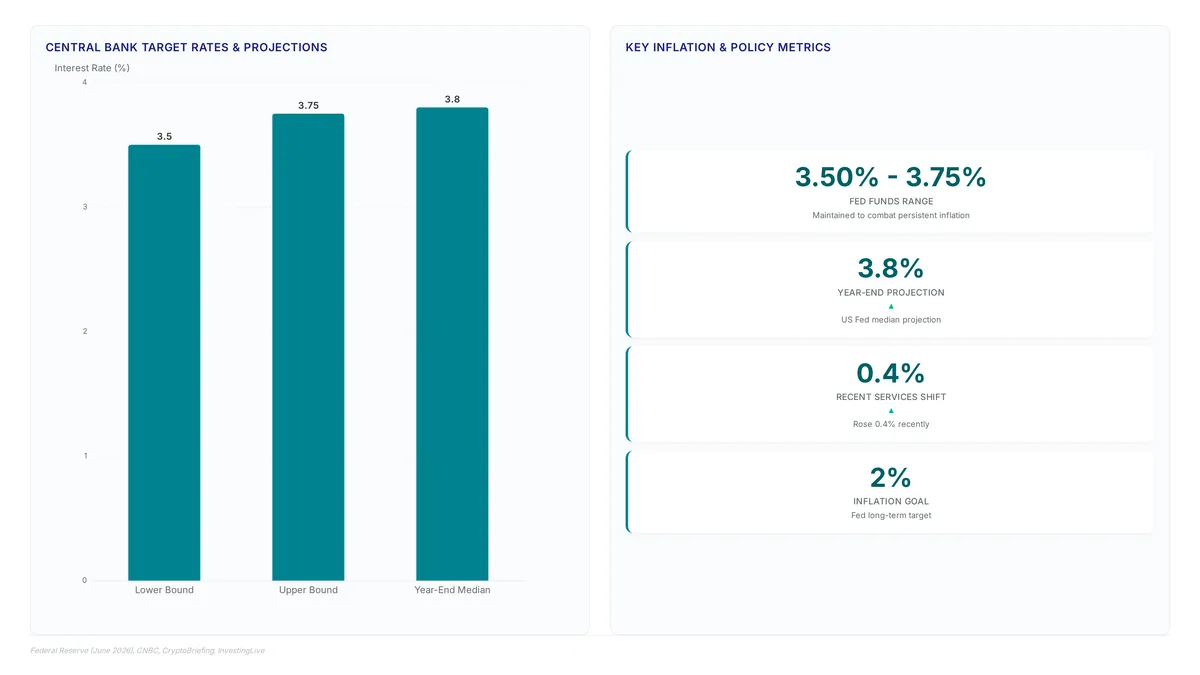
Officials face a stark calculation when the left of the decimal place stays fixed at three or four. Chicago Fed President Austan Goolsbee emphasizes that determining whether these elevated levels persist constitutes the critical through line for future rate decisions. Services inflation often proves more disturbing than volatile goods prices driven by tariffs. Markets must distinguish between one-time geopolitical disruptions and a self-perpetuating wage-price spiral. Failure to identify persistent services inflation early could force the Fed to maintain restrictive policy longer than anticipated.
| Inflation Driver | Persistence Risk | Policy Response |
|---|---|---|
| Tariffs | Low (One-off) | Monitor |
| Services | High (Embedded) | Restrict |
| Geopolitics | Variable | Assess |
ForexCFD.top analysts note that misreading this threshold creates unnecessary volatility in currency pairs sensitive to rate differentials. Traders should watch for any shift in the left-of-decimal reading before adjusting exposure to dollar-denominated assets. This divergence in official views highlights the tension between supporting growth and anchoring expectations. A decisive break below core measures is required to validate a softer path. However, any resurgence in energy costs or tariff impacts could force a reevaluation of the neutral rate. ForexCFD.top strategists monitor these FOMC projections to navigate volatility in substantial pairs. The view flips only if incoming data confirms a sustained decay in services pricing, allowing the committee to shift from a hold to a cut cycle without reigniting inflationary expectations. Until then, the bias remains firmly anchored to higher-for-longer rates.
Risk of Embedded Pressures from Tariffs and Geopolitics
Temporary shocks from tariffs and geopolitical disruptions risk becoming embedded pressures if services inflation fails to moderate. Chicago Fed President Austan Goolsbee warns that distinguishing these transient factors from persistent trends is the primary challenge for policymakers. Unlike goods prices, which often revert quickly, services inflation reflects domestic wage dynamics and can lock in higher price levels. If market participants misinterpret geopolitical noise as permanent, inflation expectations could de-anchor, forcing more aggressive tightening later.
Traders at ForexCFD.top monitor these divergences closely, recognizing that a failure to separate signal from noise often leads to premature positioning errors. The specific risk lies not in the initial price jump, but in the secondary pass-through to broader consumer baskets. Should services data continue to show strength despite easing commodity costs, the assumption of a natural fade becomes untenable. A definitive resolution in regional conflicts or a reversal of trade barriers would serve as the catalyst to flip this bearish inflation view, allowing price pressures to dissipate without further policy pain.
Strategic Frameworks for Monitoring Inflation Trajectory and Policy Outcomes
Chicago Fed President Goolsbee isolates a singular metric to gauge policy duration: whether the left of the decimal place number remains a three or a four. This distinction separates transient geopolitical shocks, such as conflict in the Middle East, from persistent services inflation that resists rapid decay. Tariff effects are theoretically one-off events, yet the monthly increase matches consensus forecasts and indicates sticky inflation. Strategists monitor this left-of-the-decimal metric because it dictates the duration of restrictive policy. Traders must weigh the probability of a prolonged high-rate regime against market pricing for imminent easing. Stakeholders evaluating inflation risks recognize that this 40-basis-point shift reflects a consensus that the federal funds rate must remain elevated to anchor expectations. The primary monetary policy challenge lies in distinguishing between geopolitical shocks and embedded price pressures.
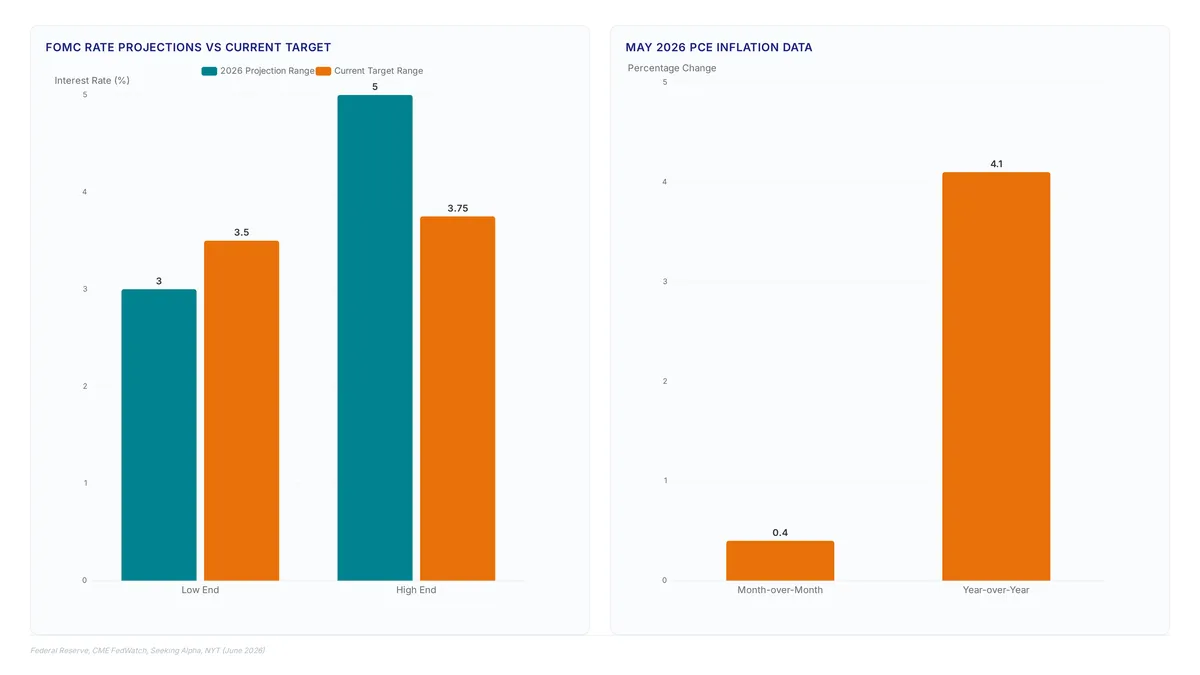
Goolsbee stressed the Fed must determine whether current pressures will naturally fade or become embedded in the broader economy. He described services inflation as "a little more disturbing," suggesting that continued strength in this sector prevents the Fed from assuming inflation will return smoothly to target.
Application: Risk of Embedded Pressures from Tariffs and Geopolitics
Distinguishing transient shocks from permanent scars defines the tactical entry for inflation-sensitive assets. Chicago Fed President Goolsbee notes that tariff impacts are theoretically one-off events, yet services inflation remains the disturbing variable resisting decay. A resolution in the Middle East could theoretically alleviate oil-driven volatility, but persistent strength in domestic services suggests price pressures may embed rather than fade. Traders must map this narrative against hard data to validate the bias. This policy rigidity creates a tangible tension: while goods prices might stabilize, the inflation target remains out of reach without broader cooling.
The primary risk lies in the lag between geopolitical de-escalation and actual price relief. If services continue to show durability despite falling energy costs, the Federal Reserve cannot pivot easily. Tariff effects and geopolitical disruptions are cited as temporary factors, yet the continued strength in services prices suggests the Fed cannot yet assume inflation will return smoothly to target.
About
Marcus Halloran serves as Chief Market Strategist at ForexCFD.top, where he directs macro analysis and central bank coverage. His background as a former interbank FX strategist in London provides the precise expertise required to dissect inflation persistence and its implications for monetary policy. Having spent years interpreting Federal Reserve communications and economic data on institutional dealing desks, Halloran understands how elevated price pressures influence interest rate trajectories and currency valuations. At ForexCFD.top, an independent publication dedicated to forex and CFD market news, he applies this experience to translate complex policy shifts into actionable insights for retail traders. His daily work involves analyzing the very economic indicators, such as CPI and Fed commentary, that drive the inflation debate. This direct engagement with macroeconomic catalysts ensures that the site's analysis of whether inflation remains stuck above target levels is grounded in rigorous, professional market logic rather than speculation.
Conclusion
When services inflation resists decay despite falling energy costs, the operational cost of holding defensive positions rises sharply. The market often misprices the lag between geopolitical de-escalation and actual price relief, creating false confidence in an imminent policy pivot. This disconnect forces traders to confront a reality where temporary shocks harden into persistent burdens if domestic demand remains too reliable. The window for assuming a smooth return to target closes quickly when core metrics refuse to align with headline improvements.
Traders must adopt a conditional stance that treats rate cuts as distant until services show consistent weakness. Do not rely on hopes of geopolitical fixes to solve domestic price stickiness. Instead, prioritize monitoring the divergence between goods and services pricing over the next quarter. Adjust your exposure to interest-rate-sensitive assets immediately if your models cannot withstand a prolonged high-rate environment. Protect capital by aligning with the data rather than the narrative of imminent easing.
Frequently Asked Questions
Services inflation indicates persistent price pressures more than goods do. This metric keeps the headline PCE index near 4.1%, forcing traders to monitor it closely for signs of embedded economic shifts.
This specific level attempts to cool the economy without causing a crash while inflation remains well above the 2% target.
Tariffs cause one-time price jumps while services inflation creates lasting spirals. Policymakers worry less about transient shocks and more about persistent trends that keep overall prices near 4.1% indefinitely.
The Fed must choose between temporary pain now or entrenched inflation later.
Expectation anchoring solidifies wage-price spirals when agents believe high rates are permanent. This psychological factor prevents a return to the 2% target by embedding current high costs into future contracts.
References