
Rate hike odds drop 7.3bps as inflation cools
The Dollar Index slipped to 101.1 as December rate hike expectations dropped 7.3bps following soft inflation data.
Inflation-driven repricing now dictates asset valuations more than central bank rhetoric. While Deutsche Bank Research notes traders slashed Fed rate hike probabilities, the broader economic reality remains grim, with the World Bank projecting global growth to stagnate at just 2.5% in 2026. Investors ignoring these structural headwinds in favor of short-term yield chases are misreading the room.
Softer PCE data forced a -8.7bps correction in 2-year Treasury yields. Payroll growth is expected to decelerate sharply to +75k, testing the durability of current employment models. Finally, diverging policy paths contrast the Fed's hawkish lean against the ECB, where hike pricing fell -12.8bps in a single week.
Only data-sensitive strategies will survive this global slowdown.
The Mechanics of Inflation-Driven Market Repricing
Defining PCE Inflation and Its Link to Treasury Yields
Core PCE inflation tracks consumer spending shifts excluding volatile food and energy sectors, serving as the primary gauge for monetary policy. The metric recorded 3.3% in April 2026, rising from the 3.0% baseline established in late 2025. This upward trajectory forces traders to recalibrate Treasury yields, which represent the annual return on government debt obligations. Short-term instruments like the 2-year Treasury note react sharply to immediate Fed rate expectations, while longer tenors reflect growth outlooks. Cooling inflation data directly compresses yield curves by reducing the perceived need for aggressive rate hikes. Market participants observed the 2-year yield drop 8.7 basis points following the softer print, signaling a rapid pivot in pricing models.
How Soft PCE Data Triggered a 7.3bps Drop in Fed Hike Pricing
When softer US PCE inflation data forces investors to reduce Federal Reserve expectations, Fed rate hike pricing adjusts instantly. This mechanical repricing pulled the December contract down by 7.3bps to 32bps, reflecting a rapid shift from speculative anticipation to a data-dependent strategy. Such volatility demonstrates the extreme sensitivity traders exhibit toward cooling inflation signals, as documented in recent Deutsche Bank Research The immediate consequence of this downward revision was a measurable weakness in the Dollar Index, which fell to a low of 101.1 on a Friday. This decline marked a second consecutive session of losses, contrasting sharply with the strength seen just days prior when the index reached a 13-month high. Market participants adjusted probabilities for a July rate rise down from 34.2% to 28.9%, creating a synchronized but divergent tightening expectation compared to the Eurozone where pricing fell to 24bps. Traders react to immediate data releases. The Federal Reserve faces a complex environment where near-term guidance remains limited, leaving markets to interpret incoming labor figures without explicit policy cues. Slight deviations in payroll growth or unemployment rates could trigger further erratic swings in yield curves. Operators must recognize that Treasury yields will remain highly reactive to every statistical release until clear policy signaling resumes.
The Risk of Extreme Sensitivity to Cooling Inflation Metrics
Extreme market sensitivity to cooling inflation metrics creates volatility where the Dollar Index recently swung from a 13-month high. This sharp reversal highlights a disconnect between transient trader positioning and institutional forecasts, as Deutsche Bank economists still anticipate two rate increases later this year. Such extreme sensitivity forces liquidity providers to widen spreads abruptly, punishing used positions that bet on linear policy paths. The broader economic data supports a hawkish stance. Immediate market reaction compresses yields and destabilizes currency pairs unnecessarily. Traders face a specific tension: following the hawkish Fed path projected by institutions risks short-term mark-to-market losses, yet ignoring it invites catastrophic basis risk if the central bank acts decisively. Operational strategy must therefore decouple execution from headline noise, focusing instead on the structural divergence between swap markets and spot pricing anomalies.
Labor Data Dynamics and Yield Curve Sensitivity
Payroll Growth and Unemployment Rate Mechanics
Payroll growth slowing to +75k creates a mechanical divergence from the previous +172k reading that directly alters Federal Reserve reaction functions. This deceleration forces a recalculation of the unemployment rate, which is expected to hold steady at 4.3% despite the drop in job creation. Such a discrepancy between hiring velocity and jobless claims often signals underlying labor hoarding rather than genuine softness. Market participants monitor this specific tension because stable unemployment alongside falling payrolls suggests companies are retaining staff despite reduced output demand. The monetary policy transmission mechanism relies heavily on this labor data to validate or invalidate inflation hawks. A miss on the +75k forecast would likely accelerate the pricing of rate cuts, whereas a beat could reignite hike fears. The 2-year Treasury note Conversely, the 10-year yield reflects the cumulative impact of growth fears on long-term capital allocation. Seasonal factors frequently distort these headlines, requiring analysts to adjust raw figures before drawing conclusions. The risk remains that seasonal adjustments fail to capture abrupt structural shifts in hiring behavior.
Translating Labor Forecasts into Treasury Yield Movements
The specific -7.3bps drop in December hike pricing to 32bps mechanically drove the 2-year Treasury note lower by reducing immediate policy tightness expectations.
- Analysts first isolate the change in fed funds futures to quantify the shift in rate hike probability.
- Traders then map this probability shift against the sensitivity of the 2-year Treasury note
- Finally, the portfolio adjusts duration exposure as the 10-year.
| Metric | Reaction Driver | Market Signal |
|---|---|---|
| 2-Year Yield | Fed Policy Expectations | Short-term Rate Path |
| 10-Year Yield | Growth and Inflation | Long-term Economic Outlook |
| Payroll Data | Labor Market Tightness | Future Inflation Risk |
A critical tension exists where payroll growth slowing to +75k suggests economic cooling, yet the unemployment rate holding steady implies underlying durability that could reignite price pressures. Most market participants overlook that this divergence forces the Federal Reserve to weigh conflicting signals rather than following a single data track. The cost of misreading this labor yield relationship is immediate portfolio mark-to-market losses as algorithms react to headline numbers before human analysts validate the context. Operational strategy requires separating transient seasonal noise from structural labor shifts to avoid over-trading based on false positives in the employment report.
Seasonal Distortions and Payroll Data Misinterpretation
Seasonal adjustment factors artificially suppress payroll counts during this period, creating a false signal of labor weakness that distorts Federal Reserve pricing models. This mechanical drag risks pulling the headline number below the projected private payroll rise of around +90k, leading analysts to misinterpret the underlying strength of the employment sector. Recent market behavior demonstrates how easily such data quirks trigger outsized reactions, as seen when the Dollar Index swung from a 13-month high to lower levels on transient inflation fears. Operators must distinguish between genuine labor cooling and calendar-induced noise to avoid mispricing rate hike probabilities.
Comparative Analysis of Fed and ECB Policy Trajectories
Defining the Hawkish Policy Path and Dot Plot Signals
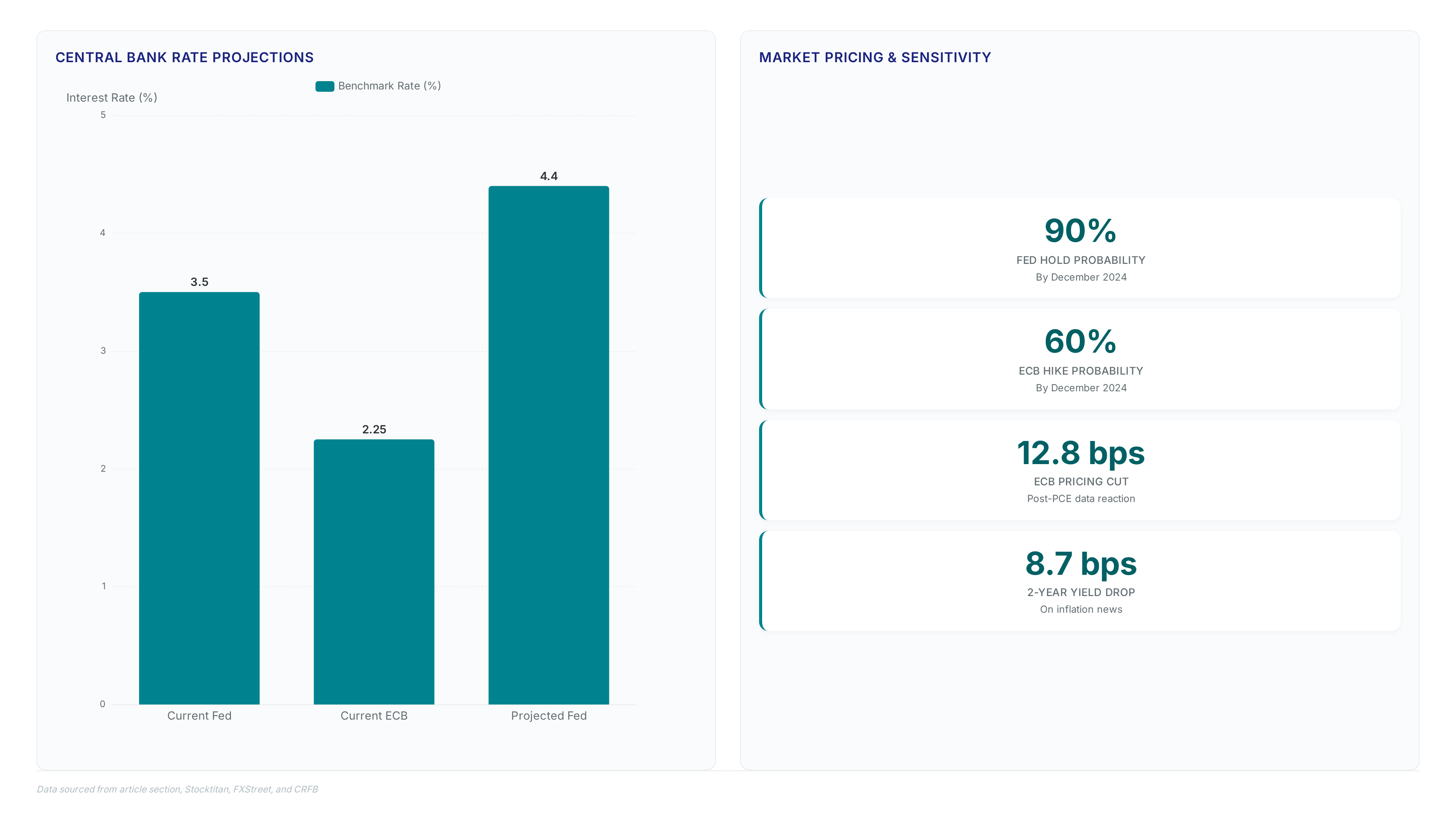
A hawkish policy path mandates raising the benchmark rate above the current 3.50% target range to suppress inflation. The Federal Reserve's dot plot serves as the primary signaling mechanism, having recently flipped projections to anticipate a hike despite earlier market expectations for a cut. This shift relies heavily on the credibility of Kevin.
| Dimension | Hawkish Signal | Market Reaction |
|---|---|---|
| Rate Projection | Two hikes pencilled in | Yield curve steepening |
| Data Sensitivity | High focus on payrolls | Volatility in short-end |
| Yield Anchor | 2-year note sensitivity | Basis point compression |
Tracking these signals requires monitoring the 2-year Treasury yield A significant limitation exists: near-term guidance remains constrained, forcing traders to infer intent from incoming data rather than explicit forward statements. Consequently, the dot plot creates a tension between the long-term goals and immediate data dependency. Operators must recognize that without explicit verbal confirmation, the dot plot alone cannot sustain a rally if labor numbers miss expectations. The cost of misreading this signal is immediate duration risk.
Tracking Divergent Rate Hike Expectations for Fed and ECB
ECB deposit rate adjustments to 2.25% on June 11 created a policy floor that US inflation data subsequently overshadowed. Markets reacted to softer PCE figures by slashing December hike pricing for the European Central Bank by 12.8 basis points, leaving only 24 basis points of tightening anticipated by year-end. This aggressive repricing contrasts with the Federal Reserve, where Deutsche Bank analysts The divergence creates a distinct tension for currency traders managing dollar exposure against euro-denominated assets.
| Metric | Federal Reserve | European Central Bank |
|---|---|---|
| December Pricing | Moderate reduction | Sharp 12.8bps cut |
| Policy Stance | Data-dependent hawkishness | Reactive tightening |
| Yield Sensitivity | High (2-year note) | Moderate (bund futures) |
Operators must note that ECB rate decisions now carry less weight for the US Dollar Index than American labor prints. The limitation of this divergence is that global liquidity remains tethered to the dollar, meaning ECB moves often fail to sustain euro strength without parallel Fed action. Consequently, trading strategies relying solely on European tightening face headwinds from dominant US monetary signals. Coverage Pillars recommend monitoring the spread between German and US two-year yields as the primary indicator for capital flow shifts. A narrowing spread suggests the market believes the Fed will pause sooner than current projections indicate.
Geopolitical Risks and Limited Near-Term Guidance Challenges
Incoming data drives market pricing because near-term guidance remains limited by design. This vacuum forces operators to monitor geopolitical risks like Middle East clashes that previously pushed Treasury yields up by over 40 basis points. Such external shocks introduce volatility that clear central bank signaling usually suppresses. The cost of this ambiguity appears in borrowing costs, where the 10-year Treasury yield climbed toward 4.4% during tension spikes. A hawkish policy path implies raising rates to combat inflation, yet geopolitical instability complicates this trajectory by threatening growth.
| Factor | Impact on Yields | Impact on Guidance |
|---|---|---|
| Geopolitical Shock | Spikes risk premium | Obscures data signals |
| Limited Guidance | Increases volatility | Forces data reliance |
| Hawkish Stance | Lifts short end | Clarifies intent |
Traders must now parse noise from signal without the usual Fed Chair Warsh commentary at the ECB's Sintra forum. Without explicit forward signals, markets overreact to every headline. Operators should expect continued whipsaw action in the 2-year Treasury yield as political events overshadow economic fundamentals.
Strategic Portfolio Adjustments Based on Rate Outlooks
Defining the Hawkish Dot Plot Signal from Fed Chair Warsh
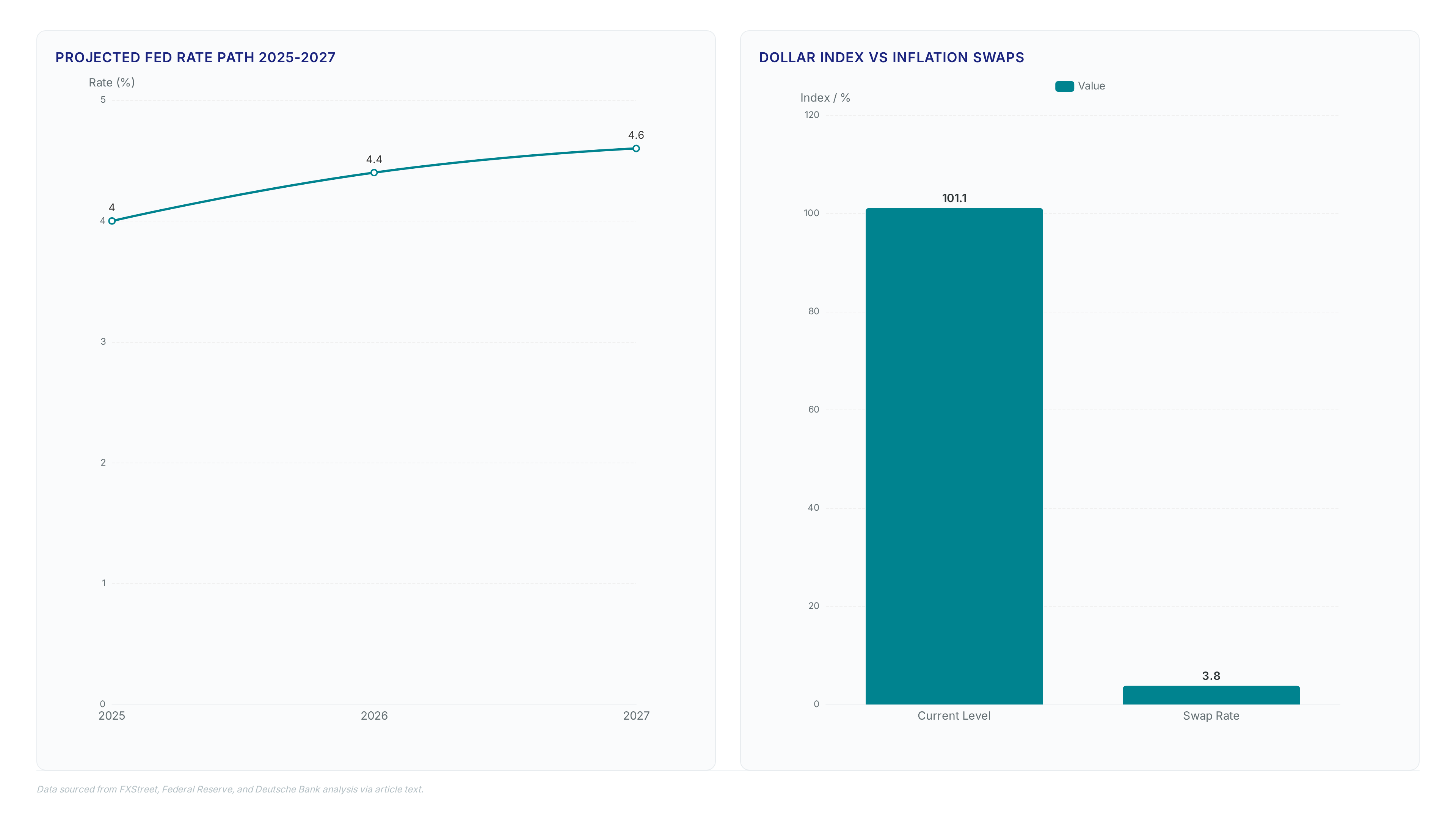
Kevin Warsh's hawkish debut as Fed Chair flipped the dot plot to project rate hikes, driving the 2-year Treasury yield. This mechanism forces investors to pivot from speculative anticipation to data-dependent strategies focused on labor anomalies. However, the limitation is that near-term guidance remains limited, leaving markets to take cues primarily from incoming payroll data rather than explicit forward commitments.
| Signal Component | Function | Market Consequence |
|---|---|---|
| Dot Plot Flip | Projects future rate hikes | Drives dollar rebound |
| Chair Commentary | Validates hawkish stance | Increases yield volatility |
| Data Dependency | Replaces explicit guidance | Heightens payroll sensitivity |
Operators using economic forecasts in investment decisions must distinguish between the mechanical dot plot projection and the actual data dependency that governs short-term pricing. A critical tension exists where the hawkish directive path conflicts with seasonal risks that could artificially suppress payroll numbers. Deutsche Bank notes that while the Dollar Index Investors ignoring this distinction risk mispricing assets during the transition from signaling to implementation. Coverage Pillars recommends monitoring the divergence between dot plot projections and realized inflation prints to avoid false breakout trades.
Translating Soft PCE Data into Dollar Index Exposure Adjustments
Deutsche Bank analysts link softer inflation directly to a repricing event that drove the US Dollar Index (DXY) down to 101.1. Investors reduced expectations for further Federal Reserve rate hikes, pulling December hike pricing down significantly as detailed in Deutsche Bank Research This mechanism forces a pivot from speculative positioning to data-dependent strategies anchored in labor anomalies. The technical correlation manifests through yield sensitivity rather than headline rates alone. The 2-year Treasury yield A limitation of this approach is that near-term guidance remains limited, leaving portfolios exposed to volatility from incoming payroll data rather than explicit central bank signaling. Operators must weigh the risk of seasonals pulling down employment numbers against the hawkish path still pencilled in by economists.
| Metric | Previous Expectation | Current Pricing |
|---|---|---|
| December Hikes | Higher probability | Reduced significantly |
| Yield Sensitivity | Moderate | High on 2-year note |
| Policy Path | Aggressive | Data-dependent |
The implication for portfolio construction is clear: exposure adjustments must account for the divergence between market pricing and economist forecasts. While traders react to cooling inflation, substantial institutions maintain a outlook expecting two rate increases later this year. This tension creates a narrow window for adjusting dollar exposure before labor data confirms or refutes the slowdown. Coverage Pillars recommends monitoring the gap between pricing and projection to avoid false signals.
Navigating Market Sensitivity to Cooling Inflation and Geopolitical Shocks
Market participants must pivot from speculative anticipation to data-dependent strategies because the US Dollar Index (DXY) recently fell to 101.1 following softer inflation prints. This reaction highlights extreme sensitivity to cooling metrics, where traders adjusted July hike probabilities down significantly within a single session. Deutsche Bank Research indicates that despite this repricing, economists still anticipate two rate increases later this year, creating a tension between current pricing and projected policy paths. Geopolitical instability further complicates this environment by introducing volatility that clear central bank signaling usually suppresses. Renewed clashes in the Middle East serve as a stress test, having previously driven Treasury yields up by over 40 basis points across the curve. Such external shocks force a divergence where inflation data suggests easing, yet conflict premiums maintain upward pressure on borrowing costs.
| Risk Factor | Primary Signal | Market Consequence |
|---|---|---|
| Cooling Inflation | Soft PCE prints | Reduced hike expectations |
| Geopolitical Shock | Supply disruption fears | Elevated term premiums |
The limitation for portfolio managers is that near-term guidance remains constrained, leaving incoming payroll data as the sole reliable anchor. Fed Chair Warsh speaking at the ECB's Sintra forum may offer clarity, yet historical patterns suggest explicit forward commitment remains unlikely. Operators should therefore prioritize labor market anomalies over rhetorical cues when adjusting duration exposure.
About
Vikram Nair, Emerging Markets & Asia FX Writer at ForexCFD. Top, brings critical perspective to the shifting environment of Federal Reserve rate expectations. While his daily coverage focuses on emerging-market currencies like USD/INR and USD/NGN, these assets are directly dictated by the strength of the US Dollar Index and Treasury yields. As inflation data softens and markets reprice Fed hikes, the resulting dollar volatility creates immediate ripple effects across the Asian and African economies Nair analyzes. His expertise in central bank policy allows him to contextualize how a hawkish or dovish Fed path influences capital flows into Tier-2 and Tier-3 markets. At ForexCFD. Top, an independent publication dedicated to factual FX and CFD analysis, Nair connects global macro shifts to local trading realities. This ensures that retail traders understand not just the headline numbers, but the tangible impact of monetary policy on their specific currency pairs and regional broker environments.
Conclusion
This divergence between cooling inflation signals and persistent geopolitical term premiums creates a fragile equilibrium where duration risk becomes the primary casualty. As the market attempts to price in conflicting data streams, the operational cost of maintaining static hedges rises sharply, particularly for portfolios heavily weighted in long-dated fixed income. The narrow window for adjusting exposure before labor data solidifies the next policy move demands a shift from passive holding to active duration management. Relying on centralized guidance is no longer sufficient when external shocks can invalidate yield curve assumptions overnight.
Investors must adopt a conditional strategy: if the next payroll report shows wage growth exceeding a modest threshold month-over-month, immediately reduce exposure to the 10-year note to mitigate repricing risk. Conversely, any sign of labor market contraction below 150,000 jobs warrants a tactical extension of duration to lock in current yields before the Fed reacts. Do not wait for explicit confirmation from Sintra; the market has already priced in the rhetoric.
Start this week by auditing your current bond fund prospectuses to identify their average duration and sensitivity to 40-basis-point yield spikes. Execute a partial hedge using short-term instruments if your portfolio's duration exceeds seven years, ensuring you retain liquidity to capitalize on the inevitable volatility caused by the next geopolitical headline.
Frequently Asked Questions
Core PCE inflation reached 3.3% in April 2026, driving the market shift. This figure rose from the 3.0% baseline established in late 2025, forcing traders to recalibrate Treasury yields and reduce expectations for aggressive Federal Reserve rate hikes.
Market participants adjusted July rate rise probabilities down from 34.2% to 28.9%. This synchronized divergence reflects softer inflation data, causing traders to slash Fed rate hike expectations while the Dollar Index slipped to lower levels recently.
The unemployment rate is expected to hold steady at 4.3% despite the drop in job creation. Analysts anticipate payroll growth will slow significantly, yet this specific labor metric remains unchanged according to current economic projections and data models.
Traders often overfit short-term noise, causing excessive volatility in the 4.37% range for the 10-year note. This specific yield level represents a critical zone where sudden labor data reversals could force violent asset repricing events quickly.
Average hourly earnings are seen unchanged at 0.3% month-on-month in recent forecasts. This stagnant wage growth, combined with a steady unemployment rate, suggests limited immediate pressure for aggressive policy shifts despite broader inflationary concerns persisting globally.