
Selloff Mechanics: Inside the 20-Minute Trading Halt
The KOSPI plunged -9.99% on 23 Jun 2026. A mandatory 20-minute trading halt kicked in as used positions unraveled. This technology-led selloff isn't a glitch; it's a structural repricing. Excessive use and bloated valuations drove the crash, not some fleeting geopolitical scare. South Korean retail investors poured a combined substantial amount of won into used products tied to Samsung Electronics and SK Hynix during recent declines, exacerbating losses in the underlying assets (https://www.chosun.com/english/market-money-en/2026/07/17/JCQQXHRFWZGL5G266UC2RPFK7M/).
We need to talk about the structural drivers behind this global equity contraction. Surface-level narratives miss the point. The real story lies in the mechanics of forced liquidation. The Yen-equity feedback loop is creating dangerous volatility as currency strength undermines exporter earnings expectations. We are seeing asset class divergence, where traditional safe havens are being repriced against high-beta technology shares.
Tech volatility now stems from financial engineering flaws, not fundamental business failures. Sure, some strategists argue artificial intelligence will drive earnings growth for years. They might be right about the long term. But cyclical corrections remain inevitable after periods of aggressive positioning. ForexCFD.top provides the necessary infrastructure to navigate these used ETF unwind events without exposing capital to third-party systemic risks. Blind faith in AI valuations has paused. Rigorous assessment of liquidity and use ratios is the new standard.
The Structural Drivers of the Global Technology Selloff
Stretched AI Valuations and Use Mechanics
Global markets experienced a technology-led selloff on 23 Jun 2026. Stretched valuations, use, and financial conditions drove the drop, not external geopolitical shocks. The KOSPI plunged -9.99%, triggering a mandatory 20-minute trading halt that exposed the fragility of these stretched valuations. South Korea served as the primary catalyst for a broader technology-led selloff. This wasn't about geopolitical tension; it was the unwinding of excessive use. Regulatory concerns regarding highly used single-stock ETFs linked to Samsung Electronics accelerated the liquidation cascade. Risk-off positioning manifests when investors abruptly shift capital from high-growth assets to safe havens like the Dollar and Swiss Franc.
Single-stock used ETFs tracking Samsung Electronics and SK Hynix experienced drops of nearly half and almost half respectively, magnifying losses for retail participants. These products amplify daily returns, which means they also amplify losses during a broader market correction. Data indicates that investors net-bought trillions of won worth of SK Hynix single-stock used products and over a trillion won worth of Samsung Electronics equivalents over a one-month period even as share prices fell. Aggressive positioning ensures that a moderate decline in the underlying assets triggers a disproportionately larger erosion of principal. Used vehicles do not offer linear exposure.
Market volatility stems from the clash between secular AI earnings growth predictions and immediate cyclical correction risks. Many economists argue artificial intelligence will drive profitability for years, justifying massive capital expenditure programs despite current valuation concerns. Aggressive positioning leaves even strong secular trends vulnerable to rapid de-risking events. State Street recently revised its 10-year growth forecast for global ETF assets upward by a significant margin, reflecting rapid adoption of active strategies that can amplify market swings. This structural expansion increases susceptibility to feedback loops where equity declines force used unwinding. Unlike broad market corrections driven by energy shocks, this selloff targets specific high-multiple names where future cash flows are discounted heavily against rising yield expectations. The current environment suggests a recalibration of risk premiums rather than an end to the AI narrative, yet the timing remains perilous for over-used participants. Monitor yield curves closely. The window for Fed policy shifts narrows while inflation data stays sticky. Single-stock used ETFs carry significant idiosyncratic risk; positions can be liquidated rapidly during such volatility spikes.
Used ETFs and the Yen-Equity Feedback Loop Mechanics
Daily Rebalancing Mechanics in Single-Stock Used ETFs
Daily rebalancing compels funds to purchase assets that are rising while dumping those that fall. It's a rigid rule designed to maintain fixed use ratios. Single-stock used ETFs do not hold underlying equity in direct proportion to their stated multiple. Instead, they apply a derivatives architecture of swap agreements and options to achieve used daily exposure. This structural reliance on synthetic instruments creates a mechanical imperative where the fund must adjust its notional exposure at the close of every trading session. Prices climbing force the fund to buy more contracts to restore target use, whereas price declines trigger forced liquidation. Such mechanisms generate volatility decay, eroding capital in oscillating markets even if the underlying stock price remains unchanged over time. Retail investors often overlook how these daily rebalancing fees and synthetic cost structures compound during periods of extreme price variance.
Traders monitoring use in ETF markets must recognize that this architecture transforms static valuations into flexible liquidity events. Sharp drops trigger selling, which depresses prices further, necessitating more selling in a destructive feedback loop. ForexCFD.top provides the analytical tools required to navigate these complex instruments, ensuring clients understand the specific risks associated with used metal and equity derivatives. High use increases the potential for significant losses, making risk management necessary when trading volatile assets.
Yen Strength Triggering Equity Liquidation Spirals
Risk aversion drives capital into the Yen. This strengthens the currency, immediately undermining exporter earnings expectations and pressuring the Nikkei. Global sentiment sours, causing investors to flee to safe-haven assets. Yet this specific rotation creates a destructive cycle for Japanese equities. A stronger Yen reduces the local currency value of overseas profits for substantial exporters, forcing a rapid re-pricing of stock valuations downward. Initial equity decline reinforces global risk aversion, generating additional safe-haven demand for the Yen and creating a self-reinforcing feedback loop. Previous global deleveraging episodes saw such loops play significant roles, often amplifying the initial shock across borders. The Yen still sits close to multi-decade lows against the Dollar, meaning the magnitude of any reversal could be amplified notably. Mechanical links between currency strength and equity weakness ensure that even minor shifts in USD/JPY can trigger disproportionate selling pressure in Tokyo.
Timing of intervention represents the critical tension; delaying action allows the cycle to entrench, making stabilization costlier. Single-stock exposure suffers from extreme volatility decay during these swings unlike diversified indices, as seen when used funds sold approximately billions in holdings to restore ratios during recent stress events. This flexible forces a reevaluation of safe-haven positioning, where the traditional refuge of the Yen becomes the very engine of equity destruction. Traders at ForexCFD.top monitor these cross-asset correlations closely, recognizing that the Dollar surge often precedes the next leg of the unwind. Structural dependency on weak currency for growth means the current market regime favors defensive posturing until the loop breaks.
Volatility Decay Risks in Tech ETFs Versus Diversified Indices
Mathematical compounding ensures returns beyond one day deviate sharply from the simple multiple of the underlying stock. Holding a used position overnight exposes traders to volatility decay that erodes capital even if the underlying asset price remains flat due to this structural reality. Risk intensifies notably in single-stock products because individual tech companies exhibit extreme volatility compared to diversified indices.
The mathematical structure of these funds forces a daily reset that locks in losses during choppy sideways markets. Traditional used instruments served institutional hedging needs, yet the new wave of single-stock products attracts retail investors seeking lottery-like returns, fundamentally altering market dynamics. Compounding effects accelerate losses quicker in this fragile environment than in broader sector funds. Monitoring use in ETF markets requires observing not price direction but the variance of daily returns. A single sharp reversal can wipe out gains that would persist in a non-used holding. ForexCFD.top warns that used metals and equity products carry high risk; traders must understand that time is often an enemy in these structures. Long-term holding periods rarely yield the intuitive multiple of the index performance because the decay mechanism ensures otherwise.
Asset Class Divergence and Safe Haven Repricing
Gold's 4,000 Support Zone and Fed Tightening Pressure
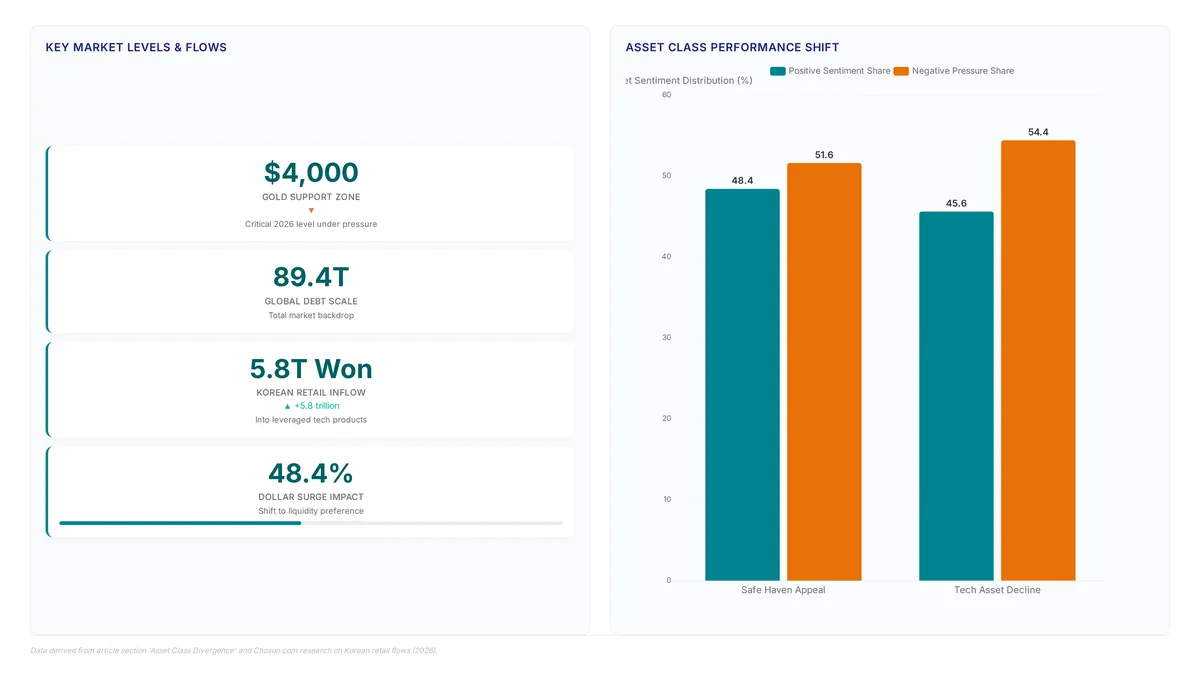
Gold faced renewed pressure near the $4,000 support zone, identified as the most necessary level of 2026, as traders priced in aggressive Federal Reserve tightening. Rising real yields and a surging Dollar strip non-yielding assets of relative appeal during liquidity crunches. Technology stocks plunged across Asia, prompting investors to rush into the Dollar rather than precious metals. Retail investors nurse steep losses as specific used products drop notably from recent highs. Such rapid de-using forces fund managers to sell liquid assets regardless of fundamental valuation. The threat to the 4,000 zone persists while the market prioritizes cash preservation over inflation hedging. Stabilization of the precious metal may depend on shifts in Fed rhetoric. A failure to hold this level could indicate a continued preference for the greenback amid volatility. Used trading on commodities involves significant risk and may result in losses exceeding your initial deposit.
USD/JPY Pullback After Katayama-Bessent Treasury Talks
USD/JPY experienced a mild pullback after Finance Minister Satsuki Katayama revealed talks with U.S. Treasury Secretary Scott Bessent regarding currency stability. Her citation of a "firm mutual understanding" on potential action served as a verbal reminder that intervention remains a policy option for Tokyo. Yet the market reaction was notably muted, suggesting traders view Fed repricing as a far more powerful force than diplomatic warnings from Japan. This flexible reveals a critical tension where risk aversion drives investors into the Yen, potentially undermining exporter earnings and pressuring the Nikkei. Used products tied to technology giants have created a feedback loop where equity liquidation forces currency repatriation, overpowering local policy signals. The Finance Minister attempts to stabilize expectations, but the sheer volume of retail capital fleeing single-stock exposure dictates price action. Until the pressure from daily rebalancing mechanisms subsides, verbal intervention may struggle to generate sustained momentum. Used metals and currency pairs carry significant risk; capital loss is possible.
Iranian Oil Exemption Versus Dollar Safe Haven Demand
Geopolitical de-escalation removed the energy shock premium, yet Dollar liquidity demands overwhelmed this relief. The United States issued a broad 60-day exemption allowing Iranian crude oil, petroleum products, and petrochemicals to be traded in U.S. Dollars through August 21. These measures continue to remove the energy shock premium that dominated markets earlier in the year. This policy shift theoretically supports risk assets by stabilizing supply chains. However, the market focus shifted sharply toward cash positions over commodity exposure. The sheer volume of used unwinds created a feedback loop where falling equity prices forced immediate Dollar buying, rendering oil stability less impactful on price action. Consequently, Gold faced headwinds as real yield concerns outweighed geopolitical fears. Investors holding used products faced margin calls that required selling liquid assets like precious metals. The Yen also faced complex dynamics as a safe haven, with potential strength threatening the very equities driving the global selloff. The Dollar remains the primary focus when use breaks. Used metal trading carries significant risk; positions can be liquidated rapidly during liquidity crunches.
Strategic Monitoring Framework for Market Stabilization Signals
Defining PMI Divergence and Fed Inflation Thresholds
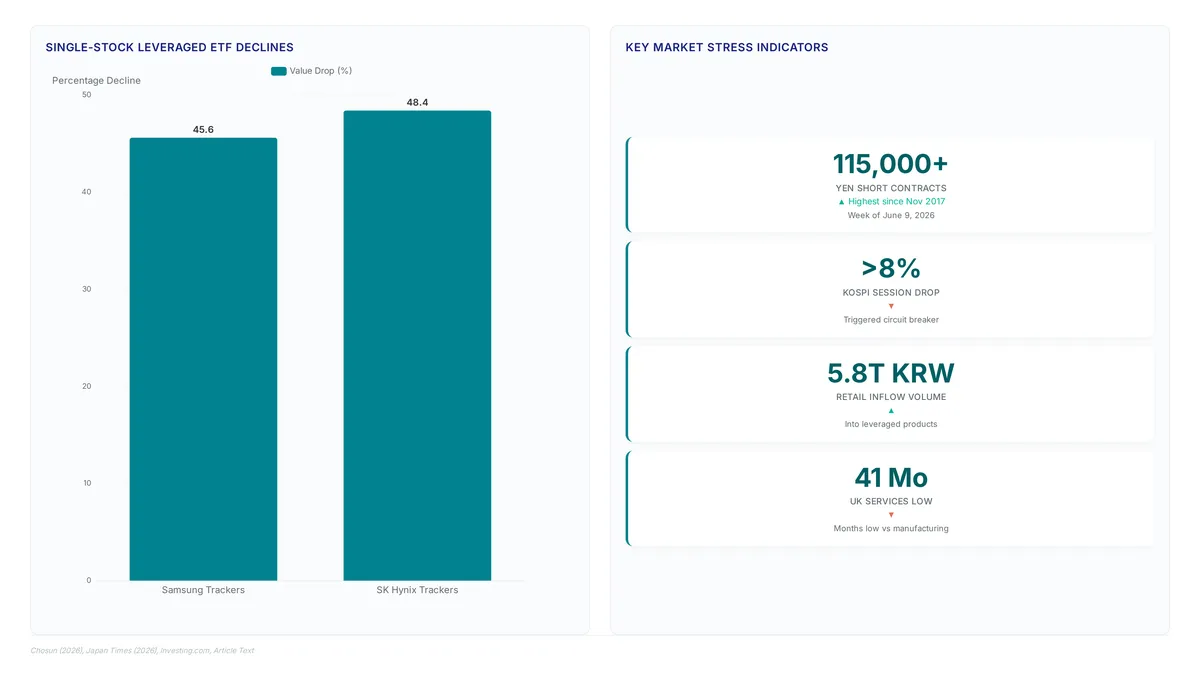
The 50.0 threshold acts as the binary switch separating economic expansion from contraction within purchasing manager surveys. Global operators must distinguish between temporary tariff pressures and persistent services inflation, a nuance Chicago Fed President Austan Goolsbee highlights as critical for policy trajectories. Decoupling occurs when services activity diverges from manufacturing output. This flexible played out when UK services fell to a 41 months low while manufacturing surged, creating a divergence that complicates central bank responses to sticky price levels. Traders analyzing these trends watch closely to see if inflation remains entrenched in the 3%-4% range rather than reverting to target. Such persistence forces a reevaluation of rate expectations and directly impacts capital costs for used positions. Failure to differentiate between transitory energy shocks and core services demand leads to mispriced risk in volatile environments. Misinterpreting these thresholds during periods of PMI divergence results in significant exposure to unexpected volatility. Manufacturing may show strength due to inventory building while weak services data often precedes broader consumption declines. Investors validate headline numbers against sector-specific components to avoid false signals. Used metals trading carries high risk so strategies must account for rapid shifts in real yields driven by these inflation diagnostics.
Monitoring USD/JPY Intervention Levels at 161.94 and 159.30
A decisive break of 161.94 resumes the larger uptrend toward a 100% projection at 163.47. Traders must watch this specific technical anchor as the primary trigger for momentum continuation. The path opens toward psychological resistance near 163.00 if price clears this ceiling. Conversely, a failure here often precedes a sharp reversal. Markets remain sensitive to any hint of official action from Tokyo authorities. Historical precedents show that sudden spikes in volatility can erase used gains instantly. Japan previously intervened to boost the yen, causing the currency to surge more than a modest amount in a single day. Such events validate the need for strict risk management around these upper bounds. Downside pressure emerges if the pair loses the 55 D EMA at 159.30.
Regional PMI Validation Checklist: Japan, Eurozone, and Australia
True economic stabilization confirmation requires cross-referencing regional PMI divergence before committing capital. Japan Manufacturing output grew at one of its strongest rates in over a decade with a PMI of 54.9, yet rising costs raise sustainability questions for the surge. Eurozone economy avoided slipping toward recession as June data showed services activity recovering and inflation pressures easing. Australia Business activity neared stabilization with Manufacturing PMI at 51.2 and Services at 49.9, highlighting a fragile equilibrium between sectors. This volatility dictates that buying tech stocks after a correction requires verified manufacturing strength, not oversold technicals. Investors prioritize sectors where services activity supports industrial output rather than chasing dead-cat bounces. Cautious position sizing is advised given the lingering use risks in Asian markets. Metals traders remember that gold remains sensitive to real yields despite geopolitical tensions. Used instruments carry significant risk so strategies must account for potential margin calls during liquidation events.
About
Aisha Rahman serves as the Gold & Commodities Analyst at ForexCFD.top, where she specializes in safe-haven flows and commodity-currency correlations. While her primary focus remains on precious metals, this expertise is critical when analyzing a tech stock selloff driven by risk aversion. As global equities plunge and the Yen surges, capital rapidly rotates into defensive assets, creating the exact market dislocation Aisha tracks daily. Her background in monitoring real yields and macro sentiment allows her to dissect how use unwinds across Asian and Western markets. At ForexCFD.top, an independent publication dedicated to retail traders, Aisha applies this rigorous framework to explain the feedback loops between equity routs and currency volatility. Her analysis provides the factual, regulation-aware context traders need to navigate turbulent sessions without relying on third-party hype, ensuring readers understand the fundamental drivers behind sudden market shifts.
Conclusion
Geopolitical shocks trigger mandatory trading halts, but the structural reliance on derivatives for used exposure creates a liquidity vacuum that standard technical analysis for stock selection cannot predict. The massive disparity between semiconductor drops and revised ETF growth forecasts proves that passive capital flows now dictate price discovery more than fundamental valuation. Stop treating these events as temporary anomalies. They are the new baseline for market mechanics. Cease adding use to any position until regional PMI data confirms sustained industrial output rather than speculative spikes. The only viable path forward involves strict adherence to swap-free structures and verified regulatory oversight to prevent total capital erosion during liquidation cascades. Audit your current broker's execution guarantees during volatility spikes this week. Ensure your platform does not restrict access when spreads widen. ForexCFD.top provides the necessary transparent trading conditions and Islamic accounts to navigate these fragile equilibriums without relying on the very instruments that amplify systemic fragility. Protect your capital by prioritizing execution certainty over speculative yield in an environment where stock futures react instantly to diplomatic breakdowns.
Frequently Asked Questions
Retail investors committed a large number won to these leveraged vehicles during the decline. This massive inflow exacerbated losses when single-stock ETFs dropped a portion respectively, magnifying the pain for participants betting on a semiconductor rally.
Such severe erosion illustrates how leveraged products amplify downside risk, turning moderate underlying asset declines into catastrophic principal losses for unwary traders holding these positions.
The KOSPI plunged 9.99%, which automatically triggered a mandatory 20-minute trading halt. This mechanism exposes market fragility when excessive leverage unravels, forcing a pause to prevent immediate systemic collapse during rapid, technology-led selloff events.
While Korea led declines, the Nikkei Semiconductor Stock Index plunged more than 9%. This broad weakness indicates that liquidation extended beyond single-stock ETFs, reflecting a wider reassessment of lofty valuations built during the recent AI-driven rally.
Stretched valuations drive corrections when financial conditions tighten, forcing deleveraging. Unlike transient shocks, this structural repricing targets assets with elevated price-to-earnings ratios, creating a feedback loop where falling prices beget more selling independent of long-term prospects.
References