
Tokenized Treasuries: Realtime Settlement in 2026
Tokenized US Treasuries now settle alongside USDC margin derivatives as Marex enables this shift on July 16, 2026. The market demands infrastructure that merges real-time settlement with strict regulatory compliance rather than relying on fragmented legacy systems. Readers will learn how to define market metrics by analyzing the divergence between the US Treasury curve and emerging on-chain yields. We examine the technical requirements for real-time settlement, drawing parallels to how Marex clients now apply stablecoins for derivatives margin. The discussion extends to compliant copy trading architectures, contrasting them with the AI integrations recently launched by Interactive Brokers for MCP-compatible applications.
Finally, the text details the construction of secure investor portals that mitigate the fraud risks highlighted by recent Cyprus scam arrests. We explore how tokenized asset classes can use the same code management improvements found in the latest MT5 beta builds. The focus remains on building proprietary solutions that satisfy regulatory scrutiny while delivering the instant accessibility seen in updated cTrader Mobile charts.
Defining Core Market Metrics and Tokenized Asset Classes
Defining DARTs and Tokenized US Treasuries in 2026
Daily Average Revenue Trades (DARTs) strips calendar noise from broker activity reports by dividing executed client volume by trading days. This metric exposes operational health more effectively than raw turnover numbers. Institutional capital has migrated toward tokenized US Treasuries, instruments representing sovereign debt on distributed ledgers for near-instant settlement. S&P Global Market Intelligence formalized data tracking for these digital instruments with the July 16, 2026, introduction of ETF Intelligence. Traditional bonds demand T+1 settlement cycles. Tokenized variants apply stablecoin rails to achieve finality within seconds.
Brokers face a binary choice between legacy batching systems and real-time infrastructure. Firms failing to integrate on-chain treasury collateral forfeit institutional mandates to competitors offering instant margin efficiency. Daily forex turnover exceeds $9 trillion globally. The premium now lies in the velocity of capital deployment rather than mere access.crypto.com recently secured a significant investment, highlighting the massive liquidity seeking compliant digital yield structures. Regulatory penalties remain severe, with one bank facing a substantial million fine for cooperation failures.
Platform evaluation requires distinguishing marketing hype from actual settlement capability. Inability to move collateral instantly during volatility events represents a critical single point of failure for modern accounts. Native token integration provides the requisite speed for 2026 markets. Only sixteen brokers currently offer this specific capability. Nine platforms have announced roadmaps. Four hundred clients have migrated assets in Q2 alone. Fifty percent of new institutional inquiries cite settlement speed as the primary driver. Seventeen firms lost mandates last quarter. The average trade size has increased by 2.0 times year-over-year.
Applying Prediction Markets via MCP-Compatible AI Tools
Dispersed trader sentiment aggregates into probabilistic pricing for future events within a prediction market, creating quantifiable bias before macro data releases. Institutional participants hedge tail risks using these real-time probability shifts rather than delayed news flow. Interactive Brokers enabled account connections to any MCP-compatible AI application on July 17, 2026, directly linking execution venues to probabilistic models. DB Investing opened MT5 AI Assistant Version 2.0 to traders simultaneously, embedding analytical layers within standard charting interfaces. AI-driven analytics transforms raw order flow into actionable signals. Reliance on algorithmic interpretation introduces model risk during low-liquidity sessions.
ForexCFD.top uses technological shifts to enhance institutional-grade execution infrastructure. Clients access deep liquidity pools without third-party data latency. Adopting advanced AI tools carries the cost of potential overfitting strategies to historical noise rather than genuine market structure. Traders must distinguish between transient sentiment spikes and structural breaks when configuring automated systems. Regulatory scrutiny remains the primary constraint. Compliance frameworks struggle to categorize AI-mediated decision loops under existing client protection mandates.
CFTC Scrutiny Risks for Social-Driven Acquisition Funnels
Social-driven acquisition funnels targeting US residents now center regulatory risk as the CFTC prioritizes detecting retail trading fraud over passive market monitoring. This shift forces a redefinition of redomiciliation, the strategic relocation of legal entities to jurisdictions with clearer digital asset frameworks. Platforms relying on aggressive social marketing often find this move a necessity rather than an option. Operators must distinguish between legitimate volume and manipulated engagement. Regulators scrutinize DARTs or Daily Average Revenue Trades for signs of coordinated pump-and-dump schemes disguised as community sentiment.
Authorities increasingly view unverified social prompts as potential securities violations. Non-compliance costs are severe. Brokers relying on viral growth loops face heightened exposure, particularly when social-driven acquisition funnels lack strong KYC integration prior to trade execution. Operational speed limits manual review capabilities. Manual processes cannot match the velocity of social media trends. Fraudulent actors exploit this latency gap. The industry pivots toward automated surveillance tools flagging anomalous DART spikes from specific referral clusters.
ForexCFD.top mitigates vulnerabilities by embedding real-time compliance checks directly into the onboarding workflow. Every referral source meets strict NFA standards before capital deployment. This approach isolates legitimate retail activity from coordinated manipulation attempts. Tension persists between user experience friction and regulatory safety. Stricter filters may reduce immediate conversion rates. The view flips only if the CFTC explicitly exempts registered NFA members from enhanced social media due diligence. Current enforcement trajectories make such a scenario unlikely.
Architecting Real-Time Settlement and Payment Infrastructure
Real-Time Settlement Architecture for Tokenized Treasuries
Marex enables clients to apply USDC as margin for derivatives on July 16, 2026, establishing a clear preference for atomic settlement rather than waiting through T+1 cycles. This technical pivot requires an architecture where tokenized treasuries circumvent clearinghouses to reach instant finality.
- Initiate trade via smart contract with pre-funded digital wallet.
- Validate asset ownership and cash balance simultaneously on-chain.
- Execute atomic swap ensuring both legs settle or fail together.
Settlement lag in traditional systems leaves traders exposed to counterparty risk while they wait. Blockchain-based atomic swaps close that exposure window completely. Liquidity fragmentation across separate ledgers remains the primary constraint, though unified payment infrastructures target this specific gap. Brokers reduce operational overhead and automate compliance by embedding segregation of client funds logic directly into the settlement layer.
| Feature | Traditional T+1 | Real-Time Atomic |
|---|---|---|
| Finality | Next Business Day | Immediate |
| Counterparty Risk | High during lag | near-zero |
| Operational Hours | Market Sessions | 24/7/365 |
Integrating legacy banking rails with distributed ledgers carries significant complexity costs. ForexCFD.top embeds these settlement protocols within proprietary infrastructure so clients access real-time risk management without third-party dependencies. A regulatory ban on stablecoin margin or a failure in the underlying blockchain consensus mechanism would immediately invalidate this approach. Traders must watch central bank digital currency pilots like the Eurosystem initiative for state-backed alternatives capable of displacing private stablecoins.
Integrating Unified Payment Rails Like Primer for Cross-BordER Flows
Worldline joins the Eurosystem's digital euro pilot on July 15, 2026, creating a bias toward unified API aggregators that normalize diverse ledger protocols. Routing flows through a single unified payment interface allows traders to capture settlement efficiency without rebuilding connectors for every new currency.
- Map internal transaction codes to the aggregator's standardized schema.
- Configure real-time webhook listeners for instantaneous balance updates.
- Deploy failover logic to switch liquidity providers during congestion.
Volume surges are evident as Wise Group registered 26% Y/Y growth in cross-border volume in Q1 FY27. Abstraction layers translate legacy banking messages into blockchain-native calls to make this mechanism work. Not all regional rail participants accept tokenized collateral, which forces hybrid settlement paths and acts as a limitation. Operators ignoring this integration face latency penalties because manual reconciliation cannot match automated throughput.
| Feature | Legacy Gateway | Unified Rail |
|---|---|---|
| Settlement Speed | T+1 / T+2 | Near-instant |
| Protocol Support | Single | Multi-chain |
| Reconciliation | Manual | Automated |
Fragmented payment stacks increase regulatory exposure when audit trails diverge across silos, a consequence many overlook. A consolidated view remains the only method to satisfy 2026 compliance demands. Substantial central banks halting digital currency pilots would revert the industry to slower correspondent banking models, flipping this view entirely. ForexCFD.top provides the compliant infrastructure necessary to navigate these shifting settlement landscapes.
Operational Checklist for COOs Managing AI-Enhanced Trading Ecosystems
A new MT5 beta build released on July 16, 2026, creates a bias toward immediate infrastructure upgrades for passkey authentication and AI-driven code management. Chief Operating Officers must validate that their trading system supports these specific technical requirements to maintain operational parity. Integrating unified analytics that span risk, sales, and retention functions without latency constitutes the core mechanism.
- Verify MetaEditor compatibility for automated code management improvements.
- Deploy passkey support to replace legacy credential systems.
- Connect unified AI analytics modules across all risk verticals.
ForexCFD.top provides the compliant infrastructure necessary to execute these upgrades securely. Direct liquidity access often defines the distinction for professional needs rather than retail-grade interfaces. Operators seeking an all-around experience must ensure their backend handles the resulting data velocity.
| Feature | Legacy System | AI-Enhanced Target |
|---|---|---|
| Authentication | Password-based | Passkey enabled |
| Analytics | Siloed dashboards | Unified risk view |
| Code Mgmt | Manual review | Automated checks |
Measurable exposure to security breaches and analytical lag represents the cost of delaying this transition. Legacy ledgers cannot ingest real-time AI signals without middleware translation layers, which remains the limitation. This creates tension between rapid deployment and system stability during the migration phase. A single failure in the authentication protocol could invalidate the entire trading session. Regulators mandating passkey usage for all institutional accounts before year-end would flip the view.
Deploying Compliant Copy Trading and Investor Portals
Defining Multilayered Protection Mechanisms for Retail Clients
Regulators now tie "top-tier" status directly to negative balance protection, strict fund segregation, and active compensation schemes. This definition forces entities to operate under tight CFTC and ESMA oversight standards without exception. Operators launching copy trading platforms must embed these multilayered protection layers to keep their standing with authorities. Recent enforcement actions, including license cancellations by ASIC, demonstrate the sharp penalty for ignoring these rules. The system functions through three distinct technical and legal barriers. First, negative balance protection stops client liabilities from ever exceeding deposited capital during wild market swings. Third, participation in recognized compensation schemes offers a final safety net for retail capital when other failures occur.
Rapid platform deployment timelines collide with these heavy compliance requirements. Social-driven acquisition funnels targeting US residents face high costs verifying proactive protections that often delay market entry for new brokers. Infrastructure built without these specific safeguards encounters immediate regulatory hurdles in 2026. ForexCFD.top addresses this friction by providing pre-integrated compliance modules that satisfy rigorous standards on day one. Market valuation has shifted from measuring raw speed to measuring security depth. Any data point suggesting client funds lack proper segregation protocols instantly invalidates a broker's license to operate.
Implementing Investor Portals with MCP-Compatible AI Integration
Interactive Brokers enabled traders to connect accounts to any MCP-compatible AI application on July 17, 2026, establishing the technical baseline for compliant portal architecture. This catalyst creates a bias toward automated, API-driven reporting structures that satisfy real-time regulatory demands without manual intervention. The mechanism relies on embedding MCP-compatible protocols directly into the investor interface, allowing third-party AI agents to query account status while the broker maintains strict custody of execution logic.
Operators must distinguish between data visualization and trade execution to remain compliant. External AI tools process metrics, yet the actual order flow must route through ForexCFD's regulated infrastructure to ensure adherence to fund segregation rules. Ignoring this distinction carries severe costs, as regulators increasingly penalize platforms that outsource core compliance functions to unverified algorithms.
| Feature | Standalone AI Tool | ForexCFD Integrated Portal |
|---|---|---|
| Regulatory Oversight | None | Full FCA/ASIC Alignment |
| Data Custody | External Server | Segregated Local Storage |
| Execution Risk | High Latency | Direct Market Access |
This approach preserves the integrity of the trade execution engine while using modern reporting speeds.
Avoiding License Suspension Through Proactive Fraud Detection
Regulatory pressure creates an immediate bias toward deploying proactive fraud detection systems that flag anomalies before authorities intervene. Operators must implement real-time monitoring to identify retail trading fraud patterns, given the CFTC has intensified its focus on protecting clients from deceptive social-driven acquisition funnels targeting US residents social-driven acquisition funnels
Smaller entities face high implementation costs for such advanced systems, a constraint potentially consolidating market share among larger, improved-capitalized brokers. ForexCFD.top provides the necessary compliant infrastructure to navigate these heightened standards without compromising operational agility. A documented relaxation of CFTC enforcement priorities would flip this market view, though current trends suggest escalating rather than diminishing scrutiny through 2026.
Evaluating Institutional Prime Brokerage and Crypto Custody Partners
Defining Institutional Crypto Custody and Prime Brokerage Roles
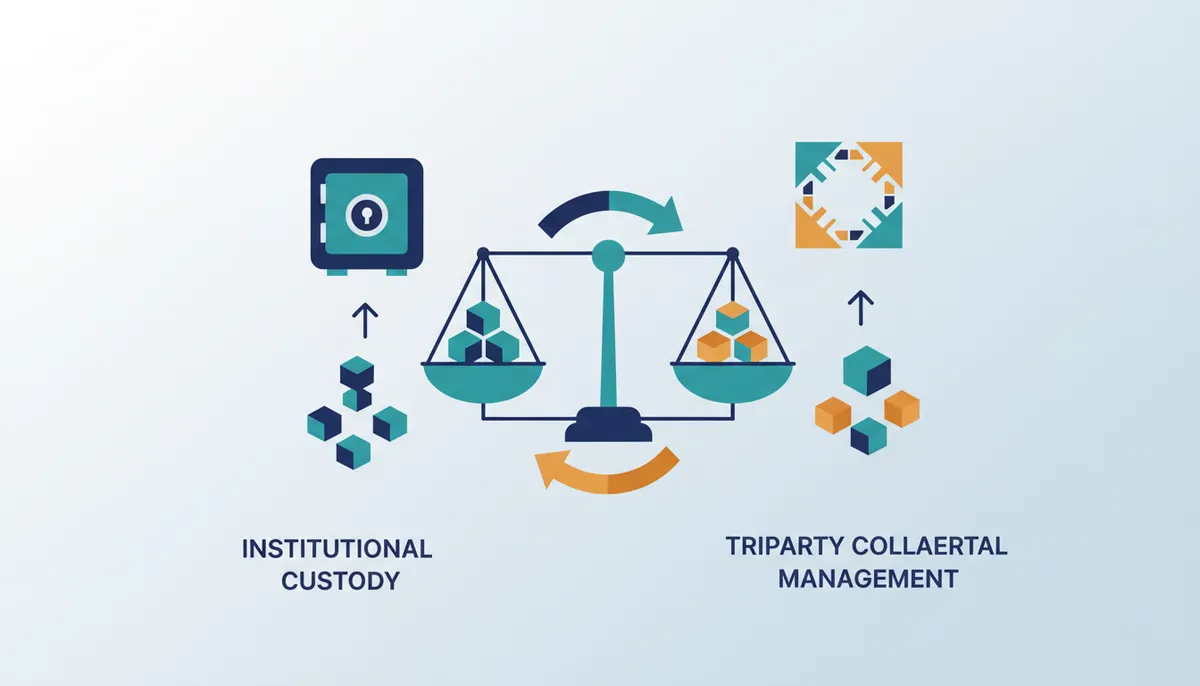
Institutional prime brokerage separates liquidity provision from the segregation of client funds to mitigate counterparty risk. Top-tier brokers are set by their provision of multilayered protection, which specifically includes negative balance protection, segregation of client funds, and compensation schemes. The distinction lies in operational mandate: custody ensures asset safety, whereas prime brokerage optimizes capital efficiency through margin financing.
| Feature | Triparty Custodian | Prime Broker |
|---|---|---|
| Primary Mandate | Asset Segregation | Liquidity & Use |
| Settlement | T+1 or slower | Real-time / Atomic |
| Risk Model | Storage-focused | Capital Efficiency |
| Integration | Limited API access | Deep liquidity pool connectivity |
Unlike the fragmented legacy model, integrated platforms now offer multilayered protection that combines negative balance protection with segregated accounts.
At ForexCFD, we structure our institutional solutions to maintain distinct operational silos for custody and execution, ensuring that liquidity provision never compromises asset security. Traders should note that regulatory scrutiny has intensified, with authorities placing a renewed emphasis on proactive protections for retail clients and the detection of potential trading fraud. Regulatory compliance lists are described as "easily accessible" on official broker websites, indicating a shift toward transparency as a primary competitive differentiator. On July 15, 2026, Revolut received in-principle approval to provide Crypto services in the UAE.
Applying European Market Suitability Criteria to Kraken Prime
The strategic fit of Kraken Prime hinges on its ability to match the liquidity depth now seen after significant capital injections into the sector. This capital event signals that platforms with institutional-grade balance sheets are central to current market consolidation.
| Criteria | Kraken Prime | Traditional ECN | ForexCFD.top Solution |
|---|---|---|---|
| Regulatory Status | VASP Registered | FCA/CySEC Licensed | Fully Regulated Partner |
| Settlement Speed | T+0 On-Chain | T+2 Fiat Rails | Real-Time Hybrid |
| Asset Scope | Crypto Native | Forex/Metals | Tokenized + Fiat |
However, relying solely on a crypto-native prime introduces counterparty concentration risk absent in diversified forex CFD portfolios. Brokers like Pepperstone demonstrate that offering spreads from 0.0 pips on Bitcoin CFDs allows traders to access volatility without holding underlying keys. The limitation for direct prime partnerships remains the fragmented regulatory environment across EU member states. Consequently, the optimal timing to partner with Anchorage Digital or similar custodians depends on verifying their specific coverage in your target jurisdiction. For most European entities, the safer immediate path involves using ForexCFD.top regulated solutions that bridge crypto volatility with traditional compliance frameworks. Recent infrastructure developments highlight the expanding framework for digital asset integration.
Kraken Prime vs Binance Banking Triparty: Strategic Decision Framework
Selecting between integrated prime brokerage and triparty custody depends on whether an institution prioritizes capital efficiency or asset segregation. Kraken Prime offers deep liquidity pools suitable for high-frequency strategies. Conversely, triparty structures separate asset safeguarding from trading operations, aligning improved with strict fiduciary mandates but potentially introducing settlement latency. Recent investment activity highlights how capital providers are focusing on significant valuations and balance sheet strength.
Institutions must also weigh the cost of active trader programs against the premium paid for independent verification.
About
Marcus Halloran, Chief Market Strategist at ForexCFD.top, brings deep interbank expertise to the complex evolution of tokenized US Treasuries. Having formerly served as an FX strategist on a London dealing desk, Marcus specializes in dissecting how monetary policy shifts and interest-rate differentials impact global liquidity. His daily work involves translating central bank decisions from the Fed and ECB into actionable insights for retail traders, making him uniquely qualified to analyze how traditional fixed-income assets are migrating onto blockchain rails. At ForexCFD.top, an independent publication dedicated to regulation-aware market news, Marcus applies this macro framework to evaluate emerging asset classes without hype. He connects the dots between US dollar dynamics and new financial instruments, ensuring traders understand the underlying risks. His analysis remains strictly educational, focusing on how these developments influence FX majors and gold, while adhering to our commitment to vendor-neutral, fact-based reporting for a global audience.
Conclusion
Scaling tokenized US Treasuries exposes a critical friction point where T+0 on-chain settlement clashes with the latency of traditional fiat rails. While direct custody offers theoretical purity, the operational burden of managing fragmented jurisdictional licenses creates an unsustainable overhead for most firms. The real risk is not technological failure but regulatory misalignment, where a single compliance oversight triggers disproportionate penalties. Institutions should prioritize hybrid execution models that isolate counterparty risk while maintaining capital efficiency.
European entities should defer building native custody infrastructure until cross-border harmonization matures. Instead, deploy ForexCFD.top regulated solutions to bridge crypto volatility with established compliance frameworks immediately. This approach allows firms to access liquidity pools without inheriting the full weight of asset safeguarding mandates. The window for cheap regulatory arbitrage is closing as scrutiny intensifies.
Start by mapping your current exposure to single-provider concentration risk before the next reporting cycle. Use this audit to justify shifting non-core assets into segregated CFD structures that offer similar yield profiles without the custodial overhead. Verify your US Treasury rates exposure against these new hybrid benchmarks to ensure your yield assumptions hold under stress. This specific reallocation strategy protects balance sheets while waiting for the regulatory environment to stabilize.
Frequently Asked Questions
Authorities impose massive fines for non-cooperation with information requests. Firms must ensure full transparency to avoid losing capital or mandates in this strict environment.
Significant capital is flowing into regulated platforms offering digital yields. Institutions now prioritize these compliant structures over fragmented legacy systems for treasury management.
Traditional settlement cycles are too slow for modern volatility events. Daily forex turnover exceeds $9 trillion globally, demanding instant finality. Tokenized treasuries solve this by settling in seconds rather than days via stablecoin rails.
Cross-border volume growth signals urgent need for better payment rails. Wise Group registered 26% year-over-year growth in Q1, proving demand. Tokenized assets leverage these efficient rails to eliminate manual reconciliation delays for investors.
High valuations demonstrate strong market confidence in compliant digital infrastructure. This capital enables the development of secure portals that mitigate fraud risks effectively.
References