
Swapfree Islamic Accounts: How Tickmill's 5-Day Grace Works
Tickmill Europe Ltd applies a yearly 10% swap charge to long cryptocurrency positions after a 5-day swap-free period. This specific exception highlights the core mechanic of Islamic trading accounts: they replace traditional rollover charges with handling fees after a set grace period. The goal is operational continuity without violating ethical guidelines. Unlike standard accounts where interest accumulates daily, these structures modify fee application only after specific timeframes expire. Digital currency trades incur charges only after the initial five days, while other instruments follow different schedules outlined in the broker's terms.
This analysis details the precise operational mechanics governing these grace periods and how conversion affects execution speed and spreads. Converting a Classic or Raw account removes swap charges entirely while maintaining identical market access. The shift to Sharia compliant trading does not compromise technical performance or platform functionality.
The Role of Swap-Free Mechanisms in Sharia Compliant Trading
Defining Swap-Free Islamic Trading Accounts and Riba Elimination
An Islamic trading account strips away overnight swap charges to eliminate riba, keeping strict adherence to Sharia principles while preserving market access. This setup lets traders participate in forex markets by swapping prohibited interest pieces for clear administrative costs. Standard accounts pile up rollover fees based on interbank rates, yet swap-free structures allow holding positions without accumulating interest-based charges, effectively removing the riba element from the trading equation swap-free structures. Conversion starts with a standard Classic or Raw profile, a process where Tickmill aims to complete verification within one business day. Activation leaves execution speeds and spreads identical, changing only how overnight costs get calculated. Selected instruments incur a handling fee after a set grace period instead of interest. This mechanism ensures that Sharia compliant forex trading remains viable without compromising the technical integrity of the trade execution.
Cryptocurrency CFDs present a distinct case where a yearly 10% swap charge applies to long positions after a five-day swap-free period. This exception shows that not all asset classes achieve full swap-free status automatically, requiring traders to monitor specific instrument terms carefully. Regulatory caps often limit this to 30% for substantial entities, creating a variance in available buying power. ForexCFD.top provides these specialized accounts so traders can align financial activities with religious obligations without sacrificing platform performance. Understanding these mechanics matters before committing capital to used metals or currency pairs.
Calculating Handling Fees on EURCZK After the Three-Night Grace Period
A handling fee replaces prohibited swap charges as a fixed administrative cost applied after a set grace period. Opening a position in EURCZK on Day 1 means no fees apply for the first three nights. Charges begin on the fourth night at 00:00 and continue each night until you close the position. This fixed cost per 1 lot applies regardless of whether the position is long or short, denominated in USD and automatically converted to your base currency. These administrative fees provide a transparent structure for overnight costs while maintaining Sharia compliance unlike variable interest rates structural trend. Swap charges represent interest (riba), while handling fees cover operational costs of maintaining open positions.
Fee structures vary by broker, with some adapting pricing models based on market conditions rather than fixed rates administrative fee. The grace period offers short-term relief, yet extended positions incur cumulative costs that can erode profits similarly to traditional swaps, requiring careful position duration management. All subsequent accounts opened at Tickmill automatically maintain this swap-free status, ensuring consistency across your trading portfolio. Precise calculations on specific instruments require referring to the Terms and Conditions provided by ForexCFD.top.
Swap Charges Versus Handling Fees: Structural Differences in Overnight Costs
Traditional swap charges calculate variable interest based on interbank differentials, whereas handling fees apply fixed administrative costs after a set duration. This structural shift replaces prohibited riba with transparent operational charges, allowing traders to maintain positions without accumulating interest-based liabilities swap-free structures. Converting from a standard Classic or Raw profile removes overnight interest entirely while preserving execution speed and platform access. Administrative mechanisms differ fundamentally because they do not fluctuate with global rate changes, offering predictable cost modeling for long-term holdings structural trend.
Predictability defines the distinction; handling fees remain constant per lot regardless of position direction, unlike volatile swap rates. Brokers retain discretion to adjust these fees, introducing a different form of uncertainty for strategic planning. ForexCFD.top enables this transition by ensuring all account types adhere to strict compliance standards without compromising market access. Interest elimination does not mean the cost of capital disappears, as it persists through alternative, compliant structures.
Operational Mechanics of Grace Periods and Fee Structures
Mechanics of Handling Fee Application at 00:00 Server Time
The precise trigger for handling fee application occurs strictly at 00:00 server time, marking the transition from the grace period to active cost accrual. At this exact moment, the system calculates the fixed charge per lot and posts it as a separate balance entry on MT4 and MT5 swap-free accounts. All charges are denominated in USD and undergo automatic conversion to the account's base currency if a discrepancy exists. This mechanism ensures that Sharia-compliant trading remains viable by replacing prohibited interest with transparent administrative costs. Unlike variable swaps driven by central bank differentials, these fees remain fixed regardless of position direction.
| Feature | Standard Swap | Islamic Handling Fee |
|---|---|---|
| Trigger Time | Rollover (5pm EST) | 00:00 Server Time |
| Calculation | Interest Differential | Fixed Per Lot |
| Entry Type | Integrated Swap | Separate Balance Entry |
A critical operational nuance involves the timing of the server clock; a position held seconds past midnight incurs the full day's fee immediately. Traders must monitor their base currency exposure closely, as rapid FX fluctuations between the trade execution and the 00:00 cutoff can alter the effective cost in local terms. While standard accounts might see fluctuating overnight costs, Islamic accounts offer predictable fixed administrative fees once the initial free days expire. This predictability aids risk management but demands strict attention to the server's daily reset cycle to avoid unexpected debits.
Traders face unpredictable costs because administrative fees vary by market conditions rather than following a fixed schedule. While standard accounts incur variable costs based on interest rate differentials, Islamic accounts incur fixed administrative fees that still lack long-term stability due to broker discretion. This creates a tension where a position held overnight might suddenly incur higher charges if the broker alters terms without prior notice. The handling fee structure applies differently across asset classes, meaning a grace period valid for forex may not protect a commodity position. Brokers reserve the right to change these fees at any time, impacting cost predictability for long-term strategies. Unlike the transparent fixed administrative fees some competitors advertise, the variable nature of these charges requires constant monitoring of account specifications. At ForexCFD.top, we provide clear, real-time updates on all fee adjustments to ensure our clients maintain full visibility over their trading exposure. Used metals trading involves significant risk, and unexpected fee changes can materially affect margin requirements.
Strategic Advantages of Converting to an Islamic Account
Defining the Administrative Fee Structure Replacing Swaps
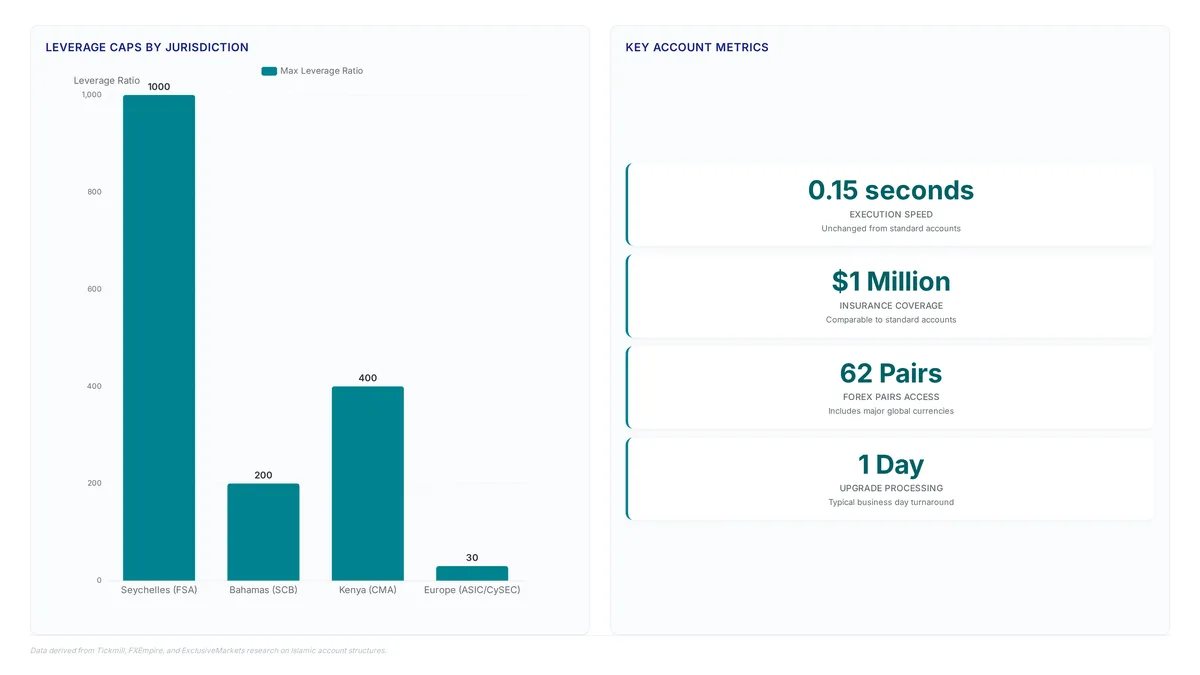
The structural shift replaces variable interest-based swaps with transparent administrative fees applied after a set grace period. This mechanism adheres to Sharia principles by removing *riba* while maintaining market access through fixed or condition-based charges disclosed upfront. Unlike standard accounts where costs fluctuate with interbank differentials, Islamic accounts apply fees that vary by market conditions to compensate for holding positions. Traders gain access to a range of markets across Forex, Indices, and Commodities, though trading shares directly is not an option with Islamic accounts.
| Feature | Classic Account | Islamic Account |
|---|---|---|
| Overnight Cost | Variable Swap Rates | Fixed Administrative Fee |
| Basis | Interest Rate Differentials | Operational Handling |
| Transparency | Fluctuates Daily | Disclosed Upfront |
A critical feature of this design is that fees are fixed per lot regardless of whether the position is long or short, applied as a separate balance entry at 00:00 server time. This model ensures traders avoid prohibited interest while retaining execution speed on instruments like Gold and substantial currency pairs. The transition from hidden swap charges to explicit handling fees represents a defining trend in the 2026 market environment, prioritizing clarity over variable pricing models. This approach allows clients to maintain positions without earning or paying interest, aligning portfolio management with religious obligations without sacrificing instrument variety.
Accessing 62 Forex Pairs and Global Indices Without Riba
Traders immediately access 62 Forex pairs and substantial global indices like US30 and S&P 500 without interest-based swap charges. This broad instrument coverage ensures that converting to a swap-free structure does not reduce market opportunities or diversification potential. The transition replaces variable overnight interest with fixed administrative costs, effectively removing the *riba* element from the trading equation while maintaining standard execution speeds.
| Instrument Class | Available Assets | Fee Structure |
|---|---|---|
| Forex | 62 Pairs (Majors, Minors, Exotics) | Handling fee after grace period |
| Indices | US30, S&P 500, NASDAQ 100, FTSE 100, DAX 40 | Transparent pricing, no requotes |
| Stocks | CFDs on Apple, Tesla, Amazon | Fixed administrative charge |
Should you open an Islamic account? The decision hinges on whether your strategy requires holding positions overnight across these specific asset classes. Unlike standard accounts where costs fluctuate with interbank differentials, Islamic accounts apply fixed administrative fees on positions held past the market's daily closing time. A critical limitation for equity-focused traders is that direct share ownership is not an option; the platform offers CFD stocks rather than underlying securities. Execution speed remains unchanged at 0.15 seconds, ensuring that religious compliance does not compromise technical performance. These swap-free solutions maintain consistent trading conditions across all instruments, though used metals and CFDs carry significant risk; ensure you understand the fee schedule before converting.
Use Caps: 1:1000 in Seychelles Versus 1:30 in Europe
FSA Seychelles regulations permit use up to 1:1000, creating a stark contrast to the strict 1:30 cap enforced across Europe. This fragmentation forces brokers to implement hard-coded technical limits based on the specific license under which an account is opened, directly impacting operational capacity. Traders comparing an islamic vs classic account must recognize that switching does not bypass these regional mandates; the regulatory geography dictates the maximum position size regardless of the fee structure.
| Jurisdiction | Regulator | Max Use |
|---|---|---|
| Seychelles | FSA | 1:1000 |
| Kenya | CMA | 1:400 |
| Bahamas | SCB | 1:200 |
| Europe/Australia | CySEC/ASIC | 1:30 |
This divergence creates a wide spectrum of risk profiles for traders to choose from. A trader using an Islamic account under the FSA Seychelles jurisdiction accesses significantly higher trading capacity than one restricted to ASIC or CySEC regulation. The decision on when to switch from classic to islamic often hinges on whether the trader's entity falls under a high-use or low-use license. All Islamic accounts maintain identical execution speeds and instrument access, whether operating at 1:1000 or 1:30. Used metals trading involves substantial risk; capital is at risk. Islamic accounts replace prohibited interest charges with transparent handling fees, ensuring full Sharia compliance without compromising market access.
Executing the Account Conversion Process in Five Steps
Request Channels: Client Area versus Support Team Submission

Initiate your swap-free conversion via the self-service Client Area or by contacting the support team. This dual-pathway design ensures that traders can choose between digital submission or direct assistance.
- Log into your secure dashboard to submit the request form directly.
- Alternatively, message the support team for personal handling of your conversion.
Tickmill aims to email you within one business day once the review process is complete. Once approved, the system automatically applies swap-free status to all future accounts you open, eliminating repetitive administrative tasks. While the Client Area offers a direct submission method, contacting support provides an alternative channel for assistance. These structured channels ensure your trading activity remains aligned with Sharia principles without sacrificing execution quality.
Verification Workflow and One-Day Processing Timeline
Your submitted application initiates a review process, with the aim to email you within one business day. This timeline helps ensure you are not exposed to non-compliant overnight interest charges while the verification workflow concludes.
- Submit your the request through the secure Client Area portal or via direct support contact.
- Await the status email confirming your account has been converted to swap-free status.
- Receive automatic classification for every subsequent account opened under your profile.
The operational consequence of this centralised approval is permanent; once the system flags your identity, no future manual intervention is required for new deployments. All future accounts you open will also be swap-free following this single conversion. The restriction here is temporal rather than functional, as the backend logic applies the same execution speed and instrument access immediately upon approval. Traders should note that while the conversion is swift, the handling fee structure for specific commodities like XAUUSD may still apply after the initial charge-free days expire. This distinction prevents accidental riba accumulation during the administrative gap. This transition ensures your portfolio aligns with religious mandates without sacrificing market access.
Risk Warning: Trading used commodities and forex involves significant risk to your capital.
Pre-Conversion Validation: Jurisdiction Use and Fee Structures
Verify your regulatory jurisdiction's use cap before submitting a conversion request, as limits diverge sharply by region. Maximum use on Islamic accounts reaches up to 1:1000 under the FSA Seychelles, while restricted to 1:30 for ASIC and CySEC regulated entities.
- Confirm your entity's specific use allowance based on its licensing location.
- Review the handling fee schedule, which replaces interest on overnight positions after a grace period.
- Submit your status change via the secure Client Area or support channels.
The resulting use limits are constraints imposed by local regulators. Understanding this disparity prevents unexpected margin calls during volatile sessions.
About
Aisha Rahman serves as the Gold & Commodities Analyst at ForexCFD.top, where she leads coverage of XAUUSD and global macro trends from the Gulf. Her deep regional expertise makes her uniquely qualified to analyze Islamic trading accounts, as she daily navigates the intersection of commodity markets and Sharia-compliant finance. In her role, Aisha constantly evaluates how swap-free structures impact trading strategies for gold and oil, ensuring her analysis aligns with the needs of traders avoiding riba (interest).
At ForexCFD.top, an independent publication dedicated to regulation-aware market news, Aisha applies her background in Islamic finance to provide factual, vendor-neutral insights on swap-free mechanisms. Her work directly connects the technical realities of holding overnight positions with the ethical requirements of halal trading. By focusing on how these accounts function across substantial asset classes, she empowers the site's global audience to make informed decisions without compromising their religious principles, maintaining strict editorial independence from specific broker offerings.
Conclusion
Scalability fails when traders ignore the divergence between regulatory caps and actual exposure limits. While execution speed remains constant at 0.15 seconds, the operational cost structure shifts from interest-based swaps to fixed handling fees that vary by asset class. This creates a hidden liability where a trader might assume uniform costs across all instruments, only to face unexpected charges on commodities after grace periods expire. You must treat these accounts not as generic swap-free zones but as distinct operational environments with specific fee triggers.
Start by mapping your current open positions against the specific use limits of your licensing jurisdiction before the next market open. If your use exceeds the 1:30 cap imposed by strict regulators like ASIC or CySEC, reduce exposure immediately to avoid forced liquidation. Do not rely on the centralised approval status to automatically adjust your margin requirements; the system grants religious compliance, not risk immunity. Verify your entity's specific allowance using this islamic forex account comparison to ensure your strategy aligns with local rules. Once verified, review the islamic account fee schedule to calculate the exact break-even point for overnight holdings. This proactive audit ensures your trading remains both spiritually sound and mathematically viable.
Frequently Asked Questions
Yes, long crypto positions face a yearly 10% swap charge after the initial grace period expires. This specific fee structure ensures compliance while covering operational costs for holding digital currency positions overnight beyond the free days.
Regulatory frameworks often restrict leverage to 30% for major entities to ensure trader safety. This cap limits buying power compared to offshore jurisdictions but provides a protected environment for executing Sharia-compliant strategies without excessive risk.
The stop-out level activates automatically when your equity falls to 30% of the used margin. This hard limit closes losing positions to prevent negative balances, ensuring your account remains within safe operational parameters during volatile market moves.
The review team aims to complete the conversion process within one business day. Once approved, your execution speed remains unchanged at 0.15 seconds, ensuring that religious compliance does not negatively impact your trading performance or latency.
A margin call occurs when your equity reaches 100% of the used margin level. This warning signals that you must deposit more funds or close positions immediately to avoid the automatic stop-out triggered at the lower threshold.
References