
Swapfree accounts: 2000:1 leverage vs reality
Swap-free accounts advertise up to 2000:1 use according to RoboForex and PlexyTrade data, but regulatory caps fracture this promise across borders. Islamic trading conditions often conceal administrative fee mechanics and use restrictions that diverge sharply from standard retail offerings. We need to dissect the specific role of Sharia-compliant structures, analyze how regulatory use caps function under bodies like the FSA Seychelles versus CMA Kenya, and review comparative broker features regarding bonus structures.
These rollover-free accounts do not charge interest on overnight positions. Instead, traders face strict use limits or alternative fee models. Entities like PrimeXBT and TradeSmart advertise maximum use of 2000:1 under FSRA St. Lucia regulation. Other jurisdictions enforce harder ceilings. The FSA Seychelles regulation limits maximum use for these accounts to 1:1000, while CMA Kenya regulations cap the same exposure at 1:400. This disparity forces a binary choice: higher nominal use in offshore zones or the perceived safety of tighter local oversight.
Brokers like PU Prime and Exness navigate these multi-jurisdictional rules while maintaining swap-free status. Minimum contract sizes often remain fixed at 0.01 regardless of the regulatory body. Yet the underlying cost structure shifts from interest-based swaps to broadened spreads or fixed fees. Understanding these mechanics is necessary for any trader seeking Sharia-compliant conditions without sacrificing capital efficiency or transparent pricing models.
The Role of Swap-Free Accounts in Sharia-Compliant Trading
Defining Swap-Free Forex Accounts and the Riba Prohibition
A swap-free forex account strips away the variable overnight interest charge called *swap* to adhere to the Islamic ban on *riba*. This structural adjustment stops time-based interest from accumulating on positions held past the daily close, satisfying religious principles that forbid such gain as unjust. Brokers replace these variable costs with a fixed administrative fee to offset the loss of standard charges. The modification enables traders to maintain Sharia-compliant status while participating in global currency markets. Definitions center on removing rollover interest mechanisms entirely from the account structure.
While the core trading engine stays the same, the cost model shifts from time-variable rates to fixed or waived fees. Strict regulators like ASIC and CySEC cap use on these accounts at 1:30, creating specific operational boundaries for traders in those regions. Brokers disclose administrative fees upfront to ensure transparency and separate them clearly from interest-based transactions. Removing the swap does not erase costs; it transforms the structure from a variable rate into a potential flat fee or wider spread. Predictability helps long-term holders but demands careful review of the replacement fee schedule. The administrative fee varies by broker and reacts to current market conditions, serving as a substitute for revenue lost by not charging overnight interest.
Applying Sharia-Compliant Trading Principles Across Regulatory Jurisdictions
Traders asking should I choose a swap-free account must prioritize the broker's regulatory license over simple fee structures. The core mechanism involves selecting a jurisdiction that balances religious compliance with acceptable risk parameters. Offshore regulators like the FSA Seychelles permit use up to 1:1000, enabling significant position sizing for capital-efficient strategies without overnight interest. Conversely, strict authorities such as ASIC cap use at 1:30 to mitigate volatility exposure, fundamentally altering the risk profile of identical Sharia-compliant trading approaches.
| Jurisdiction | Max Use | Risk Profile |
|---|---|---|
| FSA Seychelles | 1:1000 | High Capital Efficiency |
| CMA Kenya | 1:400 | Moderate Exposure |
| SCB Bahamas | 1:200 | Balanced Protection |
| ASIC / CySEC | 1:30 | Conservative Safety |
This disparity creates tangible tension between faith-based cost elimination and regulatory safety nets. A trader using an FSA Seychelles entity gains high use but accepts reduced investor protection compared to Australian counterparts. Many global brokers operate multiple subsidiaries, meaning a single platform can offer both 1:30 and 1:1000 options depending on the chosen regulatory framework. Regulatory alignment is a substantial trend, with brokers adjusting use limits based on the specific jurisdiction to maintain compliance while offering swap-free options. Traders must explicitly request the correct jurisdictional entity during onboarding to ensure their trading conditions match their ethical and financial goals.
Risk Trade-offs Between Offshore Use and Investor Protections
Selecting high-use offshore entities exposes capital to unmitigated counterparty risk despite 1:1000 ratios. Traders must choose between higher capital efficiency in offshore jurisdictions or the investor protections associated with lower-use regulatory environments. Some brokers provide account insurance coverage of up to a substantial amount for clients using these specialized accounts, though this feature is not standard across all providers.
| Feature | Offshore Jurisdiction | Strict Regulation |
|---|---|---|
| Max Use | Up to 1:1000 | Capped at 1:30 |
| Investor Safety | Limited Recourse | High Protection |
| Primary Risk | Broker Solvency | Capital Efficiency |
The administrative fee structure frequently compensates for the lack of overnight interest, replacing variable swap charges with a flat fee structure. A trader under ASIC or CySEC regulation accesses swap-free accounts but is restricted to 1:30 use, illustrating how regulatory environments dictate the risk parameters of Islamic trading products even when the swap-free feature is present. Balancing religious compliance with financial survival is the real challenge; maximizing position size via offshore licenses often bypasses the very safety nets designed to prevent total account liquidation. Newer audiences must recognize that differentiation often lies in the specific regulatory use caps ranging from 1:30 to 1:1000 and the speed of account conversion. Should I choose a swap-free account? Only if the broker's regulatory standing outweighs the temptation of excessive position sizing. Evaluating jurisdiction quality is necessary, as regulatory frameworks determine the available use and the level of investor protection afforded to the trader.
Regulatory Use Caps and Administrative Fee Mechanics
Administrative Fee Mechanics Replacing Overnight Swaps
Swap-free accounts eliminate variable overnight interest charges because religious law prohibits riba. The billing system applies a fixed administrative fee rather than calculating a time-variable interest rate. This structural shift keeps costs predictable for long-term holders while adhering to religious principles. Standard accounts accumulate expenses with time, whereas flat rates compensate brokers for the absence of swaps. Market participants increasingly disclose these fees upfront to distinguish them from prohibited interest. A regulated broker operates under strict jurisdictional use caps, such as 1:30 in strict zones versus 1:1000 offshore, regardless of the account's religious designation. The mechanism replaces an open-ended liability with a known quantity, effectively capping the cost of holding positions past the daily closing time. Strict regulatory bodies like ASIC and CySEC limit use on swap-free accounts to 1:30. The administrative fee provides certainty but removes the potential benefit of earning interest on long positions in high-yield currencies. This constraint converts a market-dependent variable into a fixed operational expense. Holding periods extending beyond specific thresholds may trigger higher cumulative flat fees than standard swaps would have incurred.
Calculating Effective Use Under FSA Seychelles and CMA Kenya Caps
Position sizing diverges sharply when comparing the 1:1000 cap in Seychelles against the 1:400 limit in Kenya. Traders calculate effective exposure by multiplying account equity by the regulatory multiplier, yet the resulting margin requirement shifts drastically between these jurisdictions. A trader with $1,000 equity commands notably larger notional volume under FSA Seychelles rules than under CMA Kenya mandates. This disparity forces a strategic choice between capital efficiency and risk containment. The maximum use available for swap-free accounts under the FSA Seychelles regulation is 1:1000. Operators must verify a broker's regulation status before deploying capital, as offshore entities often advertise maximums that domestic laws prohibit. The technical mechanism involves checking the legal entity listed on the trading platform against the regulator's public register. Accessing the highest use tiers often requires accepting weaker investor protection schemes compared to stricter regimes. A trader maximizing position size in Seychelles assumes greater counterparty risk than one operating within Kenyan bounds. Always confirm the specific regulatory license governing your account, not the brand name. Blindly trusting advertised ratios without verifying the underlying legal entity exposes capital to unregulated operational failures.
Mechanics: Risk Exposure When Choosing Offshore Use Over ASIC Protections
Selecting offshore entities offering 1:1000 use exposes capital to rapid liquidation events absent in strict jurisdictions. The mechanism driving this risk involves margin call thresholds that are determined by the specific use ratio selected. A regulated broker under ASIC or CySEC enforces a 1:30 cap, ensuring position sizes remain within solvency buffers during volatility spikes. Offshore operators permit position sizing that magnifies minor price fluctuations into total equity wipes. High use reduces the price movement tolerance before equity is depleted. Traders opting for maximum offshore ratios often face liquidity gaps where execution prices deviate sharply from requested levels. This discrepancy creates a hidden cost exceeding any saved administrative fee. Elevated use ratios increase the magnitude of exposure relative to equity. Account holders assume full responsibility for platform solvency and order book depth without the safety nets mandated by top-tier regulators.
Comparative Analysis of Broker Features and Bonus Structures
Defining Broker Bonus Structures and Minimum Deposit Tiers
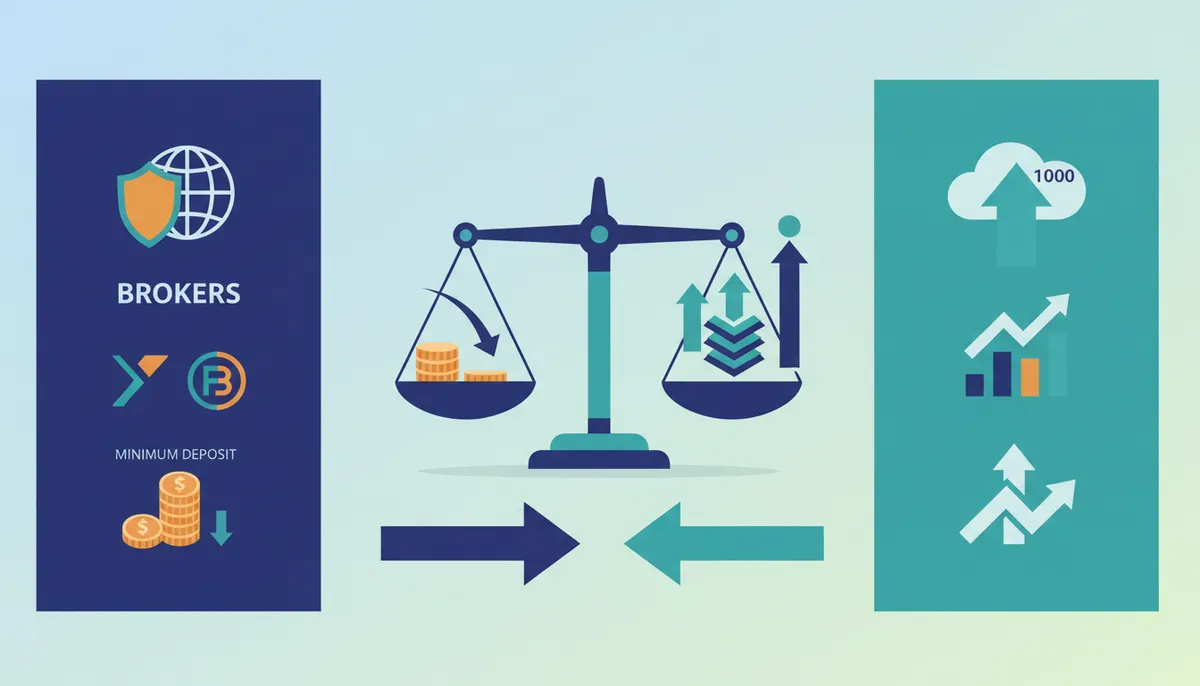
Broker bonus mechanics define immediate liquidity through distinct tradable funds versus deferred cash rebates. RoboForex offers a $30 Welcome Bonus where users must open a Pro/ProCent MT4/MT5 account, verify ID & phone, and deposit $10+ by bank card to instantly receive the funds. These structures create divergent capital efficiency profiles for the swap free brokers comparison. Welcome bonuses provide immediate buying power but often restrict withdrawal until turnover targets are met, while credit bonuses mitigate risk without expanding withdrawable equity until specific conditions are satisfied. Transparent fee structures allow traders to avoid hidden expenses that might otherwise mimic interest-based transactions. Traders must evaluate whether immediate tradable funds suit short-term strategies or if deferred cash rebates improved align with long-term position holding. This distinction remains vital when using a guide to comparing forex brokers to select a compliant provider.
Applying Use Caps and Contract Sizes to Low Deposit Strategies
Position sizing demands strict alignment with specific use ceilings to prevent immediate margin calls on small accounts. PlexyTrade requires a minimum account of 50, offers a minimum contract of 0.01, and provides maximum use of 2000:1 across 41 pairs. PU Prime requires a minimum account of 20, offers a minimum contract of 0.01, and provides maximum use of 1000:1 across 55 pairs. The lower entry barrier at PU Prime allows tighter capital control, yet the reduced use ratio limits potential exposure compared to the Saint Lucia-based competitor.
Regulatory jurisdiction dictates these limits, as an FSA Seychelles regulated broker can access use up to 1:1000 on a swap-free account. This variance creates a tension between capital accessibility and raw buying power for the retail operator. High use increases both gains and losses, making the 0.01 minimum contract size necessary for survival. Using advanced search for brokers reveals that many offshore entities offer higher ratios than strictly regulated peers. However, the cost of such access is reduced regulatory oversight and potential liquidity fragmentation during volatility. Strict regulatory bodies like ASIC and CySEC limit use on swap-free accounts to 1:30, creating a clear divide between offshore and onshore trading conditions.
Checklist for Claiming Bonuses and Meeting Volume Withdrawal Requirements
Withdrawal requests frequently fail because traders overlook the distinction between credited funds and realizable profit. A systematic validation of volume requirements prevents the forfeiture of promotional capital. At Traders Way, the 100% Deposit Bonus remains locked until the required lots are traded, capping the potential credit at a fixed amount. Conversely, PlexyTrade mandates a deposit of $200+ to activate a 120% bonus, which becomes withdrawable only after satisfying specific turnover thresholds. These structures differ notably from immediate credits, as the administrative fees often substitute for swap revenue while volume conditions remain active. The limitation is that high use on low deposits can lead to rapid margin calls before any bonus converts to cash. This tension between aggressive positioning and conservative bonus hunting requires strict risk management. Brokers disclose these administrative fees upfront to ensure transparency and distinguish them from interest-based transactions.
Executing the Transition to a Verified Islamic Trading Account
Defining Verification Steps for Islamic Account Activation
Account conversion requires submitting the proof of religious adherence to the broker's compliance team. Traders must upload identity documents and a declaration of faith to activate swap-free status on existing profiles. Regulatory frameworks mandate strict KYC protocols before any fee structure changes apply. PU Prime operates under multiple jurisdictions including FSC (Mauritius), requiring enhanced due diligence for special account types. The backend process often completes within one business day, reflecting simplified manual verification workflows. Unlike standard ledgers where costs vary with time, these accounts replace variable charges with a flat administrative fee structure. A key limitation involves the potential for rejected applications if documentation lacks specific religious authority stamps, delaying access. Operators must verify that the holding fee schedule aligns with current market conditions to avoid hidden penalties.
- Submit government-issued ID and proof of residence.
- Upload a signed letter confirming religious prohibition of interest.
- Wait for manual approval from the compliance department.
- Receive confirmation of the new fee schedule application.
Configuring Minimum Deposit Tiers for PlexyTrade and PU Prime
Activate Islamic trading conditions by funding the specific minimum deposit tier required to trigger swap-free status on your ledger. PlexyTrade mandates a minimum account balance of 50 to access their full suite of 41 pairs with 2000:1 maximum use. Traders starting with less capital should target PU Prime, which accepts a lower entry threshold of 20 while maintaining a minimum contract size of 0.01 for precise position sizing. Brokers disclose these administrative fees upfront to distinguish them from interest-based transactions and ensure transparency for compliant traders. Unlike standard ledgers where costs vary with time, swap-free accounts replace variable swap charges with a flat administrative fee structure influenced by current market conditions.
| Feature | PlexyTrade | PU Prime |
|---|---|---|
| Minimum Deposit | 50 | 20 |
| Min Contract | 0.01 | 0.01 |
| Max Use | 2000:1 | 1000:1 |
| Pairs Available | 41 | 55 |
Follow these steps to configure your account settings correctly:
- Navigate to the account management dashboard and select the Islamic account conversion option.
- Upload proof of identity and a declaration of faith to satisfy KYC protocols.
- Fund the wallet with at least 50 for PlexyTrade or 20 for PU Prime to meet tier requirements.
- Verify that the backend status updates to reflect the new fee model within one business day.
A critical operational tension exists here: selecting a broker solely for the lowest deposit often forces traders into higher administrative fees per lot, eroding margins on small positions. The pricing model is designed so that alternative charges are not considered interest, yet the flat fee structure disproportionately impacts micro-lot traders compared to institutional volumes.
Implementation: Checklist for Validating Bonus Withdrawal and Volume Requirements
Validate bonus eligibility by calculating the exact lot volume required before submitting any withdrawal request. Regulatory frameworks like ASIC restrict use to 1:30 for swap-free accounts under its jurisdiction, drastically increasing the trading volume needed to clear bonuses compared to offshore entities offering 2000:1. This creates a tension where high use aids bonus clearance but violates strict regional compliance caps.
- Calculate total lots traded against the administrative fee schedule to ensure no hidden interest accrues.
- Verify that the minimum contract size of 0.01 was maintained throughout the bonus period.
- Confirm the broker explicitly labels the ledger as "Islamic" to avoid accidental swap charges.
Traders must distinguish between commission fees and maintenance costs, as brokers adapt infrastructure to ensure no rollover interest is applied while still generating revenue. Failure to meet these specific volume thresholds results in frozen profits regardless of account balance.
About
Vikram Nair serves as the Emerging Markets & Asia FX Writer at ForexCFD.top, where he specializes in the intersection of local regulation and retail trading access. His deep expertise in markets like India, Nigeria, and Southeast Asia makes him uniquely qualified to analyze swap-free accounts, a critical tool for traders in regions with significant Muslim populations requiring Sharia-compliant conditions. In his daily work evaluating broker legality and funding rails across these jurisdictions, Vikram frequently encounters the specific need for rollover-free trading to align with religious principles while managing overnight positions. This article connects his on-the-ground knowledge of regional broker offerings with the technical mechanics of Islamic accounts. By using ForexCFD.top's commitment to vendor-neutral, regulation-led analysis, Vikram provides a factual guide helping traders identify legitimate swap-free brokers that adhere to both local legal frameworks and ethical trading standards.
Conclusion
Low entry deposits often mask restrictive volume multipliers required to enable promotional capital. The operational cost here is not interest, but the time capital remains locked while attempting to clear high lot thresholds under reduced use caps. Brokers labeling ledgers as "Islamic" adapt revenue models through flat fees that disproportionately erode margins on micro-lots compared to institutional sizes. Prioritize brokers offering transparent fee schedules over those advertising massive percentage bonuses if your trading style relies on small, frequent positions. Start this week by calculating the exact lot volume needed to clear your current bonus against your average monthly turnover before committing further funds. If the math shows you cannot realistically meet the requirement without violating use limits or overtrading, withdraw the deposit and seek a standard fee structure. True compliance and profitability depend on matching the account type to your actual trading frequency rather than chasing upfront incentives that may never become withdrawable.
Frequently Asked Questions
Brokers charge a fixed administrative fee instead of variable swap rates. This fee structure ensures compliance while offsetting revenue loss, often requiring a minimum deposit like $10 to activate specific bonus structures.
Strict regulators cap leverage at 1:30 while offshore zones allow much higher ratios. This difference means a trader might need $200 or more to achieve similar exposure under tighter regulatory safety nets.
Some brokers provide account insurance coverage of up to $1 million for clients. This protection adds a layer of security, though traders must verify if their specific jurisdiction and entity qualify for this coverage level.
Promotional offers often mandate deposits ranging from $10 to $200 to activate. For instance, a 120% bonus might require $200, whereas smaller welcome bonuses could need just $10 via bank card transfer.
Traders can usually request a status change on existing profiles within one business day. However, they must ensure their chosen regulatory entity supports the change, as some jurisdictions strictly limit leverage to 1:30.
References