
USDCHF Jumps 1.3% on Rate Divergence
USDCHF surged 1.3% this week as Kevin Warsh signaled a hawkish Fed while the SNB held rates at 0% (USDCHF).
The gap between US and Swiss monetary policy is no longer subtle; it is the primary engine for USDCHF. While the FOMC kept interest rates steady in the 3.5, 3.75% range, Chair Warsh made it clear that price stability is the only game in town. Markets now price a nearly 50% probability of a rate hike within six weeks. This isn't just a divergence; it's a chasm that fuels carry trades and momentum strategies betting on the dollar.
We need to look past the headlines and examine the mechanics. A 300 basis point spread between major central banks forces capital into the dollar. Understanding how central bank signals translate to price action is the difference between catching a trend and getting caught in a reversal.
The Role of USDCHF in Divergent Monetary Landscapes
Policy divergence is pushing USDCHF higher, forcing a recalibration of positions across the board. The pair's 1.3% weekly gain stems directly from conflicting mandates. A hawkish Fed is willing to cool economic activity to crush inflation. Chair Kevin Warsh reinforced this restrictive posture by emphasizing price stability above all else. On the other side, a dovish SNB accepts lower growth to shield exporters and suppress currency strength. The result is a persistent yield gap: dollar assets pay up, while the franc yields zero. Swiss inflation sits at 0.6%, yet the central bank remains fixated on exchange rate management rather than fighting modest price increases.
Geopolitical calm has stripped the franc of its safe-haven premium, amplifying the dollar's bullish bias. If global tensions spike, risk-off flows could swamp yield considerations instantly. The SNB would likely intervene more aggressively in that scenario. The real test is whether the Fed's data-dependent approach can sustain higher rates without triggering a recession. We saw a glimpse of this dynamic when a temporary Middle East agreement reduced immediate conflict risks, causing interest in the franc to wane. The Swiss National Bank acknowledges the currency typically strengthens during tension due to its safe-haven status. Removing that premium exposes the franc to monetary drag. This creates a specific vulnerability: USDCHF rallies accelerate on peace headlines rather than rate news. The current trajectory depends entirely on the absence of global shocks. A sudden escalation reverses flows and ignores technical resistance. Holding short franc positions becomes expensive if geopolitical risks re-emerge without warning. Diplomatic channels demand as much scrutiny as economic calendars. The interplay between conflict and capital flow is binary. Peace favors the dollar's yield; uncertainty favors the franc's stability. Current pricing assumes continued calm, embedding a risk premium that could vanish overnight.
Inside the Mechanics of Rate Differentials and FX Intervention
Defining the Rate Differential and FX Intervention Mechanism
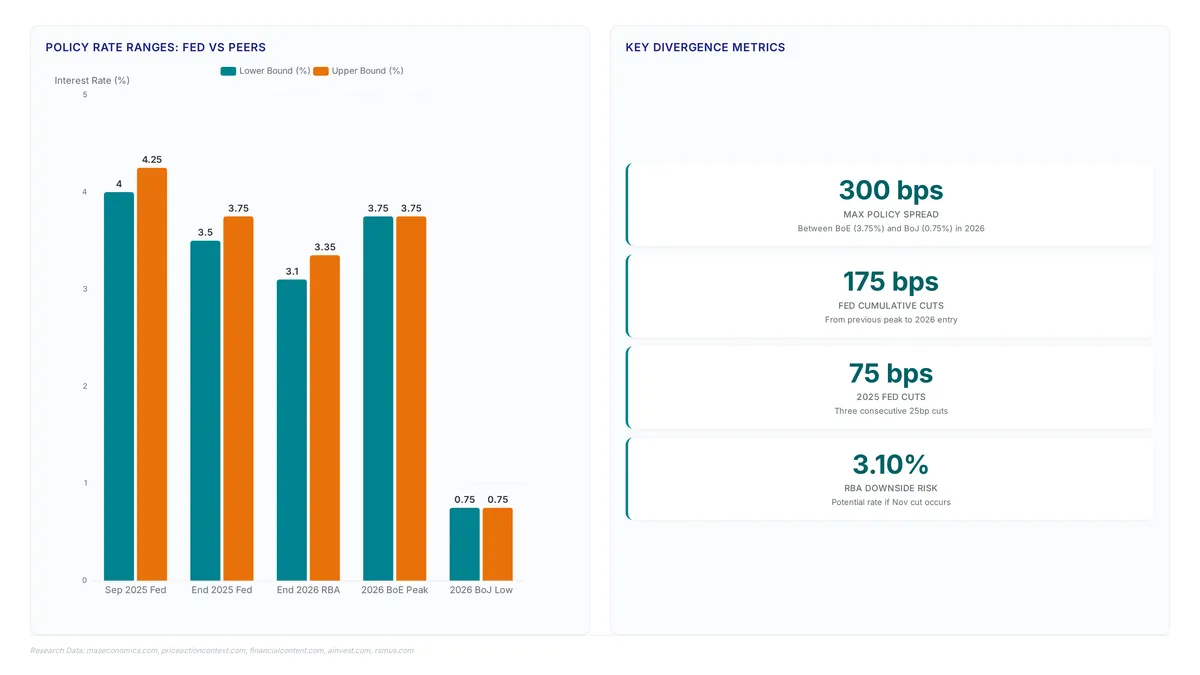
The interest-rate differential acts as the primary engine driving capital toward higher-yielding assets, currently favoring the dollar. This spread forces investors to sell francs for dollars, pushing the exchange rate higher. FX intervention happens when a central bank actively sells its own currency to suppress appreciation and protect exporters. The SNB explicitly signaled readiness to execute this strategy, stating it may sell francs to limit "excessively rapid and excessive appreciation of the currency." Unlike standard market flows, this mechanism relies on direct balance sheet expansion rather than yield attraction.
| Feature | Rate Differential Driver | FX Intervention Driver |
|---|---|---|
| Primary Actor | Private Market Participants | Central Bank Desk |
| Mechanism | Yield Seeking (Carry) | Direct Market Selling |
| Sustainability | Persistent while rates diverge | Dependent on policy stance |
| Signal Source | FOMC Statements | SNB Press Releases |
Intervention threats aim to limit excessive appreciation, but the underlying rate gap continues to drive the exchange rate. The SNB has indicated that an overly strong currency could harm the economy, especially exporters, and further reduce inflation. Investors are monitoring market pricing for a US hike, as confirmation would reinforce the yield advantage supporting the dollar.
Applying Fed Hawkish Signals to USDCHF Price Action
Kevin Warsh strongly emphasized that the Fed's priority remains price stability, meaning the fight against inflation. This recalibration drives the USDCHF surge as capital rotates toward higher yield differentials. The mechanism operates as investors interpret the Fed's focus on fighting inflation as a signal for potential tightening, widening the interest-rate spread.
Traders assess this impact by monitoring the divergence between Federal Reserve rhetoric and Swiss National Bank accommodation. While the FOMC maintains a restrictive posture, the SNB remains committed to zero rates and potential market intervention. This policy gap creates a persistent upward bias for the dollar, observed as the dollar benefits from higher expectations for US interest rates while the franc remains under pressure.
| Factor | Federal Reserve Stance | Swiss National Bank Stance |
|---|---|---|
| Primary Goal | Price Stability | Currency Stabilization |
| Rate Trajectory | Potential Hike | Fixed at Zero |
| Market Signal | Restrictive | Dovish / Interventionist |
Relying solely on rate expectations ignores the volatility risk inherent in data-dependent guidance. A single inflation print can invert these probabilities instantly, triggering sharp reversals in used positions. Warsh has announced "less predictable communication and greater dependence of decisions on incoming data," which could increase volatility. The limitation here is that FX intervention threats act as a factor limiting the Swiss currency's appreciation potential, capping franc weakness despite the yield advantage. ForexCFD.top reminds traders that used metals and currencies carry significant risk; losses can exceed deposits.
Defining Data-Dependent Fed Communication Shifts
Kevin Warsh has announced less predictable communication and greater dependence of decisions on incoming data, forcing traders to abandon rigid forward guidance models. This shift means USDCHF volatility is now driven by incoming US macroeconomic data rather than scheduled rhetoric. Unlike previous eras of clear signaling, this data-dependency creates sharp, non-linear moves that catch used positions off guard.
A failure in US data to show inflationary heat could reduce expectations for US rate hikes, as the Fed prioritizes price stability over predictable pacing. This environment favors agile execution over long-term positioning based on outdated central bank promises. ForexCFD.top reminds clients that used metals and forex trading carry significant risk; losses can exceed deposits, and Islamic accounts are available for swap-free compliance where permissible. Always verify the regulatory status of your broker and understand that policy divergence can reverse quickly if geopolitical tensions alter safe-haven flows.
Trading USDCHF on US Inflation and Oil Price Scenarios
Buy USDCHF when US inflation data confirms persistent price pressures that sustain a hawkish Federal Reserve stance. A decline in oil prices or weaker growth metrics often reduces expectations for further US rate hikes, which can weigh on the dollar against the franc. The current market pricing reflects a delicate balance where incoming data dictates capital flow direction rather than fixed forward guidance.
- Elevated US inflation supports dollar strength as traders anticipate potential policy tightening.
- Geopolitical de-escalation, such as the temporary agreement in the Middle East, has already reduced demand for safe-haven assets and limited interest in the franc.
The low to 3.75% interest rate range in the United States creates a substantial yield advantage over Swiss holdings. This differential supports the dollar as long as the divergence remains intact. However, Kevin Warsh has announced less predictable communication, making the market highly sensitive to any deviation in incoming economic reports.
| Scenario | Driver | USDCHF Implication |
|---|---|---|
| High Inflation | Fed Hawkishness | Bullish |
| Low Oil Prices | Growth Fears | Bearish |
| Risk Aversion | Safe Haven Flows | Bearish |
Used trading on volatile pairs like USDCHF carries a high risk of losing money rapidly due to use. The central bank's readiness to intervene limits excessive franc appreciation, creating a set floor for the pair. Traders must watch for sudden shifts in global central bank policy that could invalidate the current trend.
SNB Intervention Risks Against Sharp Franc Appreciation
Traders must recognize that the Swiss National Bank will counteract any excessively sharp appreciation of the franc, capping gains for short-USDCHF positions during risk aversion. While rising geopolitical tensions typically boost demand for safe-haven assets, this specific central bank mandate creates a hard ceiling on currency strength. The SNB has explicitly signaled readiness to intervene in foreign exchange markets to prevent an overly strong currency from harming exporters or reducing inflation further. This stance means that even if global instability drives capital toward Switzerland, the exchange rate may not reflect full safe-haven premiums.
Escalating geopolitical tensions historically trigger immediate capital rotation into the Swiss franc, overriding yield differentials during acute risk-off events. This flight to safety creates a sharp, temporary appreciation pressure that conflicts with the Swiss National Bank's mandate to protect export competitiveness. The SNB has explicitly signaled readiness to intervene in the foreign exchange market to curb excessive strength, creating a volatile ceiling for the currency during crises. Conversely, a decline in oil prices or weaker economic growth could reduce expectations for US rate hikes and weigh on the dollar.
- Hidden costs include sudden liquidity gaps when risk aversion spikes and stop-losses cascade.
Risks: SNB Intervention Threats Against Sharp Franc Appreciation
Traders must monitor the foreign exchange market for sudden SNB liquidity injections that could cap USDCHF rallies. The SNB has suggested it will counteract excessively sharp appreciation, creating an asymmetric risk profile where gains are gradual but reversals are abrupt.
- Direct sales of francs increase market supply instantly.
- Verbal warnings from the SNB often signal readiness to act in the foreign exchange market.
- The SNB noted that an overly strong currency could harm the economy, especially exporters.
The limitation of this strategy lies in the sheer volume of global capital; the SNB faces challenges if geopolitical fear drives intense safe-haven demand. However, the cost of carrying long positions rises if volatility spikes during intervention attempts. Expectations for a US rate hike within six weeks currently support the dollar, yet this narrative relies on stable data. The tension between US yield advantages and Swiss defensive actions defines the current trading range. ForexCFD.top analysts note that used positions on precious metals and currencies involve significant risk of loss. Traders should verify specific account conditions, such as swap-free status, before holding overnight positions during high-volatility intervention events.
About
Aisha Rahman, Gold & Commodities Analyst at ForexCFD.top, brings critical macroeconomic perspective to the USDCHF analysis despite her primary focus on precious metals. Her daily work tracking safe-haven flows and real yields directly correlates to the current divergence between the Federal Reserve and the Swiss National Bank. As the US dollar strengthens on hawkish Fed rhetoric, Rahman's expertise in how rate differentials drive commodity-currency pairs allows her to contextualize the Swiss franc's weakness. At ForexCFD.top, an independent publication dedicated to regulation-aware forex news, she applies her deep understanding of central bank policies to substantial FX pairs beyond just gold. Her background in Gulf markets further sharpens her ability to explain complex monetary shifts to a global retail audience. By connecting Fed decisions to broader currency movements, Rahman provides the factual, educational insight necessary for traders navigating volatile majors like USDCHF without relying on hype.
Conclusion
Sustaining long positions in USDCHF becomes precarious when policy divergence meets the hard ceiling of intervention risk. While yield spreads favor the dollar, the operational reality shifts from capturing macro trends to managing asymmetric tail risk where gains accumulate slowly but reversals happen instantly. Traders often underestimate how quickly verbal warnings from Bern can erase weeks of gradual appreciation, turning a sound macro thesis into a liquidity trap during thin trading windows.
Treat the current range as a conditional opportunity rather than a guaranteed trend. Commit to long exposure only while implied volatility remains suppressed and no explicit verbal threats emerge from Swiss authorities. If the SNB signals discomfort with the pace of franc weakness, reduce use immediately regardless of the underlying US yield narrative. This approach prioritizes capital preservation over maximizing every basis point of the rate differential.
Start by reviewing your broker's specific margin requirements and swap conditions for overnight holdings this week before any high-impact data release. Understanding the exact cost of carry and potential margin calls during abrupt intervention spikes is necessary for survival. Verify whether your account structure allows for rapid deleveraging without slippage that could compromise your entire position. Successful navigation of this pair depends on reacting quicker to central bank sentiment than to economic data.
Frequently Asked Questions
Hawkish Fed signals and a dovish SNB stance drive the pair higher. The currency rose 1.3% this week as markets price in tighter US policy while Switzerland maintains 0% rates to support exports.
Markets currently see a 50% probability of a rate increase within six weeks. This expectation stems from Chair Warsh emphasizing price stability, which strengthens the dollar against lower-yielding currencies like the franc.
The SNB holds rates at 0% to prevent excessive franc appreciation that harms exporters. With inflation at 0.6%, the bank prioritizes capping currency strength over tightening policy to fight modest price growth.
The bank targets 1% growth this year to protect industrial output. By keeping rates low and threatening intervention, the SNB aims to sustain this 1% forecast while preventing the franc from becoming too strong.
Peace agreements reduce safe-haven demand for the franc, supporting dollar gains. The pair gained 3.3% this month as calm allows yield differentials to dominate, though sudden conflict could reverse flows instantly.
References