
Central bank speakers: trade PCE data, not hype
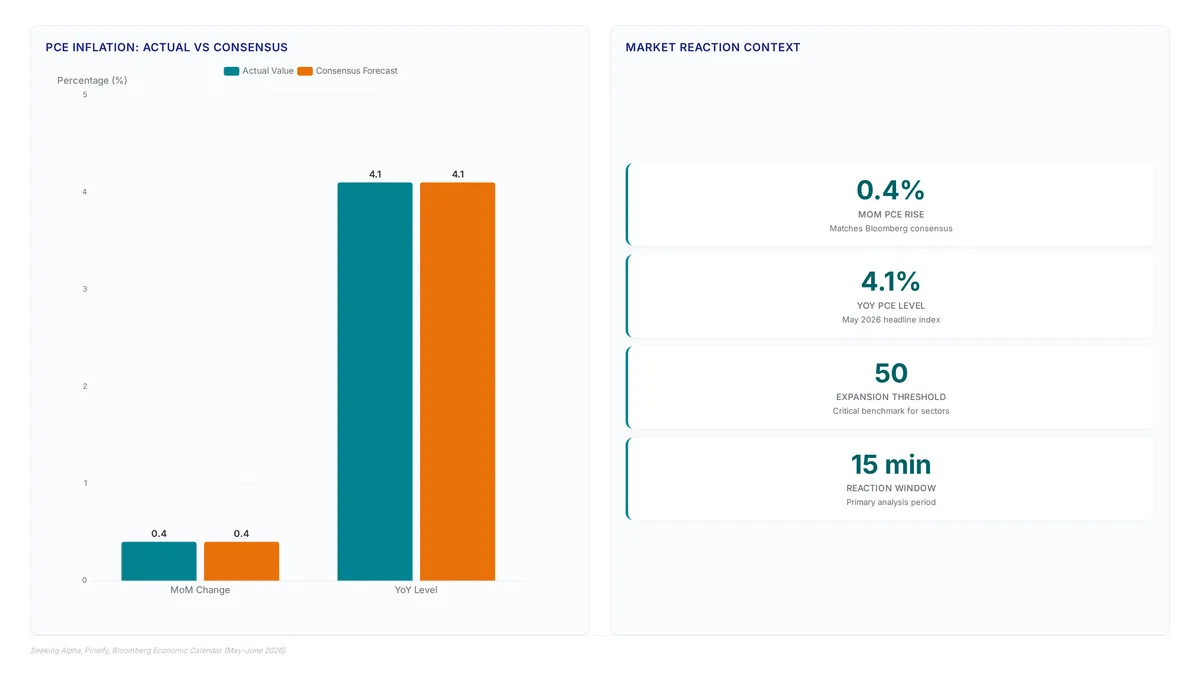
The headline PCE price index rose 0.4% in May 2026, matching consensus forecasts per Seeking Alpha data.
Italian Consumer Confidence won't move the needle. What moves markets are the specific stances of officials like the hawkish voter Nagel or the neutral voter Pereira. You need to separate noise from signal when tracking inflation expectations against falling oil prices. This analysis covers strategic execution around scheduled Fed and ECB speeches, where minor rhetorical shifts alter liquidity flows. We detail how to position portfolios when geopolitical events clash with sticky inflation, ensuring your strategy relies on verified central bank speaker schedules rather than speculative hype.
The Role of Consumer Sentiment and Inflation Data in Market Analysis
Defining Consumer Sentiment and the 50-Point Expansion Threshold
Households vote with their wallets, and consumer sentiment tracks that intent. Readings crossing the 50-point line signal expansion; figures staying below mark contraction. This binary cut lets traders ignore low-tier noise to focus on high-impact central bank signals. Preliminary data showed mood improvement and softer inflation expectations after geopolitical tensions eased and oil prices fell. Shifts in inflation expectations track these events closely, yet final reports often trigger muted reactions when matching consensus forecasts. Separating preliminary volatility from finalized trends remains necessary for accurate interpretation of economic releases.
| Indicator Type | Market Impact | Data Reliability |
|---|---|---|
| Preliminary Release | High Volatility | Moderate |
| Final Report | Muted Reaction | High |
| Central Bank Signal | Extreme Shift | Definitive |
Sentiment drives consumption, which makes up a huge chunk of economic activity. Low-tier data releases rarely alter central bank policy paths. The practical takeaway for ForexCFD.top users involves checking sentiment scores against hard inflation metrics before executing positions during the American session.
Trading the Final University of Michigan Report Amid Muted Reactions
Treat the final University of Michigan release as a confirmation tool, not a primary volatility trigger, when prior pricing aligns with consensus. Unlike the preliminary read that sets the initial tone using raw survey responses, the final data will likely show an upward revision but the market reaction will likely be muted unless figures deviate sharply from forecasts. Historical patterns show that data matching expectations, even when reflecting persistent inflationary pressure like the 0.4% monthly rise in personal consumption expenditures, frequently results in subdued price action. Institutional participants have already adjusted positions following the preliminary release and subsequent geopolitical developments, such as stabilizing energy costs.
An upward revision in the final reading, while technically positive, often lacks momentum to sustain a trend without a concurrent shift in central bank rhetoric. Data classified as "low-tier" or matching consensus forecasts results in muted volatility because market participants focus on primary drivers like central bank rate decisions. Verify that volume profiles support any apparent move before committing significant risk capital. European session details include low-tier releases like Italian Consumer Confidence and French Jobless Claims, which will not change anything for the ECB. American session attention remains fixed on the final sentiment report. Central bank speakers including ECB's Pereira, Nagel, Vujcic, and Fed's Kashkari provide scheduled commentary throughout the day.
How Central Bank Communications and Geopolitical Events Drive Price Action
Defining Hawkish Central Banker Stances and Voter Impact
A hawkish central banker focuses on inflation control, a stance distinct from neutral voters who seek balanced growth. During the European session, ECB's Nagel speaks as a hawkish voter at 08:30 GMT, while ECB's Pereira offers a neutral perspective earlier at 07:00 GMT. Conversely, Fed's Kashkari is scheduled to speak as a hawkish voter at 15:30 GMT, signaling continued tightness in the US dollar zone.
| Speaker | Jurisdiction | Stance | Impact Profile |
|---|---|---|---|
| Nagel | Eurozone | Hawkish | High (Policy Shift Signal) |
| Pereira | Eurozone | Neutral | Low (Status Quo) |
| Kashkari | United States | Hawkish | High (Rate Path Confirmation) |
Central bank rate decisions directly impact currency values, making these specific speaker labels the primary focus for traders monitoring the economic calendar. Unlike consensus-matching inflation data that yields muted reactions, explicit hawkish commentary from voting members forces immediate asset repricing across Forex and bond markets. Distinguish between these high-impact signals and background noise to avoid false breakouts. ForexCFD.top integrates these speaker stances into our real-time sentiment analysis tools, ensuring clients filter low-value commentary from actionable policy shifts.
Applying Geopolitical Shock Analysis to ECB Policy Trajectories
Ignore Italian Consumer Confidence. Low-tier data cannot alter ECB policy trajectories. When the headline PCE price index rose 4.1% year-over-year, the market reaction remained contained because the figure matched forecasts. Data aligning with expectations fails to drive price action, regardless of the absolute inflation level.
Monitoring geopolitical events demands focusing on variables with direct policy relevance, such as oil price fluctuations impacting inflation inputs.
| Data Type | Policy Relevance | Volatility Trigger |
|---|---|---|
| Low-Tier Releases | None | Muted |
| Consensus Matches | Low | Muted |
| Geopolitical Shocks | High | Elevated |
Over-monitoring low-tier releases creates noise, distracting from the singular drivers of liquidity. Reacting to non-events costs you positioning during genuine shocks. Distinguish between statistical updates and structural breaks in the macro environment. Only signals capable of moving the policy trajectory warrant capital allocation.
Strategic Execution for Trading Economic Data and Speaker Events
Defining Muted Market Reactions to Low-Tier Data Releases
Price action stays flat when releases like Italian Consumer Confidence arrive without enough force to shift central bank policy. Traders see this constantly when data points such as French Jobless Claims match consensus estimates and lack the size needed to alter the ECB trajectory. These metrics simply do not change the monetary policy outlook, so volatility contracts instead of expanding during the release window. Algorithms filter out noise that fails to impact interest rate probabilities, leaving substantial currency pairs with negligible movement. Liquidity thins around these events because institutional desks avoid starting fresh positions without a real catalyst. Misidentifying a low-impact event as high-impact leads to premature entries and unnecessary exposure to spread widening. The cost here is false signal risk, where minor fluctuations trigger stop-losses before any genuine trend emerges. Operators must distinguish between data that drives policy and data that merely records history.
| Data Tier | Policy Impact | Typical Volatility |
|---|---|---|
| High | Direct Shift | Elevated |
| Low | None | Muted |
Education from ForexCfd.top emphasizes that preserving capital requires ignoring noise lacking fundamental weight. Recognizing a muted reaction stops overtrading during quiet sessions where no structural market change is imminent.
Executing Trades Around ECB and Fed Speaker Schedules
Entering positions before hawkish voter speeches invites asymmetric volatility risk that most accounts cannot afford. Market liquidity frequently thins ahead of scheduled central bank commentary, specifically before the 08:30 GMT slot assigned to ECB official Nagel. His historical bias suggests comments could tighten rate expectations, whereas neutral voters like Pereira typically reinforce existing consensus without triggering sharp moves. Low-tier data releases earlier in the session frequently fail to alter policy trajectories, leaving speaker comments as the primary volatility catalyst. Recent economic prints are insufficient to change the ECB stance, so price action remains contingent on verbal guidance rather than hard metrics.
About
Sofia Mendes, Broker Reviews & Trading Education Editor at ForexCFD.top, brings a disciplined, risk-aware perspective to analyzing central bank speakers and their market impact. While today's calendar features low-tier European data and the final University of Michigan sentiment report, understanding how these inputs influence ECB or Fed rhetoric is critical for retail traders. Sofia's daily work involves rigorous broker due diligence and crafting trading education that emphasizes how macroeconomic shifts affect execution quality and spreads. Her expertise ensures that readers understand not just the news, but how to navigate the resulting volatility safely. At ForexCFD.top, an independent publication dedicated to forex and CFD markets, Sofia connects high-level central bank commentary to practical trading realities. She guides traders on interpreting these events without hype, focusing instead on regulated environments and sound risk management strategies necessary for navigating currency markets during key economic releases.
Conclusion
Scaling this approach reveals that liquidity fragmentation during high-profile speeches creates execution gaps that standard stop-losses cannot protect. The operational cost of trading through unverified hawkish rhetoric is often permanent capital erosion rather than temporary drawdown. Treat the 08:30 GMT window for ECB official Nagel as a distinct risk regime where historical bias suggests tightened expectations, yet market pricing may already reflect the outcome. Do not assume verbal guidance alters policy trajectories without confirming a break in key technical levels.
Implement a strict two-minute verification rule before entering any position during these events. If price action fails to sustain momentum beyond the initial spike after the speaker begins, treat the move as noise and remain flat. This discipline prevents chasing false positives driven by algorithmic overreactions to prepared statements. Your primary goal is capital preservation until the market confirms a genuine shift in forward guidance probability.
Start this week by mapping the exact spread widening patterns on your broker's platform during the previous three central bank speeches. Compare these metrics against your current risk parameters to determine if your existing position sizing accounts for this specific volatility profile. Adjust your exposure limits immediately if your backtesting shows slippage exceeds your profit targets during these windows.
Frequently Asked Questions
Data matching consensus forecasts often triggers muted reactions despite persistent pressure. The headline PCE price index rose 0.4% monthly, yet markets ignored it because participants had already priced in the expected figures beforehand.
Readings above 50 indicate expansion while those below signal contraction. Traders use this binary cut to filter noise, noting that even a 0.4% rise in personal consumption may not shift trends without policy changes.
Officials drive volatility through nuanced rhetorical shifts rather than raw numbers.
Final reports matching prior pricing usually lack momentum to sustain trends.
Easing tensions can lower oil prices and soften inflation expectations quickly.
References