
Core inflation signals: Why gas spikes mislead
Gasoline prices surged 33.2% year-on-year in May. That single number obscures the real story: sticky core inflation. While headline volatility grabs headlines, the Bank of Canada faces a messier reality where underlying metrics hold steady despite sector spikes. Data from TD Bank Financial Group shows the divergence clearly. Fresh produce prices jumped 9.0% and computer equipment costs rose 3.9%, yet shelter inflation cooled to 1.7%. Strip out the gasoline noise, and overall prices rose a modest 2.2%.
This split defines the current monetary policy landscape. With core goods cooling to 1.4% and preferred core inflation measures holding at 2.1%, central bankers will stay cautious, not reactive. Global reports confirm sticky core inflation dictates a slow path for rate cuts, even as temporary supply shocks send headline numbers swinging.
The Distinction Between Headline Volatility and Core Inflation Metrics
Headline CPI vs Core Inflation Metrics Explained
Headline CPI captures the full basket of consumer prices, letting erratic energy and food costs drown out the economic signal. In May, this measure hit 3.2% yearonyear, dragged up by gasoline prices surging 33.2%. Such headline volatility often hides the steadier persistent price pressures policymakers actually watch. Core inflation cuts that noise to reveal genuine demand momentum. The Bank of Canada uses specific median and trim metrics to filter the chaos; both averaged 2.1% in May. These gauges suggest temporary spikes haven't permanently breached alarm levels.
A gap between total and core readings creates a mixed signal. Market participants must separate transient supply shocks from entrenched demand inflation. Yet, if technology costs keep rising at 3.9% driven by AI hardware demand, the durability of low core inflation faces a real test. Grasping this distinction stops you from overreacting to single-month anomalies.
Gasoline Prices and AI Boom Impact on CPI
Mechanically, pump price spikes and technology hardware costs drive the Consumer Price Index through weighted aggregation. Energy volatility creates sharp divergences between total and underlying price pressures. When fuel costs surge, they lift headline CPI disproportionately compared to stable core components. This distortion forces the Bank of Canada to rely on median and trim metrics, excluding extreme values to isolate persistent trends. Without this filter, temporary shocks could falsely trigger aggressive monetary tightening.
Simultaneously, demand surges from the artificial intelligence sector transmit into broad goods pricing. This pressure drove a 1.9% increase in the overall durable goods category, proving technology cycles now carry measurable macroeconomic weight. Operators analyzing monthly reports must recognize that gasoline prices can mask the true trajectory of domestic demand. The challenge isn't just spotting a cost-of-living spike; it's distinguishing it from a structural shift in purchasing power. Energy costs may revert, but technology-driven hardware price increases often reflect sustained capacity constraints rather than transient shocks.
Misinterpreting Volatile Headline Data as Core Trend
Conflating transient headline volatility with persistent core inflation invites premature monetary tightening. Policymakers must separate noise from signal when temporary shocks lift the aggregate index. The recent jump in Canadian prices stemmed from energy spikes; exclude gasoline, and the environment looks far more contained with steady underlying demand. Reacting to surface-level data distorts the true economic trajectory.
Persistent pressure from technology sectors suggests that even as energy fades, other components may firm. The artificial intelligence boom is transmitting into hardware costs, creating a secondary layer of price stickiness that core metrics may initially understate. Ignoring this shift while fixating on fading energy spikes leads to underestimating future inflation risks. Global markets remain sensitive to these nuances. Geopolitical tensions can instantly recalibrate asset prices and rate expectations regardless of domestic data. Traders monitoring inflation concerns note that any escalation in the Middle East forces immediate repricing of sovereign debt and commodities. Misidentifying a temporary headline spike as a structural trend costs the central bank credibility and creates unnecessary volatility in bond yields.
Sector-Specific Drivers Including Energy Food and Technology Costs
Defining Sector-Specific Drivers: Fresh Produce and Computer Equipment
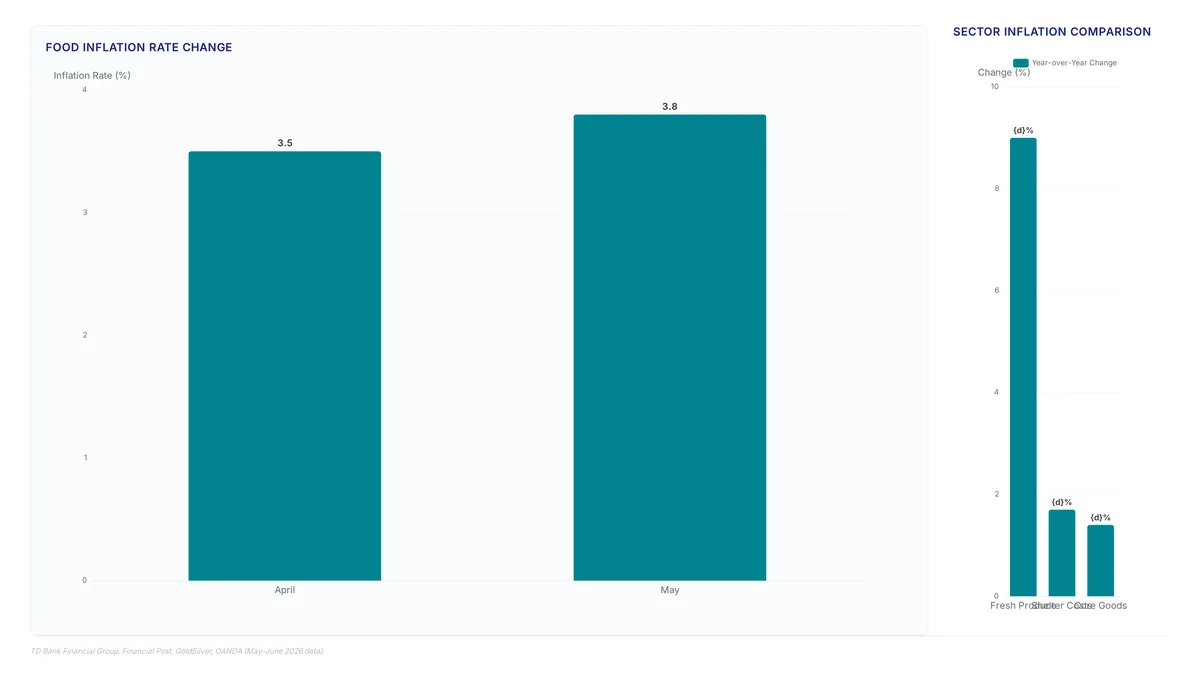
Volatile agricultural yields, not broad demand, drive current Canadian food inflation. TD Bank Financial Group reported food inflation accelerated to 3.8% in May, up from 3.5% in April. This acceleration stems almost entirely from fresh fruits and veggies, which surged 9.0% year-over-year due to supply chain disruptions affecting perishable goods. Sharp increases in perishable costs create a mechanical distortion in the headline Consumer Price Index. Such noise masks underlying stability found elsewhere in shelter and services.
Technology costs emerge as a new structural driver after years of deflationary pressure. This shift indicates the AI boom now transmits directly into Canadian consumer prices through hardware channels. Headline numbers spike, but core metric persistence remains the true signal for rate decisions. The tension lies in distinguishing between temporary supply shocks and entrenched inflationary expectations driven by tech sector growth.
Applying CPI Data: Interpreting Shelter Reversal and Services Growth
Shelter inflation reversed its prior uptick, settling at 1.7% y/y in May. This provides a critical counterweight to volatile energy costs. Housing cost deceleration mechanically offsets the sharp headline spike driven by gasoline. Analysts use this data to isolate persistent pressure in the services sector. Market participants monitoring bond costs noted yields reacting to confirmation of sticky metrics. Traders reprice expectations for prolonged restrictive policy based on these signals.
The Bank of Canada faces a dilemma. Headline numbers appear transiently high due to fuel. Geopolitical developments influencing oil input costs create uncertainty about when demand will soften sufficiently. Used positions on CAD pairs carry significant risk during these divergent data releases. Liquidity can thin rapidly around policy statements. Traders must manage exposure carefully.
Bond Market Signals and Emerging Tech Price Pressures
Bond yields remain little moved by recent data. Traders view current price pressures as transient rather than structural. Soft domestic demand absorbs isolated tech shocks without sparking a broader wage-price spiral. Monetary policy frameworks safely look through sector-specific volatility when the wider demand backdrop remains weak. The path of least resistance for rates remains sideways. Isolated inflation in software or hardware does not necessitate a hiking cycle. This gap defines the analytical baseline for forecasting. Transient energy shocks separate from persistent price pressures.
Global oil prices experienced a significant drop following geopolitical developments regarding the Strait of Hormuz. Energy input costs for substantial economies fell directly. The headline spike represents a mechanical artifact rather than a broad-based demand surge. Relying solely on headline data risks misinterpreting the monetary stance required by central banks. Erroneous rate hike predictions follow this distinction being ignored.
Applying Soft Demand Backdrops to Forecast Canadian Rate Decisions
A soft demand backdrop currently acts as the primary constraint preventing temporary price spikes from altering the monetary policy trajectory. Weak consumer purchasing power limits the ability of firms to pass through rising input costs. This creates a self-correcting mechanism. Headline volatility fails to embed itself into long-term wage and price setting behaviors. Global central banks face renewed pressure to harden stances as the price of monetary policy tightness increases amid stronger-than-expected prints elsewhere. Local demand conditions do not support aggressive pricing in the Canadian context.
The Bank of Canada is expected to release summary deliberations on June 24 regarding these specific inflation and trade risks. The implication for rate decision frameworks is clear. Policymakers will likely remain on the sidelines until core metrics show sustained deviation. Ignoring the demand suppression effect leads to false signals regarding the necessity of restrictive measures. Future forecasts must prioritize real-time consumption data over lagging price indices. Accurate prediction of any potential pivot timing depends on this shift. The TD Bank Financial Group outlook suggests this sideways equilibrium will persist for quiet some time.
Risk of Misreading Temporary Oil Price Declines as Permanent Disinflation
Forecasting models frequently misclassify transient geopolitical price drops as structural disinflationary shifts. A significant drop in global oil prices occurred following an agreement between the United States and Iran to re-open the Strait of Hormuz. This event does not guarantee a lasting decline in energy input costs. Analysts risk overcorrecting projections by treating volatile declines as permanent fixes. Temporary relief differs from structural change.
The underlying inflation trajectory remains sensitive to core metrics excluding energy shocks. Headline figures may stabilize. The Bank of Canada must distinguish between a fleeting peace deal and sustained demand suppression. Relying on this single data point creates a false sense of security regarding long-term price stability. Standard models often weight recent price action too heavily against historical volatility patterns. Policymakers might prematurely ease restrictive stances if they interpret this specific geopolitical development as a fundamental change in the economic environment. True disinflation requires broad-based cooling. A pause in supply chain disruptions is insufficient. TD Bank Financial Group advises maintaining a cautious outlook despite the apparent peak in headline numbers. Investors should monitor core persistence. Celebrating short-term gasoline price reductions offers little strategic value.
About
Aisha Rahman, Gold & Commodities Analyst at ForexCFD.top, provides critical context on Canada's inflation data through her expertise in macroeconomic drivers and commodity markets. While her primary focus is gold and oil, understanding core inflation trends is necessary for analyzing central bank policies that directly impact commodity prices and currency valuations. Her daily work involves dissecting how energy costs, like the gasoline spike noted in the report, influence broader market sentiment and safe-haven flows into assets like XAUUSD. At ForexCFD.top, an independent publication serving global retail traders, Aisha connects these complex economic indicators to actionable trading insights. Her background in Gulf commodities research allows her to clearly explain how shelter and food inflation figures affect real yields, a key determinant for metal prices. This analysis helps traders in emerging markets navigate volatility driven by divergent central bank responses to persistent price pressures.
Conclusion
The real danger isn't headline volatility from energy costs. It's the structural rigidity emerging within durable goods and fresh food sectors. This forces a divergence where central banks face sticky core inflation despite fleeting relief at the pump, complicating the path toward rate normalization. Investors and operators must recognize that relative caution in cutting rates will persist as long as domestic growth remains resilient against these specific cost pushes.
You should immediately decouple your procurement planning from headline energy indices, as they no longer predict broader pricing power. Instead, focus your Q3 strategy on locking in long-term contracts for technology hardware and agricultural inputs before these sector-specific surges embed further into operational budgets. Ignoring the distinction between transient oil dips and enduring component costs will lead to significant margin erosion. The window to hedge against durable goods inflation is narrowing as supply constraints tighten. Prioritize securing supply lines for fresh produce and electronic components this week to mitigate the impact of rising input costs that monetary policy alone cannot quickly reverse.
Frequently Asked Questions
Headline inflation hit 3.2% due to energy spikes, while core metrics stayed at 2.1%. Investors should ignore temporary gas surges and focus on the steadier underlying trend to avoid false alarms about economic overheating.
Fresh fruit and vegetable prices surged 9.0%, driving overall food inflation to 3.8%. Consumers facing higher grocery bills should understand this specific sector volatility does not necessarily indicate broad-based inflationary pressure across all goods.
Computer equipment costs rose 3.9%, pushing durable goods inflation to 1.9%. Businesses relying on hardware upgrades must budget for these sustained technology cost increases rather than expecting immediate relief from supply chain improvements.
Shelter inflation cooled to 1.7%, providing a critical counterweight to rising energy and food prices. Renters and homeowners should note this stabilization helps prevent temporary spikes in other sectors from triggering aggressive monetary policy responses.
Core goods inflation cooled to 1.4%, while services inflation rose slightly to 2%. This divergence suggests manufacturers are absorbing costs better than service providers, indicating varied pricing power across different sectors of the economy.
References