
Flash PMI Data: Why 35% Recession Odds Clash With Growth
J. P. Morgan assigns a 35% recession probability. Goldman Sachs sees 2.8% global GDP growth. Both cannot be right, yet today's Flash PMI data forces the market to pick a lane. These preliminary purchasing manager indices are no longer just sentiment gauges; they are the primary transmission mechanism for central bank policy expectations in 2026.
The dichotomy is ugly. Section 232 tariffs have driven copper prices up 15.7%, suggesting inflation is nowhere near tamed. Meanwhile, the gap between the anticipated 51.1 Services PMI and the cooling 54.6 Manufacturing reading reveals deepening sectoral fractures that raw GDP figures obscure. Monetary authorities must now balance post-conflict optimism against the persistent risk of overheating.
This analysis cuts through the noise. We dissect how central bank communication leverages these real-time data points to signal future rate paths without triggering panic. By understanding the interplay between inflation pressures and industrial output, traders can navigate the upcoming NFP and CPI reports with greater precision.
The Critical Role of Flash PMI Data in Defining Economic Sentiment
Defining Flash PMI and Central Bank Tightening Bias
Flash PMI calculates early economic estimates using 85% to 90% of survey responses before final data release. Markets rely on this metric for a timely signal of business sentiment, pricing inflation risks well ahead of official reports. A tightening bias emerges when central banks signal readiness to raise rates to curb rising prices, even if current action remains paused.
The Federal Open Market Committee voted on June 17, 2026 to maintain the target range. Yet, officials project the federal funds rate ending 2026 at 3.8%, up from the 3.4% forecast in March. This divergence between immediate stability and future projections defines the current policy stance. Conversely, a dovish posture prioritizes employment growth over inflation control, often delaying rate hikes.
Market participants must distinguish between manufacturing contraction and services expansion. The Services PMI expectation of 51.1 indicates continued growth, contrasting with potential manufacturing easing. Ignoring the services component while focusing solely on goods production creates blind spots in inflation forecasting. Elevated services activity often sustains wage growth, forcing policymakers to maintain restrictive stances longer than goods-centric models predict.
Interpreting US Services and Manufacturing PMI Forecasts
Traders parse the divergence between a Services PMI forecast of 51.1 and a Manufacturing PMI easing to 54.6 to gauge sectoral rotation. This split signals that consumer demand remains resilient while industrial output moderates under persistent cost pressures. Market participants prioritize these readings against NFP and CPI data because deviations here adjust the probability of a July FOMC hike currently priced at 34%. A key mechanical distinction exists in data collection; the manufacturing index relies on early survey responses covering most of the sample, acting as a leading indicator for broader activity.
However, interpreting these figures requires isolating temporary geopolitical noise from structural trends. Recent tariff implementations on steel and aluminum have driven mill shape prices up by 15.7%, creating a distortion in manufacturing input costs that does not reflect organic demand destruction. This inflationary spike complicates the signal for central bankers who must distinguish between supply shocks and overheating.
Divergent institutional views highlight this uncertainty; while some analysts see a 35% chance of recession, others project global growth holding at 2.8%. The limitation for operators is that strong headline numbers in services may mask underlying fragility in the industrial base. Consequently, a strong services print alone cannot sustain a hawkish repricing if manufacturing contraction accelerates. The market reaction function now weighs services strength against the risk that high interest rates finally break the industrial sector.
Inflation Risks from Strong PMI and Steel Tariffs
Strong economic activity sustains high inflation pressures, forcing central banks to maintain a tightening bias while Section 232 tariffs compound input costs. The inflationary signal from strong PMI readings risks anchoring expectations above target, requiring persistent monetary restriction. Raw material shocks distort this picture independently of demand. This specific cost surge creates a false positive for demand-driven inflation, complicating the policy response. Operators interpreting PMI data must separate organic growth from tariff-induced price spikes to avoid misjudging the neutral rate.
The limitation here is that headline PMI aggregates often mask these divergent forces. A guide to interpreting PMI data in this environment requires disaggregating the prices-paid component from overall expansion rates. The cost is a higher probability of policy error if central banks tighten against supply-side shocks. Consequently, markets may price in excessive rate hikes if tariff effects are misread as broad-based overheating.
Mechanics of Central Bank Communication and Policy Transmission
FOMC Structure and Rate Transmission Mechanics
The Federal Reserve System integrates the Board of Governors, 12 Federal Reserve Banks, and the FOMC to execute monetary policy through a unified voting structure. This committee determines the target range for the federal funds rate, which serves as the primary benchmark for short-term borrowing costs across the economy. When the FOMC votes to maintain rates, as observed in mid-June 2026, market participants scrutinize the accompanying economic projections for forward guidance signals.
Transmission of this policy occurs through distinct financial channels that influence liquidity and credit conditions:
- The federal funds rate sets the cost of overnight interbank lending.
- Changes propagate to commercial prime rates, affecting business loans.
- Longer-term yields adjust based on inflation expectations and growth forecasts.
- Asset valuations shift in response to discounted cash flow models.
Tracking central bank speakers provides real-time insight into how individual voters interpret incoming data relative to the consensus view. Unlike the collective decision released after joint meetings, individual speeches often reveal dissenting opinions or evolving thresholds for action. A speaker labeled "neutral" may signal openness to data-dependent pivots, whereas "dovish" labels imply resistance to further tightening.
The structural complexity of the voting roster creates a fragmentation risk where regional bank presidents prioritize local economic conditions over national aggregates. This divergence can confuse market pricing if public communications lack synchronization. Operators must differentiate between the binding policy rate and the non-binding economic projections released quarterly. The cost of misinterpreting a speaker's stance is immediate volatility in rate-sensitive instruments.
Tracking Global Central Bank Speaker Calendars
Precise monitoring of speaker calendars requires aligning 08:30 GMT neutral signals from Lane with dovish BoE inputs later in the day. Traders cross-reference these appearances against the statutory mandate of the Federal Reserve System to isolate divergent policy paths. The mechanical value lies in sequencing; a neutral ECB stance at 04:30 ET often anchors Euro volatility before American cash opens.
- Map voter classification to scheduled timestamps for Lane, Taylor, and Dhingra.
- Contrast dovish BoE commentary against the neutral baseline established by earlier European speakers.
| Speaker | Time (GMT) | Stance | Market Impact |
|---|---|---|---|
| Lane | 08:30 | Neutral | Anchors Euro sentiment |
| Taylor | 13:55 | Dovish | Softens Sterling yields |
| Dhingra | 17:30 | Dovish | Reinforces rate cut odds |
However, relying solely on scheduled remarks ignores the structural weight of upcoming payment service pricing changes proven in 2026. The new pricing for financial infrastructure introduces a fixed cost variable that speaker rhetoric cannot immediately offset. This creates a tension where dovish verbal guidance conflicts with hardening operational costs for banks. Consequently, market reactions to Taylor's 13:55 GMT slot may exhibit muted volatility if liquidity providers prioritize balance sheet mechanics over forward guidance. The implication for operators is clear: algorithmic filters must weigh voter stance against immutable fee schedules to avoid false breakout signals during low-liquidity windows.
Infrastructure Supercycle Inflationary Pressures
Rising capital expenditure from $4.4 trillion to $6.9 trillion creates a structural floor for commodity prices that monetary policy cannot easily suppress. This infrastructure supercycle forces central banks to distinguish between transient demand shocks and permanent supply-side constraints. Energy generation capacity acts as a hard limiter; the elasticity of 0.09 implies that generation bottlenecks directly throttle GDP growth while sustaining price levels.
| Factor | Inflation Mechanism | Policy Complication |
|---|---|---|
| Material Costs | Tariff-driven input surges | Masks true demand temperature |
| Energy Capacity | Supply inelasticity | Limits rate hike efficacy |
| Labor Markets | Wage-price spiral | Delays disinflation timeline |
The timing problem arises because rate hikes address aggregate demand but fail to fix physical shortages in copper or generating capacity. A specific risk involves the interaction between tariffs and raw material indices, where duties on imported metals drive copper and brass mill shapes. Operators face a scenario where tightening financial conditions exacerbates the cost of capital for the very projects needed to relieve supply bottlenecks.
Consequently, the transmission mechanism fractures; higher rates reduce speculative inventory buildup but do not accelerate mine output or refinery construction. This creates a stagflationary trap where inflation persists despite slowing activity. The policy dilemma intensifies as central banks risk over-tightening into a supply-constrained environment, mistaking structural price increases for overheating.
A Strategic Framework for Analyzing Daily Economic Calendar Events
Defining the PMI Deviation Threshold for Market Reaction
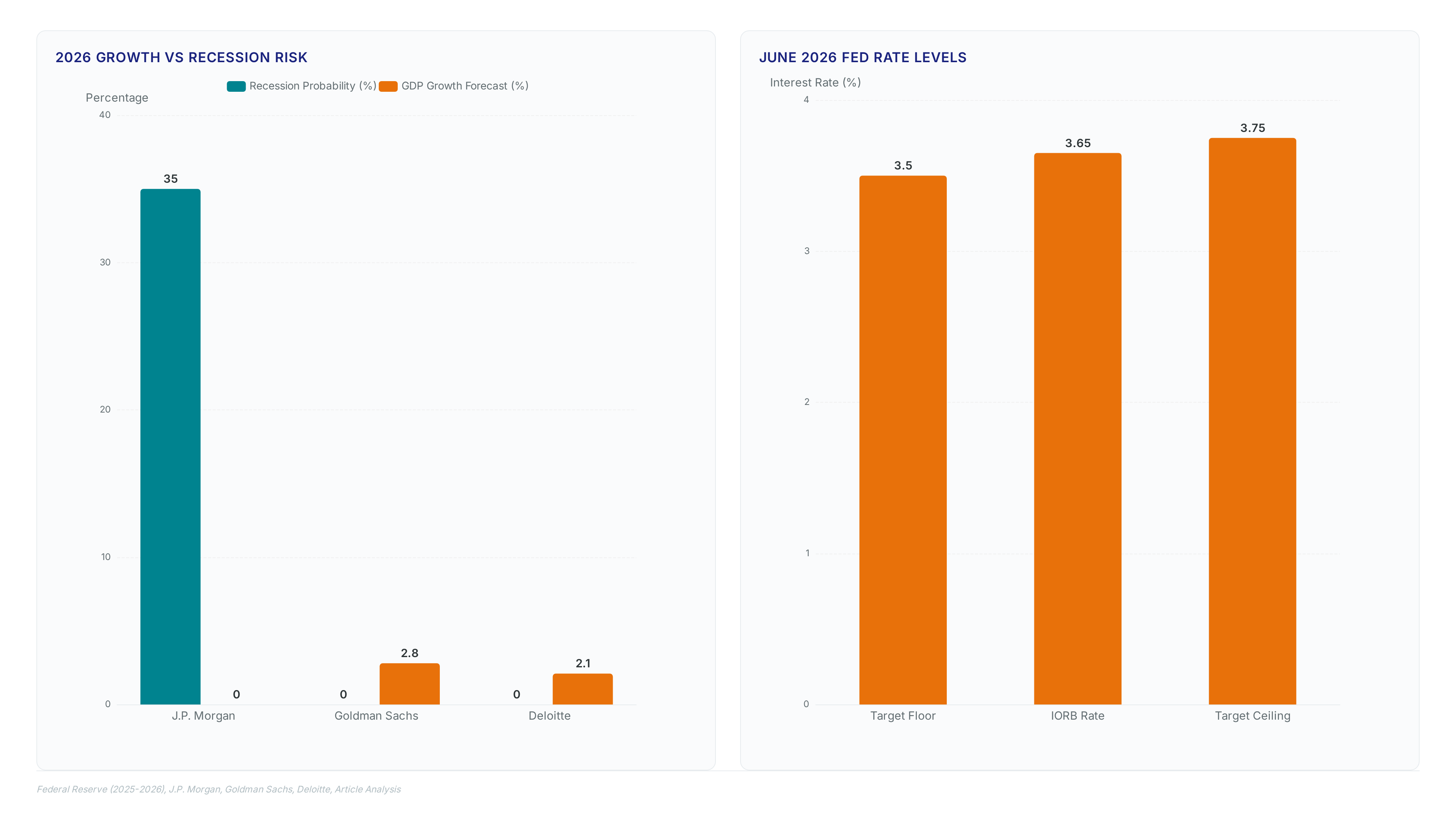
Traders require deviations exceeding standard variance from the 51.1 consensus to trigger volatility, as minor misses get absorbed by liquidity. Without significant outliers, market attention remains fixed on upcoming NFP and CPI releases rather than reacting to noise. Divergent institutional models complicate this threshold; J. P. Morgan assigns a substantial recession probability that contrasts sharply with the growth optimism found in Goldman Sachs projections. This analytical tension means a beat in one sector may fail to move yields if the composite signal contradicts the dominant macro narrative.
The mechanical trap involves ignoring prior revisions when calculating the deviation delta. A headline matching the forecast still constitutes a negative shock if the previous month's strong print was revised downward materially.
| Signal Type | Reaction Trigger |
|---|---|
| Noise | Deviation within 0.3 points of consensus |
| Actionable | Deviation >0.5 points plus revision conflict |
Operators must also weigh tariff-distorted input costs against organic demand signals. The 22% surge in copper wire prices suggests embedded inflation that raw PMI headlines might mask. Deloitte's projection of accelerated real GDP growth supports a thesis where manufacturing strength persists despite these headwinds. Ignoring the Deloitte outlook while trading purely on flash deviance risks misinterpreting supply-side constraints as demand failure. The deviation threshold is not static; it expands when external cost shocks decouple price components from volume data. The mechanical process begins with the proven interest rate on reserve balances at 3.65%, which sets the floor for short-term funding costs. Operators adjust probability weights by measuring deviations in the Services PMI against the 51.1 consensus, as any upside surprise reinforces the tightening bias required to combat persistent inflation pressures.
| Input Variable | Market Signal | Probability Impact |
|---|---|---|
| Services PMI | >51.1 | Increases hike odds |
| Manufacturing PMI | <54.6 | Decreases hike odds |
| Tariff Costs | Elevated | Sustains inflation floor |
The limitation of this framework lies in the divergent signals from global infrastructure spending, which creates a structural floor for commodity prices that monetary policy cannot easily suppress. A beat in manufacturing may fail to move yields if the composite signal contradicts the dominant macro narrative regarding growth. Consequently, the probability model remains highly sensitive to the NFP and CPI releases rather than isolated PMI prints.
Checklist for Vetting Central Bank Speaker Bias Before Trading
Operators must cross-reference speaker schedules against the proven interest rate floor to detect sentiment shifts before liquidity evaporates. This validation prevents misinterpreting neutral commentary as dovish signals during low-volume windows.
- Map voter classification against scheduled timestamps for Lane, Taylor, and Dhingra.
- Verify speech timing avoids overlap with payment service pricing updates that distort bank liquidity.
| Speaker | Voter Type | Primary Risk |
|---|---|---|
| Lane | Neutral | Anchors Euro volatility |
| Taylor | Dovish | Masks true demand temperature |
| Dhingra | Dovish | Extends tightening bias duration |
Ignoring this sequence leads to false positives when dovish BoE remarks arrive later in the day. Coverage Pillars recommends automating this timestamp alignment to filter noise from genuine policy pivots. The cost of manual verification is measurable missed entries during rapid sentiment swings.
Market Implications of Divergent Global Monetary Policies
Divergent Monetary Stances: ECB Neutrality vs BoE Dovish Bias
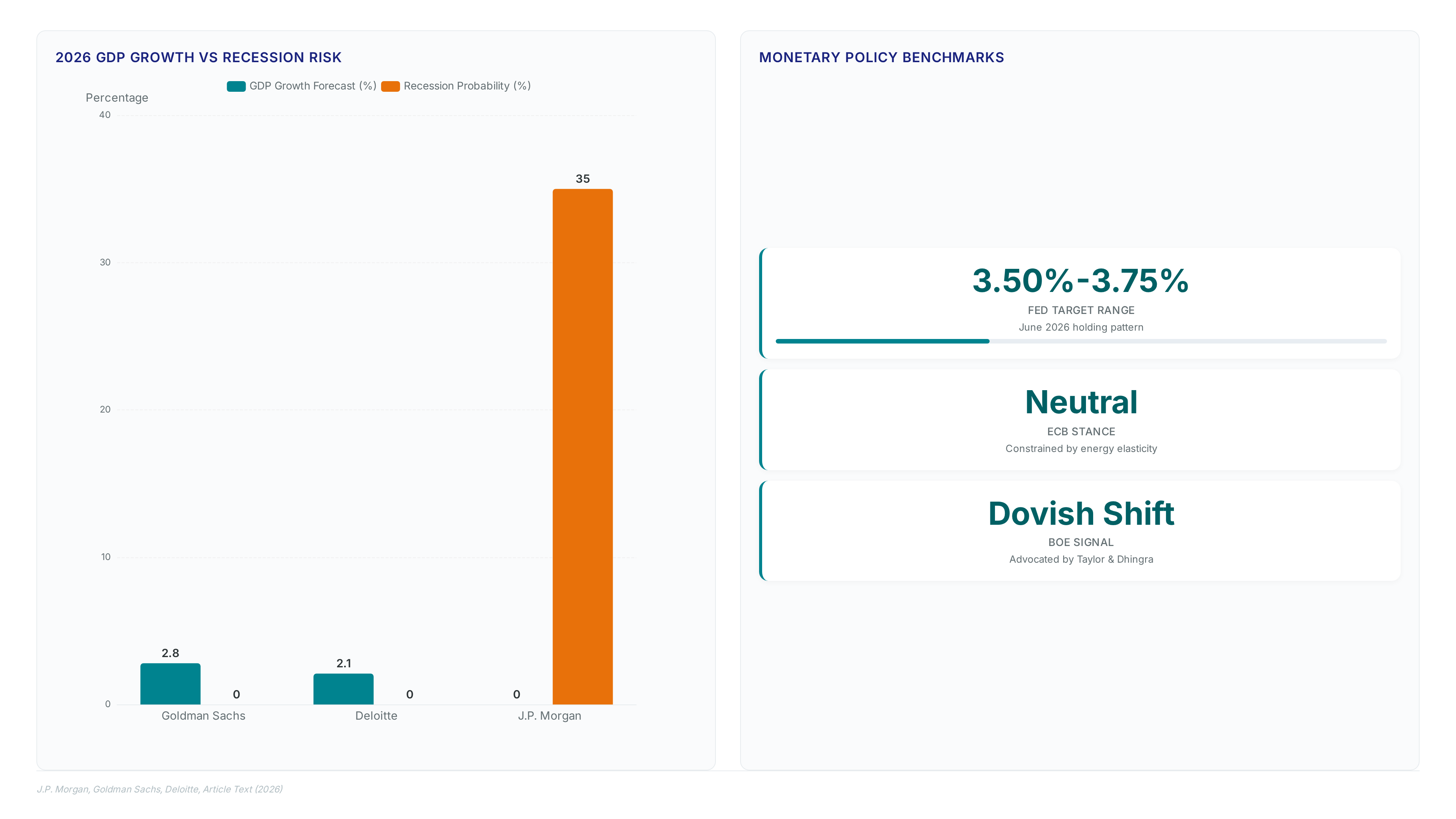
ECB speakers Lane and Vujcic maintain neutral voting records while BoE members Taylor and Dhingra explicitly advocate dovish policy shifts.
| Dimension | ECB Stance | BoE Stance |
|---|---|---|
| Voter Bias | Neutral | Dovish |
| Inflation View | Persistent Risk | Transient Shock |
| Rate Path | Stability Focus | Early Cut |
This divergence creates a tactical arbitrage window where capital flows favor euro-denominated assets over sterling instruments during volatility spikes. The Federal Reserve holding the target range at 3.50%-3.75% amplifies this split by removing US yield pressure as a unifying force. A critical limitation exists in liquidity depth; sterling markets may fracture if dovish rhetoric accelerates before inflation data confirms cooling. Most analysis overlooks how energy infrastructure constraints force the ECB's hand toward neutrality despite growth concerns. The elasticity of energy generation limits aggressive easing in Europe, a constraint the UK faces less acutely due to different grid dynamics. Traders should deploy Coverage Pillars tools to isolate these specific voter classifications rather than relying on broad regional aggregates. Failure to distinguish between neutral and dovish voting patterns results in mispriced duration risk across the yield curve. The market currently underestimates the friction caused by asynchronous policy cycles between London and Frankfurt.
Trading Infrastructure Supercycle Yields Amid Rate Divergence
Energy generation elasticity at a marginal level drives GDP gains as infrastructure spending accelerates despite rate friction. Divergent central bank stances create distinct yield curves for industrial capital. The ECB maintains neutrality while BoE dovish voters signal earlier relief, widening the spread on euro-denominated debt versus sterling instruments. This policy gap forces operators to hedge currency exposure while chasing volume in the infrastructure supercycle. Tariff-induced price spikes in copper and brass reshape the risk-reward profile for grid modernization projects.
| Dimension | High Elasticity Sector | Tariff-Impacted Input | Policy Headwind |
|---|---|---|---|
| Yield Driver | Capacity Expansion | Cost Push | Rate Stability |
| GDP Lift | a marginal gain per unit of capacity | Negative drag | Neutral |
| Volatility Source | Permitting Delays | Section 232 Rules | Speaker Rhetoric |
The limitation is that recession risks remain elevated even as spending forecasts double historical averages. Capital allocation must distinguish between transient commodity shocks and structural demand growth. A misread on inflation persistence could trigger a broader sell-off in long-duration assets. Operators should prioritize contracts with fixed-price clauses for metal components to mitigate input cost variance. The interplay between FedNow Service adoption and industrial financing costs remains an under-monitored correlation. Liquidity providers must adjust collateral hairpins for borrowers exposed to volatile raw material markets. Strategic positioning requires isolating genuine capacity constraints from speculative inventory builds.
Inflationary Risks from Aluminum PPI Surges and Tariff Escalation
A 33% surge in Aluminum PPI underscores the severity of the current supply shock.
| Factor | Inflationary Impact | Policy Constraint |
|---|---|---|
| Aluminum PPI | Severe Cost Push | Limits Rate Cuts |
| Tariff Rate | Supply Shock | Reduces Growth |
| Geopolitics | Energy Volatility | Complicates Forecast |
Dovish commentary from BoE voters Taylor and Dhingra contrasts sharply with the tightening bias required by persistent US producer price pressures. If the Fed ignores these input costs, inflation expectations could unanchor, yet aggressive hiking risks stalling the infrastructure supercycle. The July FOMC hike probability remains sensitive to whether services data offsets these manufacturing headwinds. Operators must monitor if cost pressures force a policy error where rates stay high too long. The risk is a stagflationary loop where tariffs drive prices up while growth slows. Coverage Pillars recommend hedging against prolonged rate stability failures in this environment.
About
Vikram Nair, Emerging Markets & Asia FX Writer at ForexCFD. Top, brings critical perspective to today's Flash PMI releases. While the headline data focuses on Eurozone and UK sentiment following the US-Iran resolution, Nair's expertise in global macro linkages explains why these figures matter beyond Europe. His daily analysis of central bank policies, including the Fed's tightening bias, directly connects to how PMI-driven inflation fears impact emerging market currencies like the USD/INR and USD/NGN. At ForexCFD. Top, an independent publication dedicated to factual market news, Nair interprets how stronger European activity might sustain high interest rates, thereby influencing capital flows into the Tier-2 and Tier-3 markets he covers. This context is vital for traders navigating the ripple effects of global monetary policy shifts. By grounding complex economic indicators in real-world trading scenarios, Nair ensures readers understand the broader implications of Flash PMI data on their specific currency pairs and regional broker landscapes.
Conclusion
Relying on Flash PMI data creates a false sense of precision when raw material volatility distorts the underlying signal. As aluminum costs surge, the gap between early survey estimates and final economic reality widens, forcing operators to pay a premium for liquidity that assumes stable input prices. This divergence means capital allocation based solely on headline PMI figures will likely misprice long-term infrastructure projects by underestimating sustained cost-push pressure. You cannot hedge effectively against a moving target if your primary indicator lags behind real-time commodity shocks.
Adopt a dual-track validation protocol for all capital projects exceeding a modest threshold by Q4 2027. Mandate that investment committees cross-reference Flash PMI readings with specific Producer Price Index sub-indices for critical inputs before approving funding. Do not rely on aggregate manufacturing scores when sector-specific tariffs are driving significant price swings. This approach isolates genuine demand from speculative inventory hoarding driven by fear of further tariff escalations.
Start this week by auditing your current supplier contracts for escalation clauses tied specifically to aluminum and energy indices. Replace generic CPI adjustments with fixed-price windows or explicit commodity caps to insulate your operational budget from the next wave of producer price shocks.
Frequently Asked Questions
Flash PMI calculates early estimates using 85% to 90% of survey responses. This high coverage rate allows the metric to serve as a timely signal for business sentiment before official final data releases occur.
Officials project the federal funds rate ending 2026 at 3.8%. This figure represents a significant increase from the 3.4% forecast recorded in March, highlighting a divergent policy stance.
Recent tariff implementations have driven mill shape prices up by 15.7%. This sharp increase creates a distortion in manufacturing input costs that does not necessarily reflect organic demand destruction within the sector.
The probability of a July FOMC hike is currently priced at 34%. Traders closely watch upcoming data releases because any deviations could significantly adjust these specific odds for the meeting.
While some analysts see a 35% chance of recession, others project global growth holding at 2.8%. This wide divergence creates uncertainty for operators trying to interpret conflicting economic signals accurately.