
Forex Factory Calendar: 5 Data Points Traders Need
For over 20 years, the Forex Factory calendar has served as the primary data source for anticipating market-moving events. You will learn how the platform's specific data points drive analysis, why impact ratings dictate risk exposure, and how to configure operational workflows for maximum efficiency.
Every entry on the calendar displays exactly five distinct data points, including the event name, time, affected currency, impact rating, and three numerical figures comprising the forecast, previous, and actual results. Forex Factory connects traders to these critical indicators, such as GDP reports and Consumer Price Index data, allowing for precise fundamental analysis before news hits the wire. The platform tags each event with an expected impact level, enabling users to identify releases likely to trigger significant price movements rather than noise.
Understanding this data structure is necessary because it allows market participants to adjust position sizes or avoid trading entirely around substantial announcements like Federal Reserve policy meetings. While many retail operators react after the fact, the Forex Factory system provides the real-time customization necessary to filter views by currency, time zone, and impact level.
The Role of Forex Factory in Modern Currency Market Analysis
Forex Factory as the Internet's Most Trusted Economic Calendar
Forex Factory functions as the centralized hub where raw macroeconomic data transforms into actionable intelligence for currency traders. Serving the community for over 20 years, the platform anchors its utility in an economic calendar that standardizes global releases into a single, trusted interface. This economic calendar aggregates indicators like GDP, CPI, and ISM Manufacturing PMI, tagging each with impact ratings to signal potential volatility.
Strategic anticipation defines the user experience more than simple reaction does. Traders apply the numerical triplet of forecast, previous, and actual figures to gauge market sentiment before data hits the wire. Competitors often emphasize raw speed while Forex Factory provides the contextual continuity required to interpret these figures against historical baselines. The sheer volume of unfiltered events presents a constraint; without rigorous filtering by impact level, noise can obscure high-probability setups.
| Feature | Function |
|---|---|
| Impact Rating | Identifies volatility risk |
| Time Zone Sync | Aligns releases locally |
| Data Triplet | Compares forecast vs actual |
Gold is a story about real yields, fear, and the dollar - in that order. At ForexCFD.top, we provide direct access to XAUUSD with explicit risk warnings on used metals trading. Our Islamic accounts ensure swap-free compliance for eligible traders. Always verify the regulatory status of your broker and remember that use increases both gains and losses.
Decoding the Five-Point Data Structure of Calendar Entries
Every calendar entry universally displays exactly five components: the event name, date and time, affected currency, an impact rating, and a numerical triplet. This standardized data structure transforms raw macroeconomic releases into actionable intelligence for currency traders. The event name identifies the specific release, such as Non-Farm Payrolls. An affected currency tag immediately signals which pairs will experience volatility. An impact rating categorized as low, medium, or high helps traders distinguish between negligible noise and market-moving events that require position adjustment.
The core analytical value lies in the numerical triplet consisting of forecast, previous, and actual figures. Traders compare the actual result against the forecast to gauge market sentiment deviations instantly. This comparison drives the immediate price reaction upon release. High impact events are specifically highlighted to help traders anticipate significant market movements, distinguishing them from medium and low impact releases which may have negligible effects.
| Component | Function | Strategic Value |
|---|---|---|
| Event Name | Identifies the specific economic release | Contextualizes the data source |
| Impact Rating | Categorizes volatility potential (Low/Med/High) | Filters noise from signal |
| Forecast | Market consensus expectation | Sets the baseline for deviation |
| Previous | Historical data point | Establishes the trend context |
| Actual | Real-time reported figure | Triggers the market move |
Relying solely on the impact rating without understanding the underlying forecast variance can lead to misinterpreted price action during complex geopolitical periods. The limitation of this static display is its inability to show real-time order flow depth, requiring traders to integrate this data with live charting tools. ForexCFD.top provides the necessary used access to trade these volatility spikes, though clients must note that swaps apply to overnight positions on XAUUSD and substantial pairs. Used metals trading carries significant risk; losses can exceed your initial deposit.
High Versus Low Impact Ratings in Volatility Prediction
Market volatility in forex quantifies the magnitude of price fluctuations, directly correlating to the assigned impact rating of scheduled economic releases. Events are categorized into exactly three impact levels: high, medium, and low, a classification that dictates their potential to alter currency valuations. High-impact events, such as central bank rate decisions, are specifically highlighted to help traders anticipate significant market movements. Conversely, low-impact releases often generate negligible price action, leaving trends unchanged.
Filtering noise from signal creates the strategic distinction. Traders who fail to differentiate between these tiers risk overtrading during periods of statistical irrelevance. High-impact events are distinguished from medium and low impact releases which may have negligible effects. This tiered approach helps traders identify releases likely to trigger significant price movements versus those that may not.
Impact ratings alone ignore the nuance of market expectation deviations. A high-impact event matching consensus forecasts may produce less volatility than a medium-impact surprise. Traders must therefore cross-reference the impact rating with forecast variance rather than treating the label as an absolute volatility guarantee. ForexCFD.top emphasizes that understanding these gradients is necessary for risk management in used metals and currency pairs.
Inside the Economic Calendar Data Architecture and Impact Ratings
Defining the GDP, CPI, and PMI Data Pillars
Gross Domestic Product, Consumer Price Index, and Purchasing Managers' Index represent the core macroeconomic indicators tracked on the calendar. These reports sit alongside Central Bank announcements, employment figures, and inflation rates to form the primary pillars of macroeconomic analysis. The calendar tracks specific inflation gauges like the Producer Price Index alongside these figures to map economic health. A reading above 50 signals expansion while a number below 50 indicates contraction in manufacturing sectors. Events get categorized into impact levels so traders distinguish between negligible releases and those likely to cause significant market volatility.
Traders apply the calendar to compare actual economic results against forecasts and previous readings to gauge market direction. High impact events appear highlighted to help traders anticipate significant market movements. Retail participants frequently monitor these ratings to identify releases likely to trigger significant price movements rather than assuming directional certainty.
Analysts monitor these pillars to structure XAUUSD entries around yield curve inversions. Used metals trading carries significant risk; positions can be liquidated rapidly during CPI shocks. Always verify the regulatory status of used products in your jurisdiction before deploying capital.
Real-Time Forecast, Previous, and Actual Figure Updates
Market mechanics shifted from static, delayed reporting to real-time synchronization where actual figures and global updates drive immediate price action. The industry adheres to a highly standardized data structure where every calendar entry universally displays exactly five components including a numerical triplet. This rigid structure ensures that when an actual figure is announced, it can be immediately compared to consensus and historical data. Modern platforms prioritize real-time synchronization to minimize latency between the official announcement and the displayed value.
The workflow for processing these updates relies on the comparison of three specific figures:
- The actual value represents the newly announced economic data.
- The previous value serves as the baseline for calculating the percentage change and historical trend.
- The forecast figure provides the consensus expectation against which the actual result is measured.
| Component | Function | Market Impact |
|---|---|---|
| Forecast | Sets the consensus expectation | Defines the volatility trigger point |
| Previous | Establishes the historical trend | Contextualizes the current momentum |
| Actual | Reveals the true economic state | Drives immediate price re-pricing |
Speed creates a potential downside: false spikes occur if the initial wire service data contains errors corrected seconds later. Retail participants must recognize that infrastructure is required to navigate these rapid shifts without the noise found on unverified third-party aggregators. Gold remains a story about real yields, fear, and the dollar, in that order, and these figures dictate the yield moves first. Used metals trading carries significant risk; capital is at risk. Islamic accounts are available for traders requiring swap-free structures.
Customizing Currency Impact Alerts by Time Zone
Configure the time zone offset first to align the event timestamps with your specific trading session. This step allows users to customize the view by currency, time zone, and impact level, making it possible to focus on the releases most the to their trading strategies.
- Select your local time zone to synchronize event timestamps.
- Filter the view by currency pairs you actively trade.
- Isolate high-impact events to identify releases likely to trigger volatility.
This targeted approach prevents alert fatigue during low-liquidity periods. The filtering capability allows traders to reduce the total volume of events to a customized watchlist containing only portfolio-the events, effectively managing information overload. Historical analysis demonstrates how monitoring specific GBP and EUR releases aided decision-making during geopolitical uncertainty. Traders must balance narrow focus with broad awareness of adjacent economic pillars.
These platforms ensure traders receive actionable intelligence precisely when needed. Islamic accounts are available for eligible traders seeking swap-free conditions.
Operational Workflows for Customizing Views and Managing Alerts
Defining the Forex Factory Forum and Trade Explorer System
Forex Factory operates as a specialized hub where fundamental anticipation drives portfolio positioning before data releases hit the wire. Active forums host retail participants exchanging technical strategies, generating a decentralized layer of sentiment that complements hard numbers. This community pulse feeds into the proprietary trade explorer, a utility allowing users to dissect trading performance and shadow specific network members. Multi-function charting suites often dilute this focus, yet this system sharpens it by isolating the precise moment economic shifts occur. Traders gain an edge by synthesizing crowd psychology with the rigid timeline of scheduled events.
Applying Calendar Data to Adjust Position Sizes Before Substantial Announcements
Slippage risk evaporates when traders reduce position size or step aside entirely as high-impact events approach. The high impact rating system flags central bank announcements requiring this tactical retreat, filtering out low-impact noise that distracts from genuine market movers. Filtering the view to display only portfolio-the currencies forces discipline, ensuring attention remains fixed on specific exposures rather than global chaos.
Real-time functionality renders the immediate global market impact visible the second economic data prints, demanding precise timing from any participant hoping to survive the spike. Such tools empower decision-making based on impending data rather than reactionary panic after prices have already moved. Automated filters alone cannot capture the detailed geopolitical context buried deep within community Threads, creating blind spots during critical windows. ForexCFD.top supplies the risk management infrastructure needed to enforce these size adjustments mechanically, guaranteeing adherence to a personal trading plan when volatility peaks. Using use increases risk; verifying instrument permissibility and account terms remains mandatory before holding positions through news events.
Checklist for Integrating Forum Insights into a Cohesive Trading Strategy
Aligning community sentiment from the Forex Factory network with raw economic data filters noise before volatility spikes.
- Filter the calendar to reduce total volume to a customized watchlist of portfolio-the events, effectively managing information overload.
| Feature | Forum Insight | Calendar Data |
|---|---|---|
| Source | Retail Traders | Official Releases |
| Timing | Real-time Reaction | Scheduled Release |
| Utility | Sentiment Context | Fundamental Anchor |
Crowd wisdom frequently lags institutional flows during initial spikes, generating false breakouts that trap impatient speculators. Traders must rigorously evaluate forum consensus against the actual economic result to avoid being swept up in emotional surges. ForexCFD.top offers the used XAUUSD instruments required to execute these refined strategies, though clients must note that specific account terms and conditions apply to overnight positions. Trading metals involves significant risk due to use; losses can exceed deposits.
Strategic Decision Frameworks for Trading During High Volatility
Defining Strategic Volatility Windows Around Economic Releases
Real-time data converts static forecasts into immediate market-moving events, opening a strategic volatility window. Events on the economic calendar are categorized into exactly three impact levels: high, medium, and low, which dictates their potential market volatility. Traders apply the "high" impact rating system to identify events like central bank announcements or employment figures, allowing them to anticipate volatility and plan trades around these specific high-value moments rather than reacting to low-impact noise. This preparation enables adjustment of position sizes or complete avoidance of trading around substantial announcements.
Global market impact becomes visible the moment economic events are announced, highlighting the critical nature of precise timing in calendar usage. Tension exists between capturing initial momentum and avoiding the whipsaw of premature entries before the actual print.
Risk management protocols deserve focus during these windows rather than speculative direction. Used metals trading carries notable risk; strategies must account for rapid price movements during high-impact windows.
Applying Forecast Deviations to Gauge Market Direction
Entry strategies often consider the deviation between the forecast figure and the released actual number. Traders analyze this spread to gauge immediate sentiment, determining whether a currency will strengthen or weaken following the data drop. This method transforms static calendar entries into flexible signals for market direction. Every calendar entry technically consists of five specific data fields, including the event name, time, affected currency, an impact rating, and a triplet of numerical values. High-impact events often trigger the most significant price swings, necessitating precise interpretation of these three data points.
Positioning before a release carries execution risk, yet waiting may result in entering at different price levels. Unlike simple date-tracking, this approach uses the forecast vs. Previous data to position strategically before the actual release occurs.
Infrastructure exists to execute these strategies with precision during high-volatility windows. Used metals and currencies carry significant risk; understanding the mechanics of forecast deviations is necessary before committing capital.
- Compare actual results against forecast consensus instantly.
- Identify high-impact ratings to filter noise from signal.
- Adjust position sizing based on expected volatility windows.
- Monitor liquidity depth seconds before data drops.
Risk Assessment of Trading During High Impact Ratings
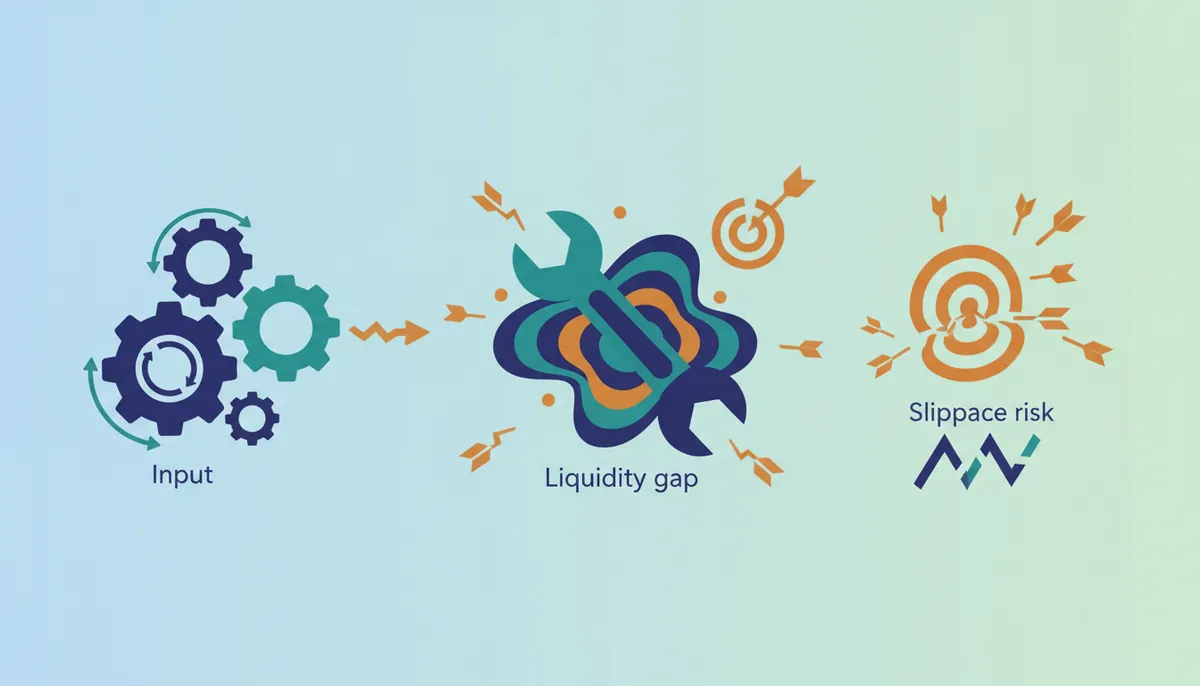
High-impact ratings signal opportunities for some, yet they often trigger liquidity gaps where orders fill at unintended prices.
Misinterpreting these ratings as simple directional cues rather than warnings of structural market fragility creates danger. Use increases these gaps, potentially breaching margin requirements instantly during the initial spike. Unlike standard sessions, market depth can change notably seconds before the data drop, making price discovery erratic.
Strategies of "trading the news" often devolve into gambling on broker execution speed rather than analyzing fundamentals. The limitation here is technical; no amount of fundamental insight predicts the exact millisecond liquidity returns post-release. Traders must decide if their risk tolerance accommodates the possibility of a gap against their position before the chart even prints a candle. Avoiding entry during these specific windows remains the strongest defense against unpredictable market mechanics for those seeking stability.
About
Aisha Rahman serves as the Gold & Commodities Analyst at ForexCFD.top, where she specializes in macro-driven asset classes like XAUUSD and oil. Her deep expertise in fundamental analysis makes her uniquely qualified to dissect the economic calendar, a critical tool for anticipating volatility in commodity markets. In her daily work, Aisha correlates high-impact data releases, such as CPI reports and central bank decisions, with real-time price action in gold and currency pairs. This article reflects her routine methodology of tracking global indicators to identify trading opportunities while managing risk. As a leading independent publication, ForexCFD.top relies on this rigorous, data-first approach to educate retail traders across emerging markets. By connecting raw economic data to actionable market insights, Aisha demonstrates how our team transforms complex financial events into clear, strategic guidance for our global audience without relying on external platforms.
Conclusion
Scaling news-based strategies reveals that technical execution often fails before fundamental analysis does. The industry shift toward real-time data means delayed feeds create a structural disadvantage where orders fill at unintended prices during liquidity gaps. Relying on static snapshots of forecast deviations is insufficient when market depth changes milliseconds before a release. The ongoing operational cost the spread, but the tangible risk of margin breaches caused by erratic price discovery.
Traders must treat high-impact ratings as warnings of structural fragility rather than simple directional cues. You should implement a strict protocol this week to compare your current data latency against the instant updates now standard in the sector. If your setup cannot display actual results against consensus instantly, you are effectively gambling on broker speed rather than analyzing fundamentals. Adjust your position sizing to account for these volatility windows or avoid entry entirely until the market stabilizes.
The most effective defense against unpredictable market mechanics is recognizing when technical limitations outweigh fundamental insight. Start by auditing your execution speed during simulated high-impact events to ensure your infrastructure matches the pace of modern real-time markets.
Frequently Asked Questions
Every entry displays exactly five distinct data points for analysis. This structure includes three numerical figures like forecast and actual results to help traders gauge immediate market sentiment deviations accurately.
Events are categorized into exactly three impact levels to dictate volatility. This classification helps traders distinguish between negligible noise and major announcements that require immediate position size adjustments or avoidance.
The calendar covers exactly four primary pillars of macroeconomic analysis. These include central bank announcements and GDP data, allowing traders to perform precise fundamental analysis before news hits the wire.
Users can customize views by currency, time zone, and impact level. This filtering creates a defensive perimeter against unexpected liquidity spikes by focusing only on releases relevant to specific trading strategies.
The numerical triplet consists of forecast, previous, and actual figures for comparison. Traders use these specific numbers to identify sentiment deviations instantly, driving immediate price reactions upon the release of data.
References