
Warsh Testimony: Inflation at 4.2% Risks
Inflation sits at a three-year high of 4.2% per PBS. Chair Warsh faces immediate legislative scrutiny over his hawkish resolve.
This testimony proves that the Humphrey-Hawkins hearings have evolved from routine oversight into a critical stress test for Warsh's unconventional regime change strategy. Investors expecting standard central bank platitudes will be disappointed; the collision of uneven monetary policy and what JPMorgan calls the "unstoppable AI supercycle" is fundamentally reshaping the global economic environment in 2026. Warsh's refusal to submit a personal dot-plot forecast signals a deliberate break from transparency norms, forcing markets to decode intent rather than follow guidance.
Readers will learn how the statutory requirements of the 1978 Act constrain Congress's ability to extract concrete commitments regarding the persistent price surges driven by post-conflict energy costs. Finally, the analysis covers the strategic implications of Warsh's silence on forward guidance, a tactic designed to insulate the Fed from political pressure while nine voting members already signal support for higher rates. This is not merely a report; it is the unveiling of a new, less predictable monetary architecture.
The Statutory Role of Humphrey-Hawkins Testimony in Monetary Oversight
Humphrey-Hawkins Act Semi-Annual Reporting Mandate
The Humphrey-Hawkins Full Employment Act of 1978 compels the Federal Reserve Chair to testify before Congress twice yearly, enforcing the dual mandate through direct legislative scrutiny. This statute demands the central bank submit written Monetary Policy Reports by February 20 and July 20 annually. The statutory deadlines impose a rigid disclosure cycle that blocks indefinite policy opacity during volatile economic shifts. Written reports detail the conduct of monetary policy and economic prospects, creating a permanent record for legislative review. The legal framework binds the Fed to maximum employment and stable prices as primary goals.
| Written Report | Semi-annual | February 20 / July 20 |
| Chair Testimony | Semi-annual | February / July |
| Economic Forecast | Semi-annual | Concurrent with Report |
Policy execution remains bound by these statutory goals despite political pressure to alter rate paths. A sharp tension exists between the fixed reporting calendar and volatile inflation data; rigid deadlines can force public justification of policies that market conditions may have already rendered obsolete. Operators must track these dates as hard stops for potential volatility spikes.
Warsh July 2026 Congressional Testimony Schedule
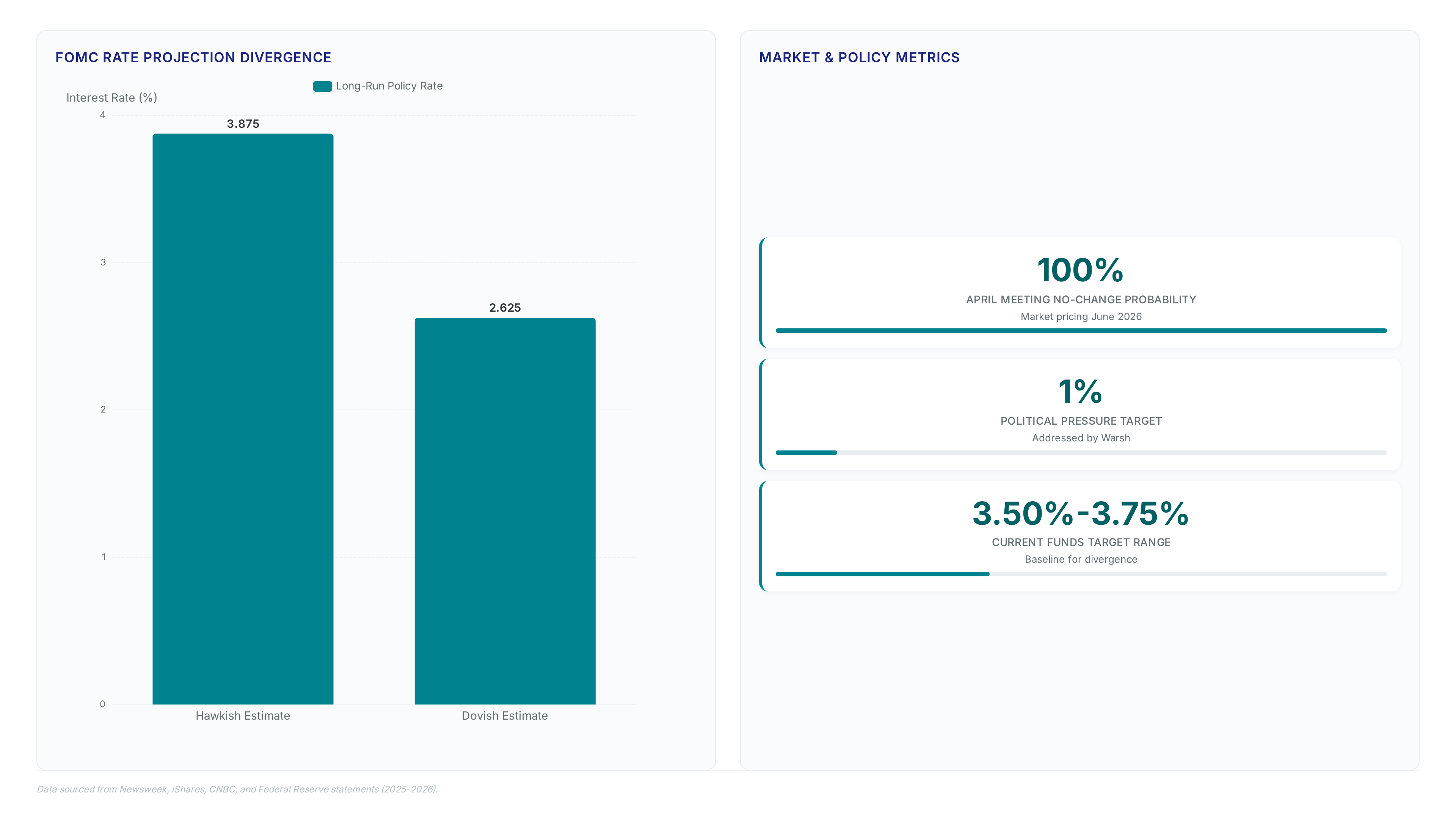
Kevin Warsh must appear before the House Financial Services Committee on July 14 at 10am ET to satisfy statutory oversight. The House Financial Services Committee slot initiates the semi-annual ritual where Congress reviews the Monetary Policy Report. Senate Banking follows on July 15, completing the dual-chamber requirement mandated by law. These sessions force public justification of the federal funds rate range currently held at 3.50% to 3.75%. The statutory deadline for the written report arrives July 20, creating a hard stop for data submission. Warsh faces immediate scrutiny over the 4.2% inflation print, a figure complicating his the goal of balance sheet reduction. Unlike prior chairs, Warsh omitted personal rate projections, leaving the dot plot partially empty and inviting aggressive questioning on forward guidance. Markets often react violently to tonal shifts in these specific windows, yet Warsh has signaled reduced press frequency. This creates an information vacuum where testimony becomes the sole high-fidelity signal for policy direction. Failure to clarify the path to the 2% target during this window could destabilize long-term yield curves. The Humphrey-Hawkins framework ensures accountability but risks politicizing technical rate decisions during election cycles.
Monitoring Central Bank Independence via Statutory Deadlines
Statutory deadlines force the Federal Reserve to transmit its semi-annual Monetary Policy Report by July 20, creating a hard constraint on policy opacity. This rigid timeline prevents indefinite delays in disclosing economic projections or justifying forward guidance shifts. Observers track the gap between oral testimony and written submission to detect political interference or administrative stalling. The law mandates these reports detail the conduct of monetary policy, binding the central bank to its dual mandate architecture set by maximum employment and stable prices. Failure to meet the statutory deadline would signal a breakdown in the legal framework supporting central bank independence.
| Report Frequency | Semi-annual | February and July cycles |
|---|---|---|
| Transmission Date | February 20 / July 20 | Hard legal stop |
| Oversight Body | Congress | House and Senate Committees |
The conflict emerges from the fixed reporting date clashing with volatile economic data releases occurring days prior. If inflation prints unexpectedly high just before the deadline, the Fed faces a choice: revise the report late or submit outdated analysis. Most operators assume the written document supersedes oral comments, yet markets often react to the latter first. This lag creates a narrow window where policy signals may appear contradictory until the record aligns with public statements. This headline figure masks deeper supply-side fractures where infrastructure cost inflation alters project economics. Nonresidential construction input prices sit 44.5% higher than pandemic-era baselines, creating a persistent drag on price stability.
Meanwhile, the mechanism translating physical delays to monetary metrics involves extended capital cycles. Investor risk premiums rise across long-term projects due to permitting delays, raising the required return threshold for clean energy ROI. Electricity prices and construction costs trend upward, stressing aging grid assets and embedding volatility into core inflation metrics.
| Energy | Geopolitical supply shock | Direct headline increase |
| Construction | Input price surge | Lagged services inflation |
| Capital | Risk premium expansion | Reduced supply elasticity |
Persistence of these pressures complicates the dual mandate. Supply-side constraints resist standard monetary policy tools, forcing a choice between curbing demand or accepting higher neutral rates. Consequently, the Federal Reserve faces a scenario where rate hikes may fail to lower prices if the root cause remains physical scarcity rather than excess liquidity. This flexible suggests that bringing inflation to target requires more than just tightening; it demands resolution of the underlying logistical bottlenecks. Committee members adjusted the Interest on Reserve Balances to 3.65%, anchoring the proven rate while signaling a hawkish shift in long-term expectations. Analysis of the Summary of Economic Projections reveals a decisive break from March data, where no policymakers anticipated a rate hike. The median projection for year-end 2026 now sits at 3.8%, exceeding the 3.4% forecast recorded just three months prior. This revision reflects a consensus that persistent inflationary pressure requires tighter policy than previously modeled. Six members explicitly penciled in two quarter-point increases before year-end, reversing the March expectation of a single rate cut. Failure to price in this upward trajectory ignores the explicit signaling embedded in the dot plot revisions. The cost of maintaining the status quo is a compressed timeline for future tightening actions.
Supply Chain Risks: Steel Lead Times Extending to 16 Weeks
Steel fabrication lead times have extended to 12 to 16 weeks markets in 2026, disrupting the historical norm of 8 to 10 weeks. This delay directly increases the time-cost of capital projects, forcing operators to re-evaluate deployment schedules. When fabrication queues lengthen, the holding costs for unfinished infrastructure rise, embedding price pressure into the broader economy.
| Lead Time | 8 to 10 weeks | 12 to 16 weeks |
| Cost Impact | Baseline | Elevated time-cost |
| Driver | Standard demand | Permitting delays |
The primary limitation in tracking balance sheet changes lies in the lag between physical delivery and accounting recognition. Investor risk premiums across long-term infrastructure. This elevation in required returns restricts capital availability for non-necessary upgrades. The implication for network engineers is a contraction in discretionary buildouts. Operators must now prioritize critical path components that face the longest queues. Delaying a router refresh carries less financial penalty than delaying a data center ground-up construction facing steel shortages. The cost is measurable in deferred capacity rather than immediate cash outlay.
Strategic Implications of Warsh's Regime Change for Market Volatility
Defining Warsh's Regime Change via Five Internal Task Forces
Chair Warsh launched five internal task forces in June 2026 to audit the ample reserves framework adopted in January 2019. These groups scrutinize data sourcing and communication protocols to dismantle perceived policy rigidities. The mechanism targets the operational backbone of modern liquidity management rather than just headline rates. By re-examining the balance sheet composition, the central bank signals a potential reduction from its current $6.7 trillion size. This structural review f forces market participants to discard models assuming permanent balance sheet expansion. A distinct shift occurs as the Fed decouples policy stance from routine press updates.
Volatility Risks from Overhauling Fed Communication Protocols
Removing forward guidance Market participants previously relied on explicit rate paths, but the new regime prioritizes raw data dependence. This shift forces traders to interpret every semantic nuance in real-time rather than following a pre-set trajectory. Measurable instability arises as algorithms struggle to price assets without clear signals. Unlike the era of Jerome Powell, where consistency reduced surprise, the current approach demands constant recalibration of market expectations. A sudden lack of verbal cushioning means minor data deviations could trigger outsized moves in Treasury yields. Operators must now model for higher headline risk since the central bank no longer smooths volatility through predictable speech patterns. Credibility now hinges entirely on immediate data accuracy rather than promised future actions.
Communication Divergence Between Warsh and Powell Leadership Styles
Comparison: Defining Warsh's Regime Change Communication Protocol
Warsh eliminated forward guidance. This pivot rejects the Powell-era norm where explicit signals anchored trader expectations regardless of incoming volatility. The strategy creates an information vacuum that amplifies short-term price swings during the transition period.
| Feature | Powell Era Protocol | Warsh Regime Standard |
|---|---|---|
| Rate Forecasts | Individual dot-plots published | Chair omits personal projection |
| Press Events | Mandatory post-meeting conferences | Held only for substantive updates |
| Policy Frame | Ample reserves maintained | Task forces review 2019 framework |
The omission of a personal dot-plot forecast prevents the market from locking the Chair into a rigid stance that undermines flexibility. Five internal groups now scrutinize the ample reserves logic adopted years ago to determine if balance sheet reduction is viable. However, reducing communication frequency risks misinterpretation when inflation remains elevated without clear directional cues. Markets accustomed to hand-holding may overreact to silence, creating unnecessary volatility in rate-sensitive sectors. The limitation of this approach is that credibility relies entirely on outcome consistency rather than verbal reassurance. Operators must now build adaptive hedging strategies that function without explicit central bank roadmaps. Coverage Pillars recommends monitoring task forceoutputs for shifts in the dual mandate interpretation.
Applying Independence Tests to Warsh's July 2026 Testimony
Warsh addressed political pressure for 1% rates by affirming independence without directly attacking the appointing administration. This rhetorical balance avoids validating extreme policy communication Democrats pressed for comments on the low-rate suggestions, yet Warsh declined to endorse or reject the figure explicitly. The strategy relies on omitting personal rate forecasts to prevent market fixation on specific numbers. Unlike predecessor Jerome Powell, Warsh removed forward guidance. This creates a high-variance environment where markets must interpret raw inputs rather than follow explicit trails.
The cost of this silence is increased short-term volatility as traders parse every semantic shift. Market participants lose the stabilizing anchor of projected outcomes, forcing reliance on real-time interpretation. Warsh confirmed the Fed would not provide rate guidance, focusing solely on present conditions. This approach tests whether central bank independence survives without the crutch of predictable communication schedules. The limitation is clear: avoiding political traps requires accepting higher noise in price discovery mechanisms. Operators must now model scenarios where the Fed speaks less but acts strictly on incoming metrics.
Contrasting Forward Guidance: Powell's Data Dependence vs Warsh's Mandate Focus
Jerome Powell anchored market expectations through explicit rate projections, whereas Kevin Warsh now enforces strict data dependence. This structural shift forces traders to interpret raw economic inputs rather than relying on the central bank's internal forecasts. Warsh explicitly prioritizes the statutory dual mandate of price stability and maximum employment, signaling a departure from previous inflation frameworks that tolerated extended overshoots. The cost of this clarity is reduced flexibility; without the buffer of projected paths, any deviation in incoming data triggers immediate volatility.
Warsh confirmed that the Fed would not provide forward guidance, focusing solely on current conditions to avoid locking policymakers into rigid positions. This approach aligns with the legal requirements established by the Humphrey-Hawkins Act, which mandates regular accountability without prescribing specific communication tools. The operational implication for network engineers managing financial infrastructure is clear: algorithmic trading systems must be re-tuned to ingest raw data releases instantly, as the stabilizing signal of central bank interpretation is gone. Coverage Pillars recommends updating monitoring dashboards to flag semantic shifts in Humphrey-Hawkins testimony rather than waiting for dot-plot updates. The era of guided market navigation has ended.
About
Marcus Halloran, Chief Market Strategist at ForexCFD. Top, brings critical expertise to this analysis of Federal Reserve Chair Kevin Warsh's upcoming Humphrey-Hawkins testimony. With a professional background as a former interbank FX strategist in London, Halloran specializes in decoding monetary policy shifts and their immediate impact on G10 currency pairs. His daily work involves translating complex central bank communications into actionable market insights, making him uniquely qualified to assess how Warsh's inflation resolve will influence the US dollar and global liquidity. At ForexCFD. Top, an independent publication dedicated to unbiased forex and commodities news, Halloran applies this deep macroeconomic understanding to guide retail traders through volatile FOMC cycles. By connecting legislative requirements like the Humphrey-Hawkins Act to real-time price action in majors like EUR/USD, he ensures readers grasp not just the political theater, but the tangible trading implications of the Fed's semi-annual report.
Conclusion
Removing forward guidance breaks the system. Algorithmic latency becomes the primary determinant of market stability. Without the stabilizing buffer of projected paths, even minor data deviations trigger disproportionate volatility, forcing infrastructure to handle sudden liquidity spikes that previous protocols smoothed over. The collision between this opaque monetary environment and the unstoppable AI supercycle means trading algorithms must now interpret raw economic inputs instantly, as the era of relying on central bank interpretation for signal clarity has effectively ended.
Organizations must re-architect their risk models to prioritize real-time data ingestion over historical trend analysis by Q4 2026. Relying on legacy systems designed for guided markets invites catastrophic failure when inflation prints diverge from consensus without warning. The operational cost of maintaining outdated monitoring dashboards now exceeds the investment required for adaptive AI-driven overlays that can parse Humphrey-Hawkins testimony for semantic shifts.
Start by auditing your current alert thresholds against raw data volatility ranges before the next statutory deadline. Adjust your engineering teams to focus on ingestion speed rather than prediction accuracy, as the market now punishes hesitation more severely than error. This shift demands immediate attention to infrastructure durability to survive the new regime of data-dependent policy.
Frequently Asked Questions
Warsh faces scrutiny because inflation hit a three-year high recently. The current 4.2% inflation print complicates his stated goal of reducing the balance sheet while trying to stabilize prices.
Legislators will examine the federal funds rate range currently held steady. This target sits between 3.50% and 3.75%, anchoring borrowing costs while nine members signal support for higher rates soon.
Warsh broke tradition by refusing to submit a personal dot-plot forecast. This silence forces markets to decode intent rather than following clear guidance on reaching the critical 2% inflation target.
Post-conflict energy costs are significantly compounding pressure on the FOMC to act. These elevated costs have pushed overall inflation to 4.2%, creating a difficult environment for monetary policy decisions.
Markets react violently to tonal shifts when forward guidance remains unclear. Failure to clarify the path to the 2% target during this tight window could destabilize long-term yield curves significantly.